What does the R-200 sign with a black stripe in the center mean?
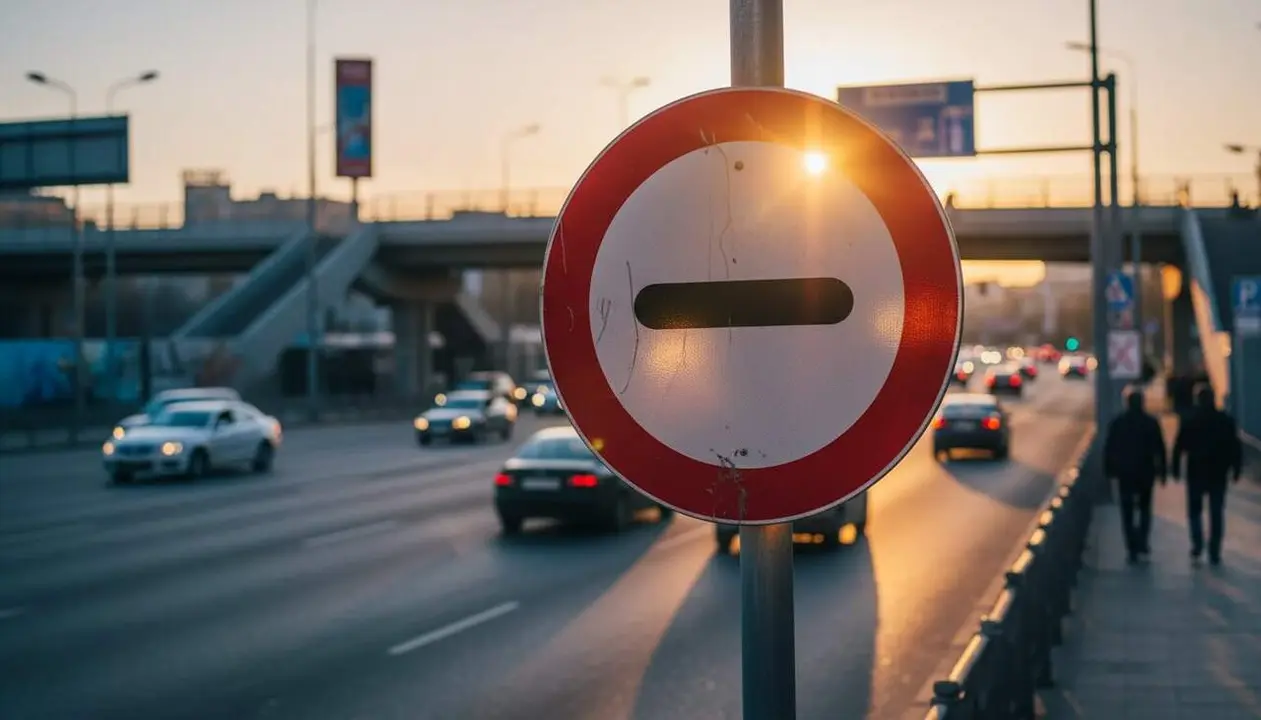

Have you ever seen that sign with a red circle and a black horizontal stripe in the middle and been left puzzled as if you had found a hieroglyph? You are not alone. Many drivers, even those who already have a license, end up confusing it with prohibitions or tolls.
The Directorate General of Traffic (DGT) warns that this is one of the most misunderstood and forgotten signs by drivers and students in the theoretical exam. But what does it really mean, and why does it cause so much confusion?
The R-200 sign: more than just a black stripe
An uncommon but crucial sign
The R-200 sign stands out for its circular shape, with a red border and a black horizontal stripe in the center. Many think it indicates that traffic is prohibited or that it marks the beginning or end of a toll road. Nothing could be further from the truth.
The DGT points out that this sign requires stopping before continuing the trip. But it is not just any stop: it refers to places where the driver must stop by legal obligation, such as a customs checkpoint, a police control, or a toll booth, depending on what the sign itself or an additional panel indicates.
The error rate in the exam
The numbers are clear: a 54% of driver applicants fail this sign on theoretical exams. The reason? Confusion with other more common signs and the rarity of this one in everyday life means it is not properly memorized.
One of the DGT's methods to remember it is to associate it with a place where stopping is mandatory before moving on: a place that controls passage, not one that prohibits traffic.
Where to find this sign and what it implies
Typical places and operation
This sign often appears at border crossings, tolls, fixed police controls, or monitored zones where the vehicle must be checked before entering. It may be accompanied by a barrier that prevents passage until the regulations are met.
It is common to see it in port areas, restricted access enclosures, or security checkpoints. It is no surprise that for this reason, it is confused with a sign prohibiting traffic or indicating a toll.
Fines and penalties for not respecting it
Ignoring this sign can be costly: the fine can reach up to 200 euros. The reason is clear: not stopping when the sign indicates can put safety and order at risk in controlled areas.
The DGT emphasizes that after stopping, the trip can continue once authorization is obtained or the control is passed, so it is not about forbidding passage, but regulating it.
The most common mistakes and the reality behind the black stripe
Common confusions among drivers and students
A widespread mistake is thinking that the black stripe indicates an absolute prohibition to pass or that it is a toll sign. But in reality, the black stripe is a warning to stop where the sign indicates, not an order prohibiting traffic.
Some experienced drivers, when they see it, expect a barrier or checkpoint, but if there is nothing, they can proceed normally after the stop.
How to avoid confusion and stay updated
The key lies in knowing the less common symbols and their typical locations. The DGT recommends reviewing these signs, especially when preparing for the exam, but also for drivers who have been licensed for years and may no longer remember their exact meaning.
If you wonder why sometimes the simplest signs cause the most doubt, the answer is easy: because they are not seen very often and the brain sets them aside.
Finally, the R-200 sign with its black stripe is not a puzzle but a clear order: stop where required, but then move forward.
The Directorate General of Traffic insists that respecting this sign helps maintain safety in sensitive areas and avoid fines of up to 200 euros. Perhaps next time you see it, you will look at it with different eyes.