Four keys to understanding the controversy surrounding the V-16 beacon shaking up the DGT in 2026
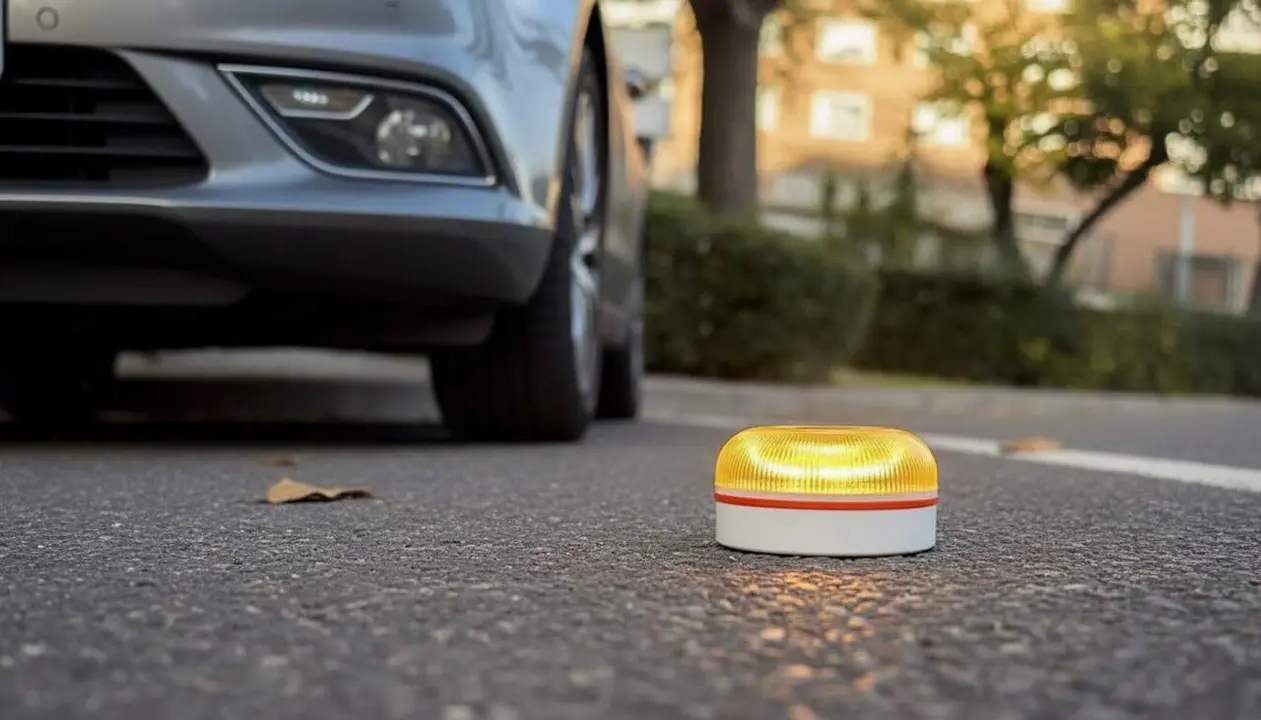

The V-16 beacon is mandatory from this year to improve road safety, but controversy has not taken long to arise. The Directorate-General for Traffic (DGT) defends that it is a tool here to stay, but the political opposition does not see it so clearly.
With more than 54 million trips expected during August, road safety is at the center of the debate. But what is the truth behind the V-16 beacon and what challenges does it really pose?
The V-16 beacon: more safety or political controversy?
What does the DGT say about the V-16 beacon and its mandatory nature?
The DGT, chaired by Pere Navarro, defends that the V-16 beacon is a key element to prevent pedestrian accidents and crashes on the road. Navarro has emphasized that the beacon is easy to use, has its own light, and prevents the driver from having to get out of the vehicle, something that traditional triangles do not allow.
According to Navarro, the inclusion of this device helps reduce the worrying number of pedestrian deaths, which represent nearly half of fatal accidents in cities. His stance is clear: "There is no turning back."
Why does the V-16 beacon generate debate in Congress?
After months of public debate, a parliamentary group has presented an amendment to make the use of the beacon optional and restore the use of warning triangles. Vox proposes that the beacon be an alternative, not a substitute, and that triangles remain valid after January 1, 2026.
This initiative seeks to tighten sanctions against those who park improperly in spaces for people with disabilities, but also questions the forced implementation of the beacon. The controversy is not only technical but also political and social.
Real impact of the V-16 beacon on road safety
How does the beacon affect drivers in emergency situations?
From the driver’s perspective, the V-16 beacon represents a notable change: it prevents having to leave the vehicle and expose oneself on dangerous roads. Additionally, its light makes the signaling more visible at longer distances and under adverse conditions.
However, its implementation has also caused perplexity and resistance, especially among those who preferred the classic triangle. What seemed like an obvious improvement has practical complexities that the DGT still needs to manage.
What do experts and the local environment in Galicia say?
In the case of Galicia, where population dispersion and rural roads are the norm, pedestrian accidents are a particular problem. Navarro has highlighted the need for a "reflection" on road safety that includes these devices.
This directly impacts the local perception of the V-16 beacon and the importance of policies that put the pedestrian at the center, as recalled by the mayor of La Coruña, Inés Rey.
What sanctions and legal novelties come with the V-16 beacon?
What legal changes has the V-16 beacon caused?
The V-16 beacon is a mandatory device from January 2026, but the proposal to make it optional tries to change this obligation. Currently, those who do not comply may face fines and loss of license points, especially in cases of failing to signal incidents correctly on the road.
The DGT maintains its firm stance, but the amendment in Congress could modify the regulatory landscape if it succeeds.
How does this affect drivers and road safety?
The debate is not only technical but has a direct impact on driver behavior and the perception of safety on the road. The V-16 beacon aims to modernize and make a classic aspect of driving safer, but its social and legal acceptance is yet to be seen.
The question is whether the new regulation will be implemented with the necessary force or will remain more of a political debate than a practical one.
The reality is that the V-16 beacon has come to stay, but the road to its full acceptance still has unexpected twists.
The DGT insists that road safety involves constant adaptations and reflections, especially in a time with more trips and risks on the road. But society and politics have not yet closed the debate. And you, are you team beacons or triangles?
🎯 Sanctions: Fines and point loss for failing to signal
📅 Current debate: Amendment proposal to make it optional
🏛️ Authority: Directorate-General for Traffic (DGT)
The V-16 beacon is not just a device, it is the reflection of a clash between safety, politics, and customs that is still far from being resolved. The DGT defends its virtues, but parliamentary and social resistance questions its full implementation.