Three Tesla changes that ended in a €260 fine with autonomous city driving
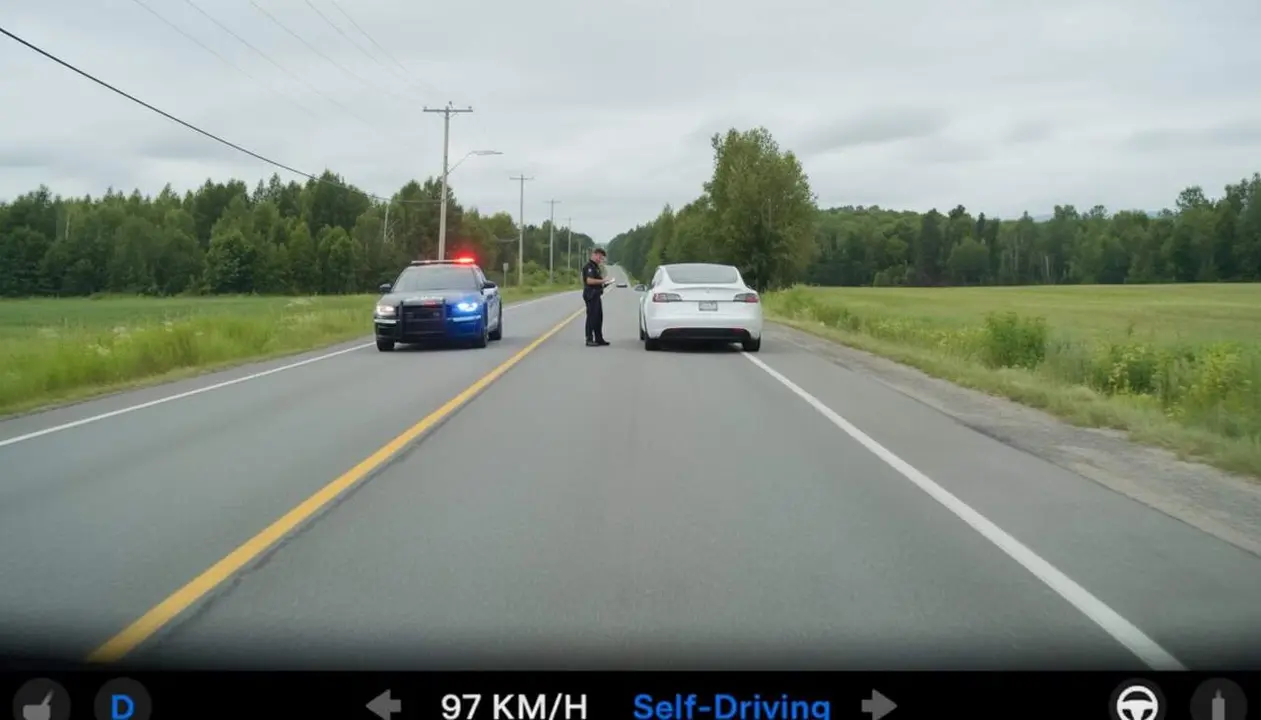

A Tesla driver ends up with a €262 speeding fine after activating the autonomous driving system. This case highlights how the latest changes in Tesla's software can work against the driver itself.
The controversy begins with the disappearance of a control option that allowed adjusting the automatic speed below the legal limit. Thus, the machine can accelerate without warning and cause unexpected penalties.
Recent changes in Tesla's autonomous driving system
What has Tesla removed in its latest update?
Until last October, Tesla allowed users to set a customized margin above the speed limit, avoiding penalties in the assistance systems. With the v14 update, this option disappeared.
Instead, the software now offers five preset profiles: Lazy, Relaxed, Standard, Fast, and Mad Max. This means the driver can no longer set a specific limit; instead, the car automatically decides the speed, often without clear indications.
Why is this relevant for the driver?
The change deprives the user of direct control that previously avoided unintentional speeding. This means the car can accelerate beyond the allowed speed in urban areas, as happened in this case, where the Tesla reached 78 km/h on a stretch limited to 50 km/h.
The practical consequences of software changes
Why can this system cause unexpected fines?
The algorithms managing autonomous driving interpret traffic conditions and decide the instantaneous speed. Without a manual limit, the vehicle can suddenly accelerate without warnings and be captured by mobile or stationary radar.
Thus, the driver, even with hands on the wheel, can be fined without having had real control over the car’s behavior.
How has the driver community reacted?
Many people have reduced the use of these systems in urban areas or secondary roads to avoid legal risks. This case shows that, more than help, it can become a problem when the software becomes less configurable.
The practical case: speeding fine and lesson for Tesla
How exactly did the infraction happen?
The Tesla was traveling on an urban stretch limited to 50 km/h but, with Full Self-Driving activated, accelerated to 78 km/h. Police detected this excess in real time with a mobile radar and stopped the vehicle to issue the €262 fine.
This fine shows that autonomous driving is still not infallible and that fully trusting algorithms can have an important economic cost.
What is the legal responsibility of the driver?
Although Tesla’s system manages the driving, the law assigns responsibility to the driver behind the wheel. This opens a debate about to what extent these systems should offer more control and safety to users.
According to experts, removing the manual adjustment was a decision that did not take into account the particularities of urban traffic, and it is a clear example of how technology does not always adapt to the reality of the road.
The situation serves as a warning to any user of autonomous driving systems, especially Tesla’s, that speed must still be actively controlled even with these technologies.
The reality is that the new profile management and the removal of the manual limit can lead to unexpected fines, such as the €262 speeding fine in the city that this driver received.