5 locations where the DGT has just placed 130 undetectable speed laser radars
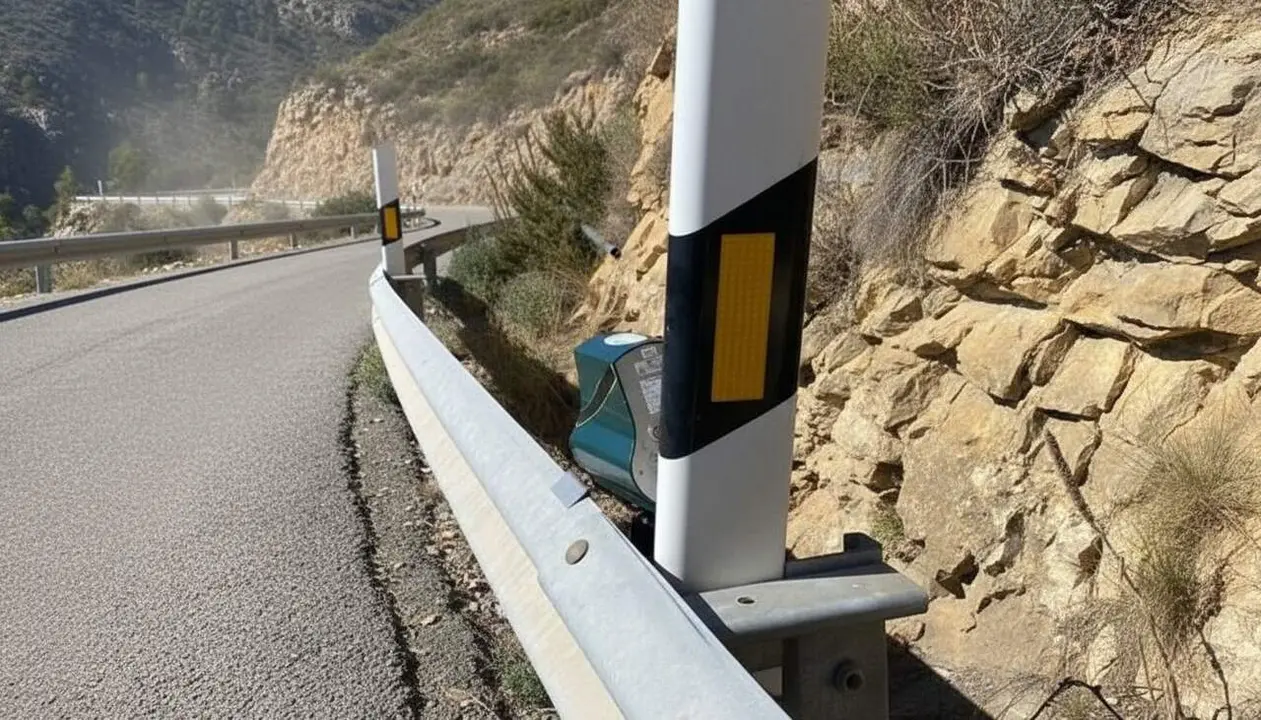

The DGT now has 130 portable and wireless Velolàser radars distributed throughout the country. This increase —confirmed by DGT sources this spring— explains why we see more “invisible” controls on secondary roads and in high accident areas.
The Velolàsers are small (just over 50 cm), weigh less than 2 kg, and register speeds between 30 and 250 km/h. With battery autonomy and 4G connection, they can send images and data in real time to the patrol that validates the ticket.
Why the DGT bets on Velolàser
Why is this of interest to the driver?
Because the presence of 130 units changes the likelihood of encountering a control on secondary roads and ACAs. This matters: many drivers assume that visible radars are the ones controlling, but the DGT prioritizes discretion to capture more real violations.
What technical features make them useful?
They measure speeds between 30 and 250 km/h and work day and night. Also, laser technology avoids the traditional flash and the measuring range is broad; all this makes them useful in both urban and highway settings.
Where Velolàser radars are installed
What locations are most common?
The DGT usually places them in Accident Concentration Sections (ACAs) and on dangerous secondary roads. They are also seen behind guardrails, on bridge pillars, or hidden behind vegetation and signage.
How do they hide them without losing effectiveness?
Metal supports, tripods, and even camouflaged vehicles are used. Their small size and light weight allow positioning them in places a fixed radar couldn’t, enabling the Civil Guard to work at a safe distance.
How they fine and what you should know
How does the Civil Guard validate a Velolàser detection?
4G and Wi‑Fi connection send data and images to the patrol that validates the infraction. An officer receives the evidence in real time and proceeds to process the ticket if the reading exceeds the tolerated margins.
What technical limits should be kept in mind?
Minimal error margins and the ability to operate in adverse conditions (rain, darkness) make Velolàsers reliable; this means a reading is not easily overturned due to weather conditions.
Practical angles and quick tips
Driving within limits and paying attention to ACAs reduces the risk of a fine. Micro-tips: brake in advance in sections with accident signage and avoid accelerating right after a risk zone.
What exactly has the DGT purchased?
According to the Autopista report (Jordi Moral, 09/01/2026), the DGT acquired two batches —60 and 70 units— reaching a total of 130 Velolàsers. Furthermore, this spring the Directorate confirmed an award exceeding 1 million euros to expand the fleet with “dynamic” radars.
By the way, the official intention is to install up to 122 new controls between 2026 and 2027, which indicates a continued commitment to this technology.
Legality and frequent doubts
Placement behind safety elements (guardrails, pillars) raises legal questions. Some experts consulted for the piece state that the location is legitimate as long as it does not obstruct visibility and the reading verification protocols are respected.
Impact on local accident rates
The Velolàser radars aim to reduce risky behaviors in high accident spots. From the perspective of a local mobility expert, this can translate into fewer crashes and fewer victims if there is constant control.
DGT sources (spring 2026) emphasize the effectiveness of these devices to complement usual surveillance. According to the same communication, the combination of fixed sensors, sections, and mobile controls improves control coverage.
What practical limitations do they have?
Battery autonomy up to 5 hours and dependence on 4G coverage. This means that areas without coverage or long-duration shifts may require other devices or logistical support.
The reality is that the DGT is determined to keep them as a key piece within its surveillance strategy. This affects both secondary roads and high accident sections; the likelihood of encountering a control rises.
Information on 130 units and technical specifications (50 cm, less than 2 kg, 30–250 km/h, 5 h autonomy) appears in documentation consulted by the editorial team. So, if you drive on ACAs or secondary roads, expect the presence of these radars to be common.
But it’s not all technicality: it changes the way road surveillance is understood. Micro-phrases: look, brake, react. Period.
In short, the DGT has multiplied its tools with 130 Velolàsers, and this implies more comfortable controls for the administration and more surprises for those who rely only on visible radars.
The DGT and the **Velolàsers** appear as protagonists in the new road safety strategy: laser technology, 4G connection, and mobility to cover delicate spots. This combination changes the perception of speed control and demands greater caution at the wheel.
Frequently Asked Questions
- How many Velolàser radars does the DGT currently have?
- The DGT has 130 units, acquired in two batches (60 + 70), according to information published by Autopista.
- What speeds can these radars register?
- The Velolàsers can measure between 30 and 250 km/h both day and night and under various weather conditions.
- Where are these radars usually placed?
- They are used in Accident Concentration Sections and on secondary roads; often hidden behind guardrails, pillars, trees, or in camouflaged vehicles.