Three key changes from the DGT: the Government bans running amber traffic lights starting October 1
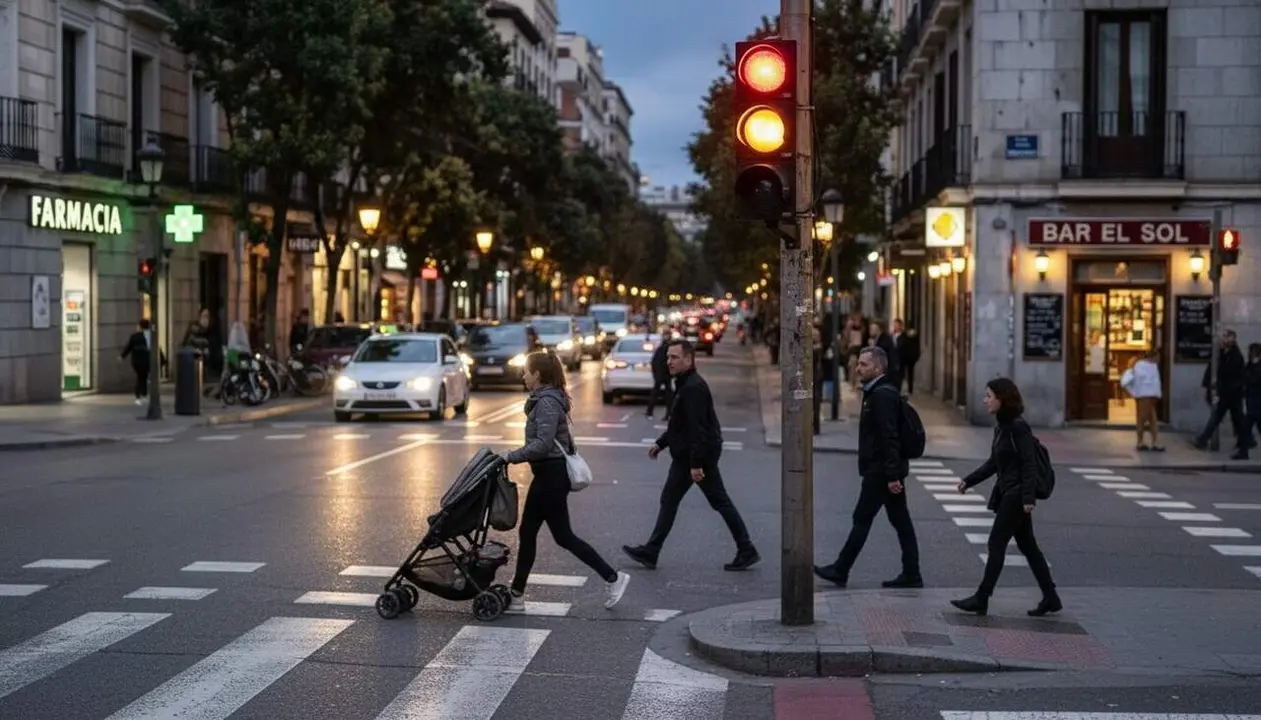

Yes: starting October 1st, it is prohibited for vehicles to pass a yellow traffic light, according to the BOE and the DGT. The measure aims to reduce pedestrian accidents at urban intersections and eliminate confusion between drivers and pedestrians.
The change is signed in Royal Decree 518/2026 and arrives alongside modifications about scooters, helmets, and seat belts that could affect your daily street life.
What does the BOE say and why should you care
For the driver, this means a clear rule: do not go through yellow. This avoids the classic doubt at intersections (do you go or not?) and seeks to prioritize pedestrian safety at urban crossings.
🎯 License points lost: —
📅 In force since: October 1
🏛️ Authority: DGT / BOE
What does the Decree literally say?
The BOE specifies that the yellow phase cannot coincide with green for pedestrians. Therefore, when the pedestrian light is green, the vehicle traffic light must be red.
Why does this matter to people who drive every day?
Because it eliminates ambiguities in turns and intersections and reduces the risk of pedestrian accidents. This affects those who drive in the city, delivery riders, and any user who encounters busy crosswalks.
How the prohibition affects drivers, cyclists, and scooters
If you drive a car, you will have to stop if yellow coincides with pedestrian green. This not only changes a road habit: it also alters decisions in merges, turns, and in areas with high pedestrian density.
Do delivery drivers and taxis also have to comply with the rule?
Yes, the rule applies universally. The decree removes exceptions and establishes the same rule for all motorized vehicles at urban intersections.
What about cyclists and scooters?
The decree includes specific measures for scooters: helmet and light use, minimum age of 15, and fines up to €200. For bicycles, the text requires keeping 5 meters of distance behind a bike in the city and, on the road, to fully change lanes to overtake them.
Practical implementation and controls (what changes we will see on the streets)
The DGT plans to adjust traffic light programs and informational campaigns before October 1st. This means pictograms, signage, and awareness campaigns to avoid fines and accidents in the first few months.
How will traffic lights adapt?
Traffic lights that previously showed yellow coinciding with pedestrian green will change to direct red for vehicles. Yellow will only appear after a red phase or when the pedestrian light is red.
What specific sanctions will be applied?
The decree details sanctions for scooter violations (up to €200) and establishes the prohibition of passing on yellow for vehicles. The BOE text does not specify in all phrases points deduction for this infraction, so the first months will be key to see enforcement practice.
How will this protect you as a pedestrian?
The clear pedestrian priority—green light vs. red for vehicles—reduces coexistence of contradictory lights and avoids fatal decisions at busy intersections. Less doubt. Less risk. Period.
What can cities do to adapt?
Implement programs for traffic light reprogramming and local campaigns with the DGT and city councils. It will also be necessary to review overtaking trajectories on narrow streets and better mark school crossings.
By the way, it won’t be automatic. It requires planning. And surveillance. And a lot of patience in the first weeks.
The DGT and the BOE have justified the measure as a reaction to the usual confusion at intersections and aim to reduce pedestrian accidents. This does not make yellow useless: it only prevents its use when the pedestrian has guaranteed passage.
A practical idea: if you see a traffic light with yellow, remember the rule changes on October 1st. Until then, follow the current signage and drive carefully.
If you do delivery work or spend hours on the road, this attention will save you incidents and possibly fines. Reorganize routes if necessary. Adjust speeds. And remember the new safety distance behind bicycles in the city: 5 meters.
The reality is that Royal Decree 518/2026 seeks to prioritize pedestrian safety and simplify decisions behind the wheel. The question is clear: are we willing to change habits to avoid pedestrian accidents? It is no longer optional. It has a date.
In any case, October 1st will be the test moment for drivers, cyclists, and scooter users. Watch the signage, adapt your driving, and do not assume permissiveness from the public road.
If you want a quick summary: the DGT and BOE close the debate: no passing on yellow, scooters with helmets and lights, seat belts without exceptions, and 5 meters behind a bike in the city. Huge change. Direct impact. To keep in mind.
The reality is that these measures will change your urban behavior and how we interact with pedestrians. Review the new rules, prepare for October 1st, and share this with frequent drivers.
Frequently Asked Questions
- From when is it mandatory not to pass on yellow?
- It will come into force on October 1st according to Royal Decree 518/2026 published in the BOE. The prohibition will apply generally to vehicles.
- What are the sanctions for electric scooters?
- The decree establishes mandatory helmet use, a minimum age of 15, and fines that can reach up to €200 for violations such as not using lights or wearing a reflective vest at night.
- How should I overtake a bicycle on the road?
- You must fully change lanes to overtake a bicycle on the road; in the city, keeping 5 meters of distance behind a bike is mandatory according to the text.