2 clear steps to form the emergency lane according to Royal Decree 518/2026 of the DGT
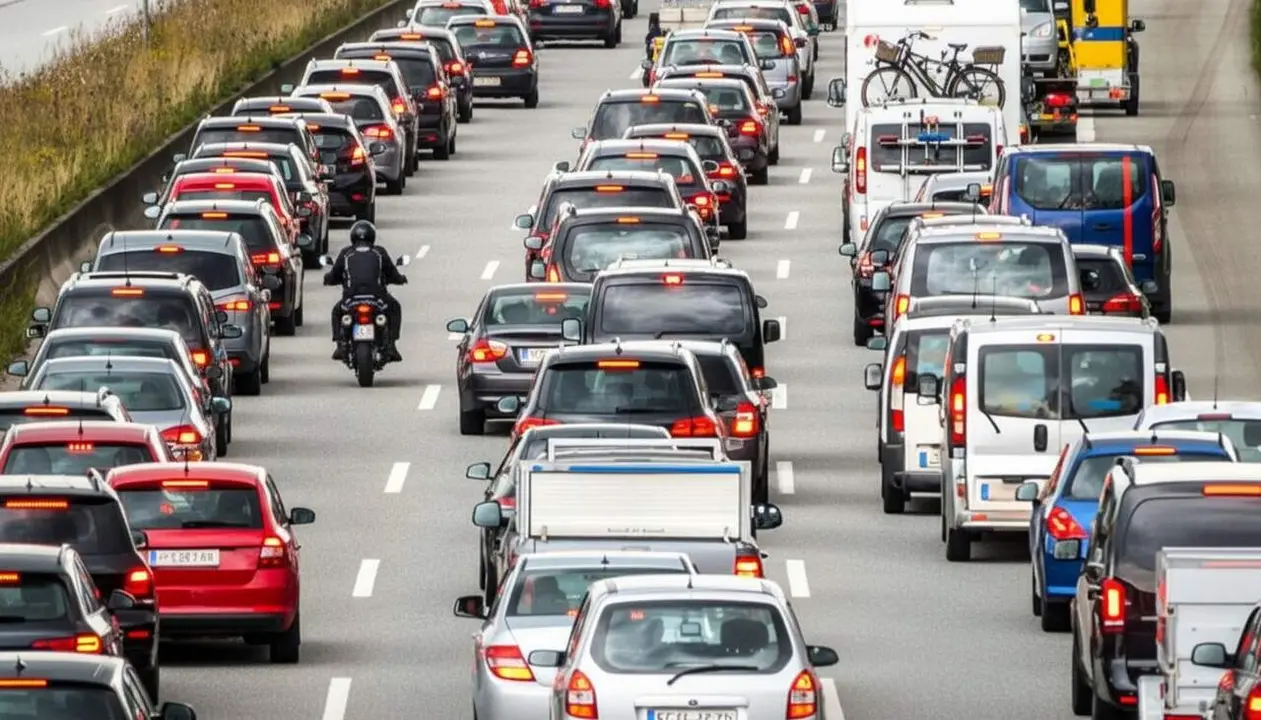

Yes: Royal Decree 518/2026 and the DGT impose a new behavior when there are traffic jams or accidents to facilitate the passage of emergency services. Those returning from vacation will have already noticed changes on the road and in the signage (and in their patience).
The regulation, published in the BOE and signed on June 24, comes into effect on October 1, 2026 and requires leaving a free space —the so-called "emergency lane"— for police, ambulances, and road cleaning services. The DGT has already issued warnings on social media.
What does Royal Decree 518/2026 say and what has the DGT explained
🎯 License points: Not specified
📅 Effective from: October 1, 2026
🏛️ Authority: DGT / BOE
This matters for the average driver because it can change a usual maneuver in a traffic jam. If you travel on the AP-7 or the N-340 during rush hour, this Royal Decree conditions where you can stop and how you must position yourself in the event of a prolonged stop.
What does Article 32 establish?
Article 32 states that on highways and expressways, vehicles, when moving at walking pace or stopped, must pull over leaving a free space for the passage of priority vehicles. The literal quote appears in the text of the Royal Decree published in the BOE.
Why does the DGT support it?
The DGT has argued on its networks that it is "a measure that facilitates the access of aid services when every minute counts." It is an obvious justification: in long traffic jams, quick access can make the difference between effective action and delayed response.
How to form the emergency lane depending on the number of lanes
This section tells you exactly what to do on the road so you are not caught by surprise by the fine nor have your car sideswiped. The regulation differentiates between roads with two lanes and three lanes per direction; knowing this avoids errors that will now be punishable.
How to do it when there are two lanes per direction?
On roads with two lanes per direction, the emergency lane must be formed in the center of the roadway, between both lanes. This means vehicles must move aside so that the central strip is free for the passage of priority vehicles. Curious, but functional.
How to do it when there are three lanes per direction?
If the road has three lanes per direction, the emergency lane is formed between the leftmost lane and the adjacent one. This forces the vehicles in the left lane to move further left and the vehicles in the other two lanes to move right to open the central corridor (yes, it is mentally confusing the first time).
Special cases, sanctions, and practical advice
So you don't complain later: the regulation includes exceptions for snow and requires driving on the right in adverse conditions. This frees the left lane for snowplows and emergency services; it is not optional.
What is the mandatory behavior in snow?
When traffic is complicated by snow, overtaking is prohibited and you must drive on the far right lane, reserving the left lane for emergencies. Only if the road has three or more lanes per direction may the lane adjacent to the left be used for maneuvering.
What fine can I receive for not doing it?
The official information mentions a penalty of up to €200 for non-compliance with these obligations. The text published in the BOE is clear regarding economic sanctions; do not invent the officer’s interpretation, follow the rule.
Practical advice from experts and common scenarios
A mechanic or local road officer usually recommends positioning the car with enough space to open the door and check the surroundings before opening it. In long bottlenecks, coordinating with other drivers (using hand signals or indicators) simplifies the creation of the corridor.
How does this affect urban traffic and high-demand highways?
On very busy roads, the formation of the emergency lane may momentarily slow traffic but facilitates the arrival of services and, in the long run, reduces incident time. Think of it as a time investment: a few seconds to give way that can avoid hours of traffic jam.
*Note to the reader: remember that acting in chain in a traffic jam saves time and can save lives.*
The reality is that the DGT and the BOE have established a rule that forces changing behaviors that many drivers were already doing spontaneously; now they are regulations. If you drive on highways with two or three lanes per direction, you must internalize the two basic patterns: empty center on two lanes, corridor between left and adjacent lane on three lanes. The fine of up to €200 is not anecdotal; it is a way to ensure compliance.
Finally, do not forget that the purpose of the regulation is to facilitate the access of police and ambulances and that the goal is to reduce response time in accidents. Cooperating on the road is a collective responsibility that affects everyone’s safety.
The DGT, Royal Decree 518/2026, and the effective date (October 1, 2026) are the references you must keep in mind before facing a return from vacation or a complicated traffic day.
Frequently Asked Questions
Frequently Asked Questions
- When does this new obligation to form the emergency lane come into effect?
- It will come into effect on October 1, 2026, according to Royal Decree 518/2026 published in the BOE.
- How should I proceed if the road has two lanes per direction?
- You must pull over in such a way as to leave the central space free between the two lanes for priority vehicles to pass.
- What sanction can failure to open the emergency lane entail?
- The regulation contemplates an economic sanction of up to €200 for non-compliance; license points are not detailed in the available text.