3 keys to the fast pass at the Madrid F1: what it is, who can buy it, and how to check it
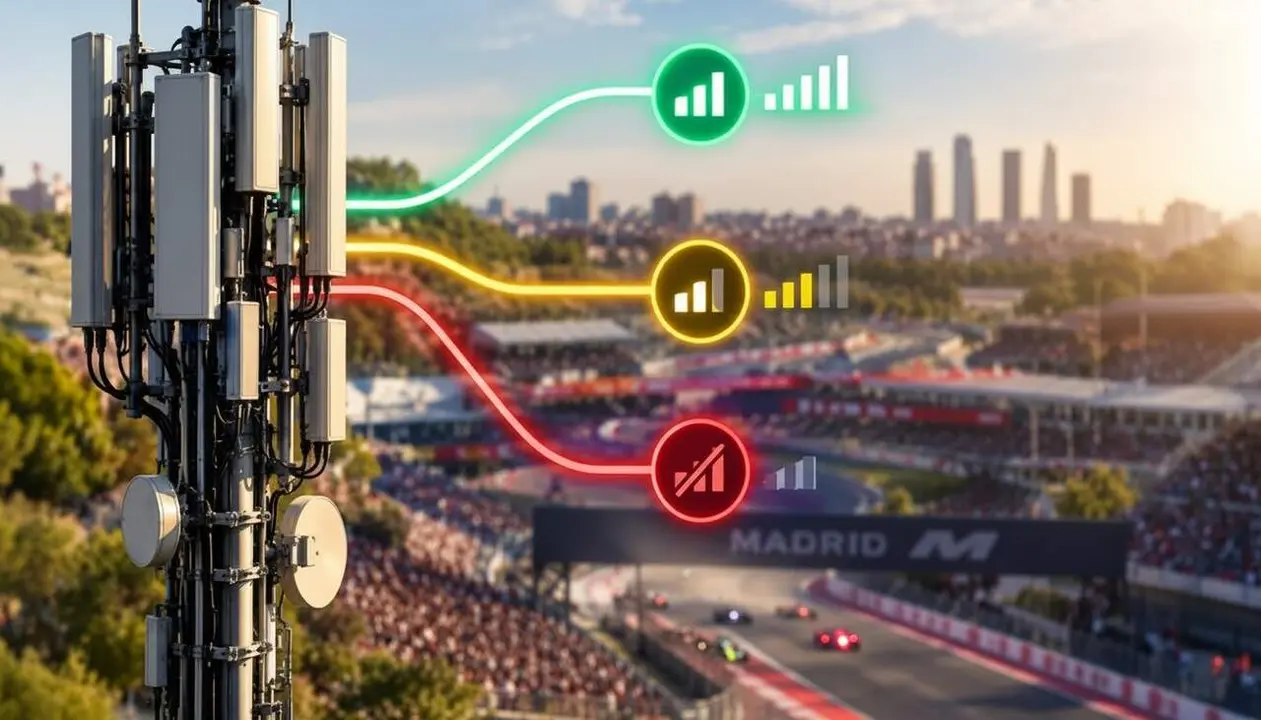

Yes: some operators offer priority access during large events; they do not cut off your connection, but priority is given to paying customers. In practice, this means that, during congestion moments such as a Formula 1 Grand Prix in Madrid, some people gain access to a “fast lane” to share content or make video calls with less delay.
There is a common anecdote: people trying to upload a Story see the clock icon; others, who have paid extra, upload without problems. This explains why the offer of priority passes reappears every time there are major events.
Source: Xataka Móvil, report by Noelia Hontoria. The original text details commercial offers and explains that this prioritization is applied through a technical feature called network slicing.
1. What is happening and why it matters
Why should you care? If you will attend the Madrid Grand Prix or be in a high-traffic area, your connection quality may vary depending on the operator’s commercial policy. This affects your ability to send messages, upload photos, and receive real-time services.
How exactly does network slicing work?
Short answer: network slicing creates separate virtual networks within the same infrastructure to give priority to certain customers or services.
Put simply: 5G SA technology (network architecture) allows the physical infrastructure to be sliced into virtual “slices.” An operator can reserve a slice for users who have paid a premium so that, when all connections compete for the same capacity, these users experience lower latency or more stability.
What do ‘fast passes’ offer in real conditions?
According to available information, Movistar and Orange sell prioritized access for events: prices mentioned in the report are €3 per day, €7 per week, and €10 per month. They do not include additional data; the goal is to improve perceived quality during congestion moments, not to add traffic bonuses.
2. Who can be affected and how to detect it
Why is this relevant to the reader? Knowing if you are the type of user who might lose service quality lets you make decisions (buy the pass, look for alternatives, or plan when to upload content).
How do I know if my Operator Offers this service?
Short answer: check the operator’s app or client area and commercial communications for events.
Simple steps to verify:
- Open the operator’s app or operator’s website.
- Access the client area and look for sections like offers or special services.
- Review notifications or announcements about events (e.g., Madrid Grand Prix).
What signs indicate I am already affected?
Short answer: delays in sending messages, worse call quality, or inability to upload media in very crowded areas.
Quick checklist:
- You are physically in the Grand Prix area or zones with high concentration of people.
- You see “priority” offers in the Movistar or Orange app.
- You regularly have trouble uploading photos or making video calls when others are also connected.
3. What you can do and what is the technical and legal justification
Why does this information change your decision? Understanding the technical basis and regulatory stance helps you assess whether to buy the extra or demand transparency from the operator.
How is the problem resolved if you want priority?
Short answer: contract the offered commercial priority or look for connection alternatives.
Options explained (according to the report):
- Accept the commercial priority offer (prices cited: €3/day, €7/week, €10/month) if available.
- Use public Wi-Fi spots or those provided by the event organization if reliable (information not detailed in the source).
What does the regulation say and why is it allowed?
Short answer: the Secretariat of State for Telecommunications indicates it is compatible to offer different quality levels if it is transparent and does not intentionally degrade other services.
In practical terms, this means selling priority passes does not necessarily violate net neutrality as long as the offer is clear and the rest of the users are not deliberately downgraded. The source reminds of the condition: offers must be transparent and independent of the application used.
Comparative table of operators and Offers
| Operator | Offers fast pass? | Price indicated |
|---|---|---|
| Movistar | Yes | €3/day · €7/week · €10/month |
| Orange | Yes | €3/day · €7/week · €10/month |
| O2 | Seems like it | Similar offers according to source indications (not specified) |
Note: price and availability information comes from the cited report; if your operator is not on this table, the source did not provide concrete data.
Check transparency before paying: demand clear information about what you get in return (priority, conditions, and duration). Request written or app confirmation and keep screenshots of the offer.
Additional tips and maintenance: keep your device updated, activate secondary authentication for important accounts, and review app permissions that consume data. If you have professional contact or need critical connection during the event, consider contracting the priority service if available.
The reality is that how operators manage traffic prioritization is a technical and commercial decision that can directly affect you in areas of massive attendance. If you care about connection quality at the Madrid Grand Prix, review offers, save evidence, and compare options before paying.
Frequently Asked Questions
- Is it illegal for operators to sell priority for events?
- According to the report cited by the source, it is not necessarily illegal: offering different quality levels is allowed if the proposal is transparent and does not intentionally degrade the rest of the services.
- If I don’t pay, will I be left without connection?
- No: the source explains they do not intentionally cut your connection; they simply may offer a less congested slice to those who pay.
- How can I know if my connection is improving after paying?
- Check latency and message sending times instantly, keep screenshots, and compare with prior connection; the operator should be transparent about the conditions.