The Terres de l’Ebre receive 4.45 million: 52 municipalities will renovate public schools

Les Terres de l’Ebre will receive 4,451,345.40 euros to improve public educational centers in 52 municipalities. The town councils will be paid 100% of the assigned amounts in advance and will be able to carry out the works between 2026 and 2028.
In Tortosa, the Generalitat has presented a program that puts money on the table to fix roofs, bathrooms, kitchens, dining rooms, boilers, and other elements of school buildings. For families, the matter is far more concrete than any administrative acronym: having safer, more accessible, and more comfortable schools.
52 municipalities will receive the money before starting the works
For the municipalities of the Ebre region, the advance payment of 100% reduces the financial burden that often accompanies public works. The town councils will be able to have the assigned amounts before carrying out the actions, a practical difference when it is necessary to repair a building that continues to operate as a school every day.
How much money is coming to Les Terres de l’Ebre?
The total investment is 4,451,345.40 euros and is distributed among the 52 municipalities of the Ebre region. The program is designed to carry out renovation, adaptation, and improvement works — the RAM actions — at public educational centers during the period between 2026 and 2028.
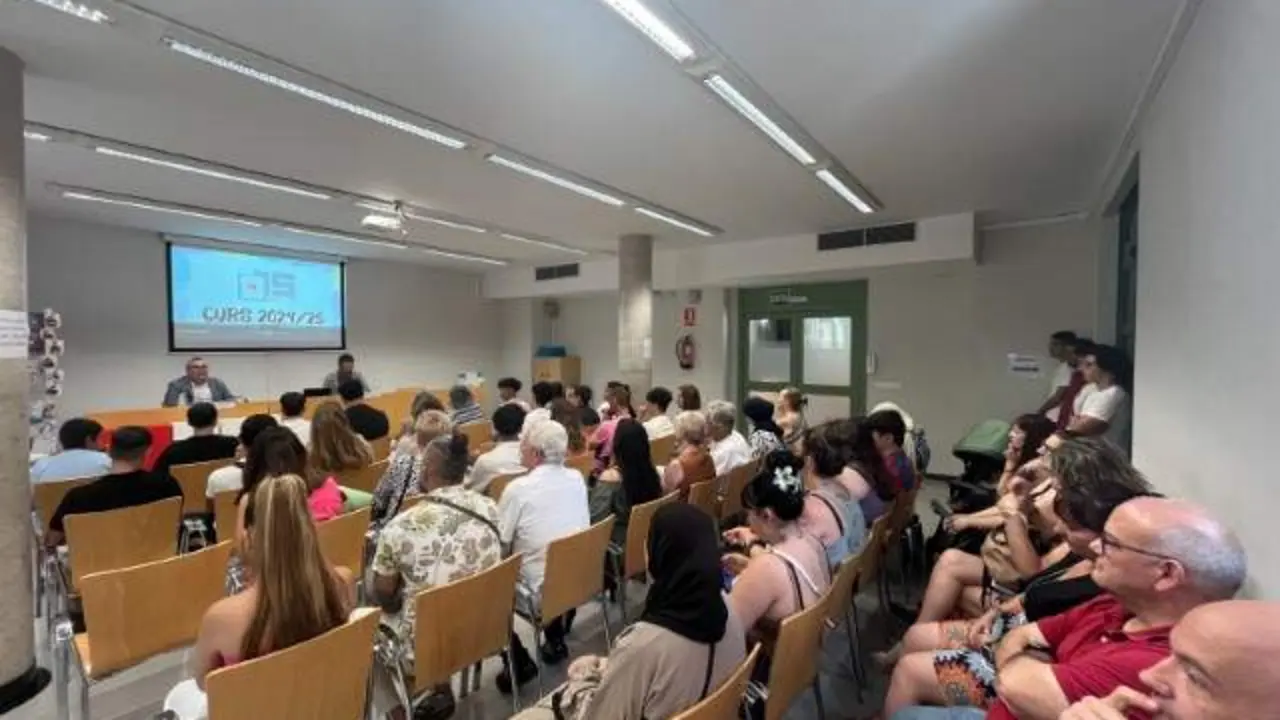
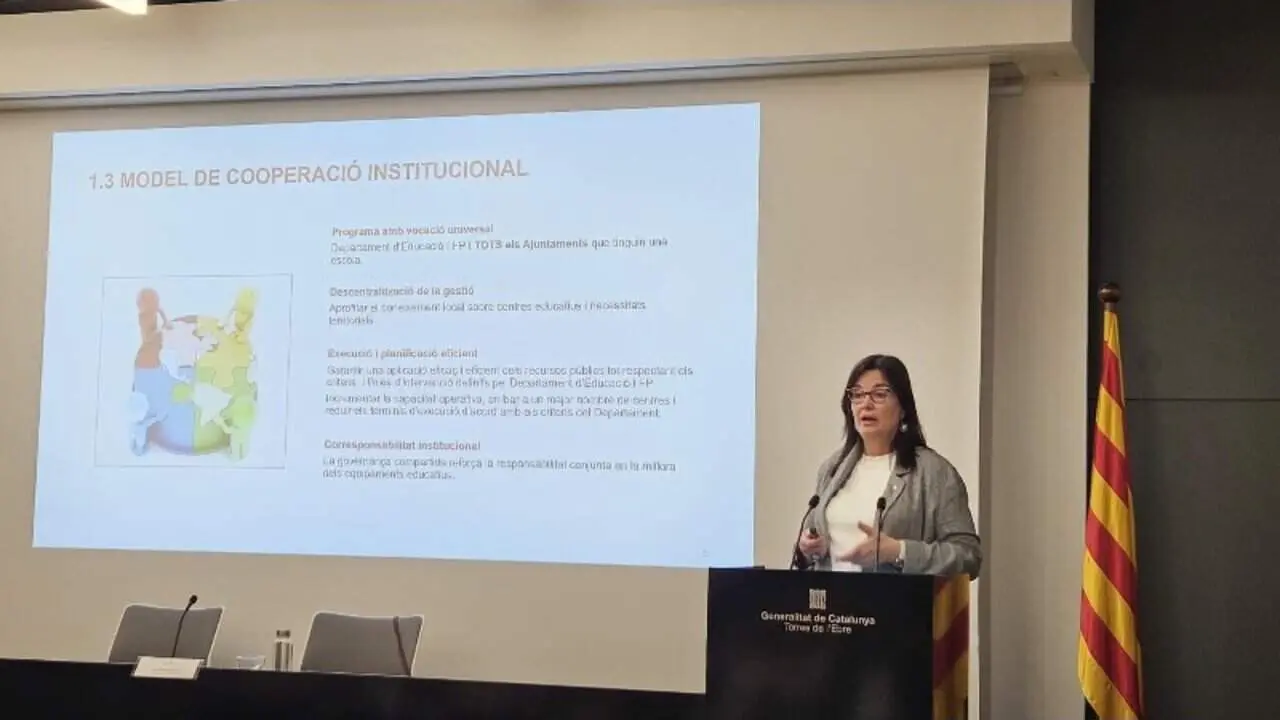
According to Govern.cat, the Director General of Public Centers of the Department of Education and Vocational Training, Montserrat Duran Tauleria, presented the program in Tortosa.
The figure does not describe a single major work but a pool of resources distributed among municipalities with different needs. One school may require action on the roof; another, the replacement of an old facility. There is no single recipe here, but concrete buildings and very specific problems.
Why can advance payment make a difference?
The town councils will receive the total assigned amount in advance, instead of having to advance municipal funds and wait for their return. This facilitates planning bidding processes, schedules, and works without turning each repair into a pending budget item.
The program also extends the timeframe to carry out the actions: the works can be executed between 2026 and 2028. In school buildings, this schedule allows ordering interventions and reduces the risk that an urgent repair ends up being rushed (the usual recipe for paying twice).
- Beneficiary territory: 52 municipalities of Les Terres de l’Ebre.
- Total amount: 4,451,345.40 euros.
- Payment: 100% advance payment of assigned amounts.
- Execution period: between 2026 and 2028.
The distribution prioritizes Students, Age, and Rural Areas
The distribution of resources does not depend solely on the number of schools in each municipality. For the Ebre reader, this means that the program combines the size of the educational service with the age of the buildings and the challenges typical of rural municipalities.
How is the amount each municipality receives calculated?
The first criterion is the number of students aged 3 to 12 enrolled in public centers owned by the Department of Education and Vocational Training. The data used are from the RALC of February 23, 2026.
The second criterion looks at the age of the school buildings. Each building constructed or renovated before 2007 receives an allocation of 37,300 euros, with two exceptions: fully modular centers and facilities that already have a Government agreement for their construction.
| Criterion | Application |
|---|---|
| Students | Students aged 3 to 12 enrolled in public centers |
| Age | 37,300 euros per building constructed or renovated before 2007 |
| Rurality | Additional contribution of between 6,000 and 10,000 euros |
| Students in rural municipalities | 130 additional euros per enrolled student |
What do rural municipalities receive?
Municipalities recognized as rural will receive an additional contribution of between 6,000 and 10,000 euros, depending on their qualification. Additionally, they will receive 130 euros extra for each enrolled student.
This system gives more weight to municipalities where a school may serve fewer students but remains an essential service for families. The criterion prevents student count from being the only measure of needs. Because a small school still has a roof, bathrooms, or a boiler.
The combination of criteria allows the age of the buildings and rurality to have a direct economic translation. It is not the same to maintain a recent facility as to intervene in a building that has accumulated years of service, and the program incorporates this into the distribution.
What works can be done in the Educational Centers?
Eligible actions affect both the structure of the buildings and the installations used daily by the educational community. For families, this can translate into fewer maintenance problems, more accessible spaces, and facilities that operate more safely.
Which elements can be renovated or replaced?
The program allows action on obsolete buildings and facilities. The list includes roofs, carpentry, boilers, bathrooms, kitchens, and dining rooms, as well as other elements related to the conservation and improvement of the centers.
- Renovation and improvement of school buildings.
- Replacement of deteriorated roofs and carpentry.
- Renewal of boilers and other obsolete installations.
- Improvement of bathrooms, kitchens, and dining rooms.
- Incorporation of energy efficiency measures.
- Adaptations to improve accessibility.
- Removal of fiber cement.
The removal of fiber cement is one of the planned actions to guarantee safer facilities. Energy efficiency measures, meanwhile, seek to make the buildings more sustainable and comfortable for students, teachers, and staff.
When will the actions in the Centers be noticeable?
The works can be carried out between 2026 and 2028, according to the planning of each municipality. The program does not set a single intervention or an identical calendar for all schools: the town councils will have to specify the actions within this period.
The presentation of the program in Tortosa focuses on a little spectacular but decisive issue: preserving buildings before deterioration forces more expensive repairs. A roof, a boiler, or a bathroom do not usually appear in grand speeches but are the part of the school everyone ends up noticing when they fail.
According to Govern.cat, the program strengthens the improvement of educational infrastructure and territorial equity, with specific attention to rural municipalities in Les Terres de l’Ebre.
The 4.45 million euros, the 52 municipalities, and the 100% advance payment define the scope of the program. The decisive part will come when the resources become repaired roofs, accessible spaces, efficient installations, and safer centers; this is where an administrative item ceases to be a number and becomes part of the daily life of Ebre’s schools.
Frequently Asked Questions
- How much money will Les Terres de l’Ebre receive to improve schools?
- The 52 municipalities of the Ebre region will receive a total investment of 4,451,345.40 euros to carry out renovation, adaptation, and improvement works at public educational centers between 2026 and 2028.
- Will the town councils receive the money before carrying out the works?
- Yes. The program provides for 100% advance payment of the amounts assigned to each beneficiary municipality.
- What criteria determine the distribution of resources?
- The number of students aged 3 to 12, the age of school buildings, and the rurality of the municipality are taken into account. Buildings constructed before 2007 receive 37,300 euros each.
- What works can be funded with this program?
- Funding is available for building renovations, replacement of roofs, carpentry, and boilers, improvements to bathrooms, kitchens, and dining rooms, energy efficiency actions, accessibility, and removal of fiber cement.
Sources consulted
- Govern.cat – Investment, criteria, and actions of the RAM program
Source of the article: Govern.cat