La Fatarella scores the 0-3 away in the center: a small school with a future
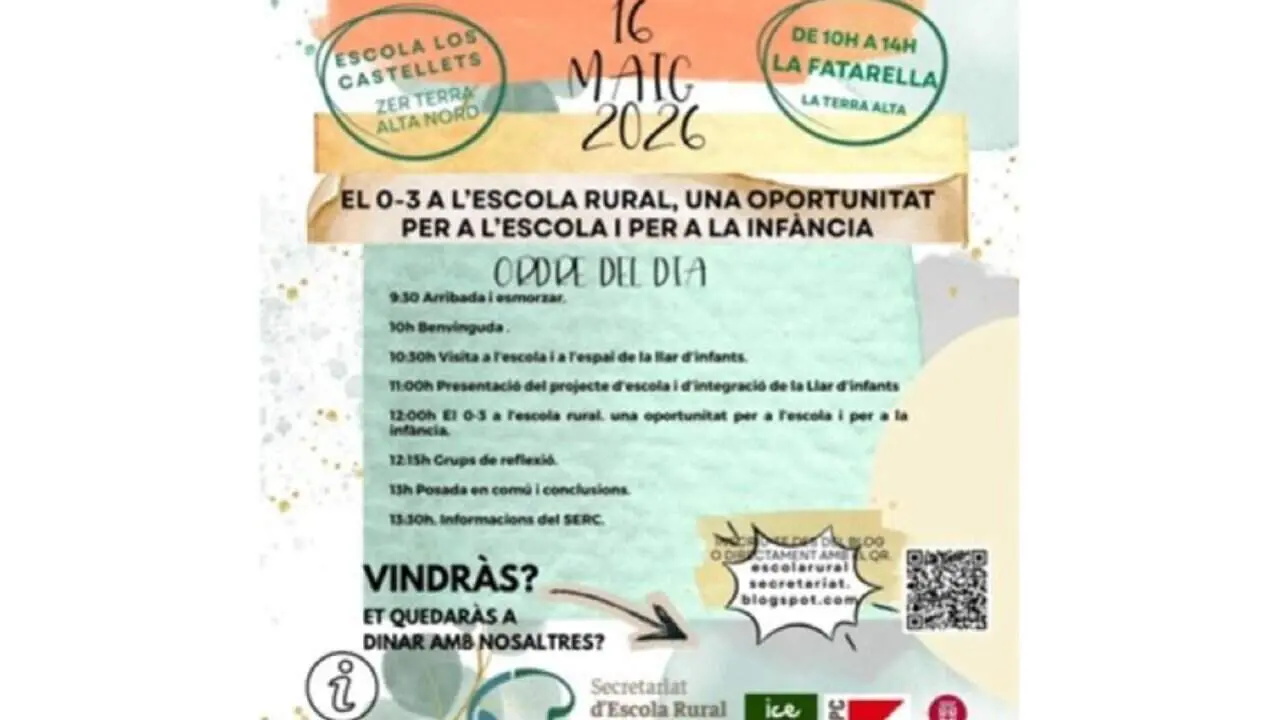

Escola Los Castellets de la Fatarella hosts a conference on education from 0 to 3 years old in rural schools. The meeting raises an issue that directly affects small towns: having local educational services from the very beginning.
During the morning, the Secretariat of Rural Schools of Catalonia and the ZER Terra Alta Nord center share experiences, debate proposals, and advocate a model with three very specific ideas: small, village-based, and public. It is not just a nice slogan for a poster; it is a way to ensure that growing up in a small municipality does not mean starting with fewer opportunities.
The 0-3 stage enters the debate at Escola Los Castellets
Why does this conference matter in Terra Alta?
Because early childhood education is linked to where each family lives. In Terra Alta, where there are small municipalities and dispersed population centers, a nearby school can make the difference between maintaining a service in the village or forcing families to travel.
According to Govern.cat, the meeting focuses on the educational stage from 0 to 3 years and carries the motto 0-3 in rural schools, an opportunity for the school and childhood. The phrase points to a dual need: addressing the needs of children and reinforcing the school’s role as a service to the village.
The conference takes place from 9:30 am to 2:00 pm and is jointly organized by the Secretariat of Rural Schools of Catalonia, known as SERC, and Escola Los Castellets. The debate does not start from a single recipe but from the experiences of the centers and the needs of the communities that support them.
What does the School of the three “P”s mean?
The model advocated during the meeting sums up the rural school with three words: small, village-based, and public. These are three characteristics that together describe a school close to families, rooted in the territory, and linked to the daily life of the municipality.
- Small: allows for close relationships between children, families, and professionals.
- Village-based: connects learning with the social, natural, and cultural environment.
- Public: guarantees access to quality education without separating opportunities by place of residence.
This combination has a very concrete consequence: the school is not an isolated building but a reference space for the village. And when the first cycle of early childhood education is integrated, families can find a closer educational response from the earliest years of life.
A rural nursery integrated within the center
What will participants be able to learn?
The meeting includes a pedagogical visit to Escola Los Castellets, presenting the center’s educational project and its rural nursery integrated within the school. For readers from the Terres de l’Ebre, this detail is the most revealing: the debate does not remain in a room but moves to a concrete educational space.
The rural nursery is part of the proposal that the center puts on the table to analyze how the 0 to 3 stage can be served in a rural environment. The visit allows seeing how this option is articulated within the school and how it is related to the general educational project.
There are also small group discussion spaces. The idea is to share experiences and formulate proposals for improvement for rural nurseries in Catalonia. In other words: less podium speeches and more conversation among people who know the daily life of the centers.
Who participates in the meeting?
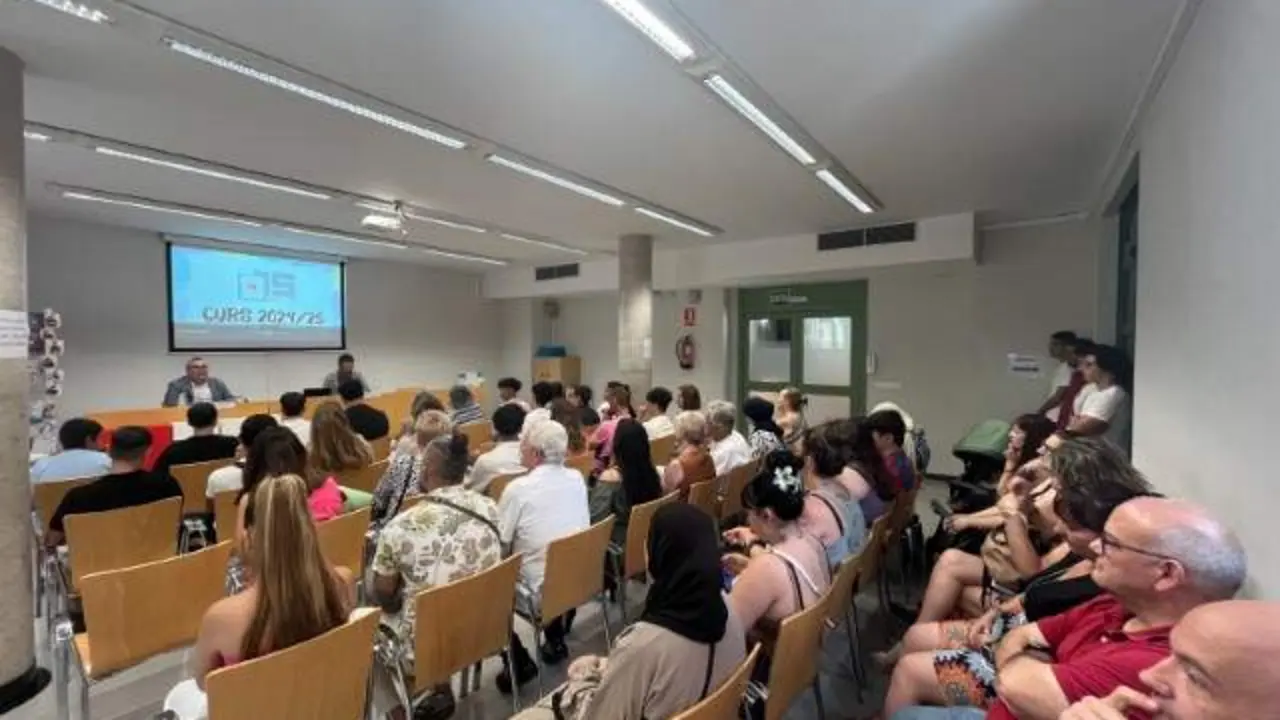
The conference brings together members of SERC, the faculty of Escola Los Castellets, the center’s AFA, and other education professionals. This composition allows for putting the views of the educational administration, the school, and the families at the same table.
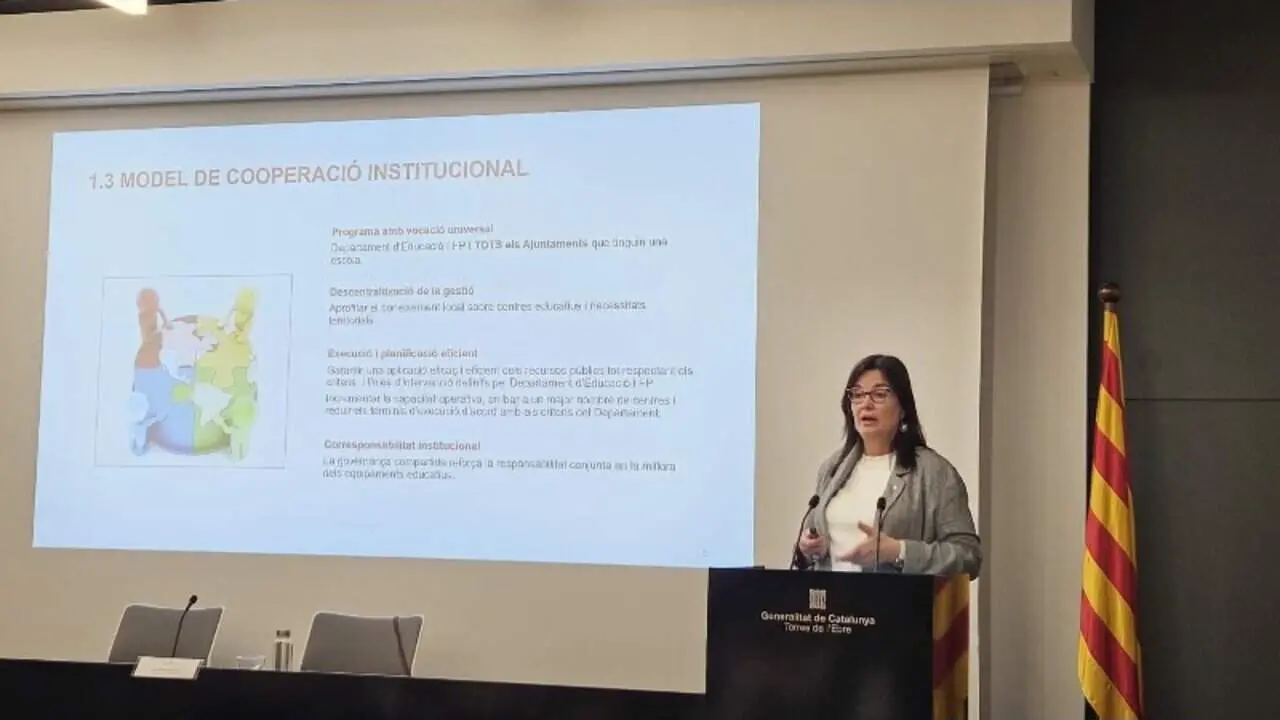
The institutional opening is led by the mayor of La Fatarella, Jordi Rius; the Councillor for Education, Isabel Bernal; the director of Territorial Services of Education and Vocational Training in Terres de l’Ebre, Mario González; the coordinator of the Secretariat of Rural Schools of Catalonia, Toni Comajoan; and the director of Escola Los Castellets, Àlex Iniesta.
The presence of municipal and educational representatives reflects a simple reality: rural schools do not depend on a single office. They need coordination among administration, town council, professionals, and families. When one of these pieces fails, the village notices quickly.
A school linked to the territory and with a future
How does the rural school contribute to territorial cohesion?
The rural school helps maintain local educational services in small municipalities and areas with dispersed populations. This function has an effect that goes beyond the classrooms: it strengthens bonds among families, gives life to the village, and maintains an educational community connected to its environment.
The model is also based on organizational flexibility, intergenerational relationships, and network work through the Rural School Zones. The ZERs allow various centers to share a cooperative structure without losing direct connection with each municipality.
Therefore, talking about 0-3 is not only about an educational stage. It is about how the first relationships with the school are built and what opportunities families find when living far from large centers. Distance, in this case, should not become a penalty.
What proposal emerges from the conference?
The meeting ends with sharing conclusions and a fellowship lunch. The program does not establish a single answer but opens a space to collect experiences and propose improvements for rural nurseries in Catalonia.
The director of Territorial Services of Education and Vocational Training, Mario González, argues that the rural school is an essential public service and a tool to guarantee equal educational opportunities, social cohesion, and balanced territorial development, especially in rural counties like Terra Alta.
The question, then, is not whether the rural school is small. It is. The question is whether this size should be read as a weakness or as an ability to better know each child and family. At Los Castellets, the answer seems clear: small does not mean lesser.
Escola Los Castellets, the rural 0-3 stage, and the ZER network form a single conversation about the future of villages. The Fatarella conference sets numbers and speeches aside — here what matters is proximity — and reminds us that a rooted public school can support much more than learning: it can sustain community, opportunities, and life in the territory. And in a small village, that is no small detail.
Frequently Asked Questions
- Where is the meeting on rural 0-3 held?
- The meeting is held at Escola Los Castellets de la Fatarella, a center of the ZER Terra Alta Nord.
- Who organizes the educational conference?
- It is organized by the Secretariat of Rural Schools of Catalonia and Escola Los Castellets.
- What is the main topic of the conference?
- The conference analyzes the role of the first cycle of early childhood education, from 0 to 3 years, within the rural school.
- What does the school of the three “P”s mean?
- The formula advocates for a small, village-based, and public school, linked to families and the territory.
Consulted sources
- Govern.cat – Information about the conference and participants
Article source: Govern.cat