How Chinese drones fly indefinitely with remote recharging
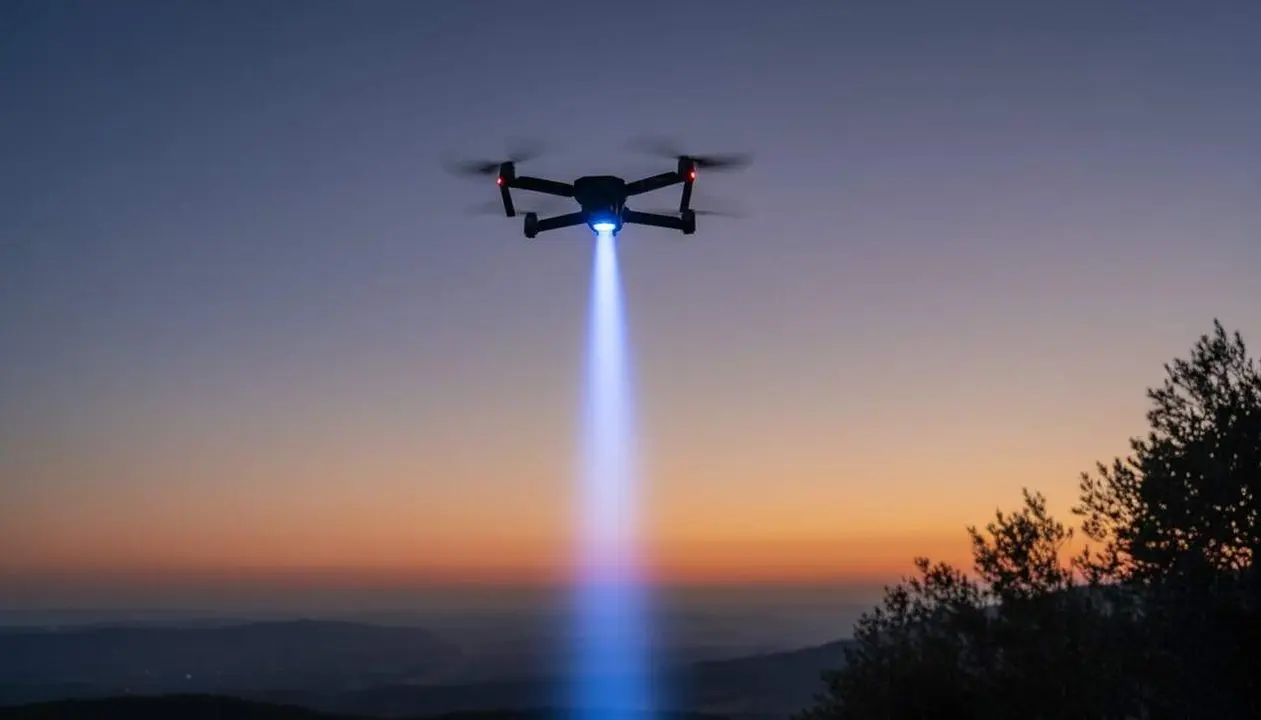

Source: The experiment has been detailed by the South China Morning Post and published in the journal Aeronautical Science & Technology, where it is described as a ground system sending microwave beams to antennas installed on the underside of drones to charge them continuously.
The system works by transmitting wireless energy through an electromagnetic link. This eliminates the need for drones to land or change batteries, something that until now limited their autonomy. The energy captured by the drones' antennas is converted into electricity to power the motors and systems, allowing the aircraft to maintain flight indefinitely, at least in theory.
How microwave charging works
The basic technical principle
A ground transmitter generates microwave beams directed at the drone. This, equipped with special antennas that capture these waves, converts the electromagnetic energy into useful electricity for the battery and motors.
Current advantages and limitations
The great advantage is charging on the move, which prevents the drone from having to pause the mission to recharge. This reduces strategic risks, especially in military environments, where a stopped drone is an easy target.
But not everything is perfect: current technology only utilizes 5% of the emitted energy, making the system inefficient and requiring maintaining a direct line of sight between the transmitter and the drone.
What uses can drones with this technology have
Military and strategic applications
Researchers propose aerial vehicles capable of acting as launch and refueling platforms simultaneously, like naval aircraft carriers but in the air. This could change war tactics and aerial surveillance.
Civil and commercial uses
In sectors such as visual shows or environmental monitoring, this technology could allow longer performances or constant coverage without interruptions for recharging.
How to test and verify if a drone can recharge remotely
Steps to identify wireless charging technology
- Consult the technical information of the drone model to see if it is equipped with antennas for microwave charging.
- Observe if the drone can remain in flight without stopping for longer periods than usual.
- Look for experimental data or prototypes supported by ground charging via electromagnetic beams.
Signs indicating the technology is still experimental
- Flights limited to a few hours but without the need to land.
- Strict maintenance of a direct line of sight between base and drone.
- Low energy efficiency, with high consumption in microwave emission.
| Platform / Version | Affected | Solution / Status |
|---|---|---|
| Xidian Drone (prototype) | Yes | Experimental microwave charging |
| Standard commercial drone | No | Conventional battery charging |
To advance this technology, it is necessary to improve efficiency and find solutions to maintain the microwave beam stable despite atmospheric conditions and drone movement.
Wireless charging on the move could revolutionize the drone world, but there is still a way to go before making it practical on a large scale.
Some recommendations to maintain equipment and ensure proper functioning are updating the drone’s firmware, periodically checking the condition of the antennas, and protecting the system from possible electromagnetic interference. It is also advisable to activate safety systems that prevent overcharges and monitor battery usage to detect anomalies.
If a drone shows unusual behavior such as interruptions in energy reception, sudden altitude loss, or overheating beyond normal, it is better to stop its use and consult a specialized technician to avoid greater damage.
The reality is that this innovation opens the door to a new era in aerial mobility, where drones could fly for hours or days, almost without limits.