How a smartwatch becomes the gear lever of an old Audi
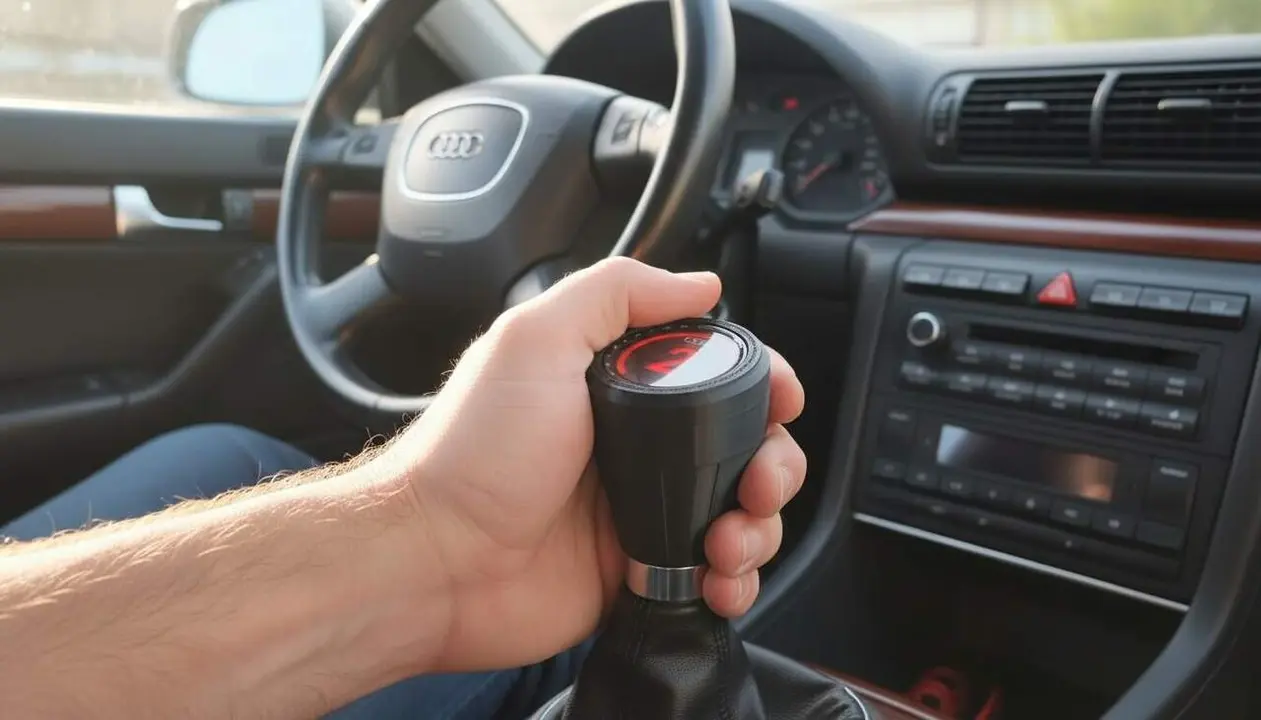

Imagine transforming an everyday object like a smartwatch into a key tool inside your classic car. That is exactly what a programmer from Brazil did with a first-generation Audi A4, creating an invention that surprises with its creativity and functionality.
The project not only changed the character of a car over twenty years old but also showed how technology can adapt to ergonomics and safety, all with a 3D printer and clever programming. Want to know how he managed to turn a TicWatch into the gear shift lever of his Audi and even into a multimedia remote control?
The transformation of the knob into a digital gear shift lever
How the conversion was made with a TicWatch
The starting point was an old TicWatch, which the creator fitted in place of the original knob using a 3D-printed piece. This homemade solution not only fit perfectly but also allowed the use of the watch’s sensors, such as the gyroscope and accelerometer, to record the tilt and position of the lever.
With this information, the programmer developed a WearOS app that interpreted the movements to determine which gear the car was in: first, second, third, fourth, fifth, or reverse. An idea as simple as it was innovative with great ergonomic potential.
The technical challenges and the dynamic calibration solution
The main difficulty was that the sensor could get confused on slopes, especially uphill, altering the detected angle and thus incorrectly identifying the engaged gear. But the programmer did not give up: he implemented dynamic calibration to adjust the values in real time and ensure an accurate reading in any situation.
This adjustment was key for the system to work with a B5-era Audi, a car with communication protocols not prepared for current technology, making relying on the smartwatch’s own sensor the best option.
Turning the lever into a multimedia remote control
From basic functionality to tactile interaction
When people saw the project, many thought it only provided an aesthetic change, with little practical value. But the creator wanted to go much further and live-coded on Twitch a program that turned the smartwatch into a touch remote to control Spotify.
With this development, the lever stopped being just a gear selector to become a device that allowed pausing or playing music and changing tracks with simple touch gestures, without needing to take your eyes off the road. A safety and comfort plus that no driver had imagined until now.
Safe control and practicality at the wheel
The touch controls located in such an accessible place as the gear knob offer very comfortable access to multimedia functions. But it should be remembered that safe driving means keeping both hands on the wheel, except when shifting gears.
Furthermore, any excessive pressure on this electronic knob can affect the gearbox gears, so it should be used gently to avoid premature wear. This precaution ensures that the innovation does not compromise the car’s durability.
Homemade innovations that inspire the automotive industry
The value of a DIY project in the technology of the future
What may seem like a simple whim of a programmer with free time becomes a clear example of how enthusiasts and inventors can bring fresh ideas to the motor industry. Turning a smartwatch into a gear shift and multimedia remote opens the door to new ways of understanding the interaction between driver and vehicle.
The combination of accessible tools—a 3D printer, programming, and a smart watch—shows that innovation does not always come from big laboratories but often from creative minds looking to solve everyday problems.
Possible applications and future evolution
Even manufacturers like Audi could take note of this experiment to develop more ergonomic, safe, and personalized systems. The idea of controlling vehicle functions from a device located on the gear lever, integrating touch gestures, could be the key to more comfortable and technologically advanced driving.
In this sense, seeing how an old car can adopt current technologies without major modifications is a demonstration of how innovation can be accessible and effective, with a touch of creativity and ingenuity.
The Brazilian programmer’s project is not only a tribute to the passion for the automobile but also an impetus to rethink how we interact with our vehicles. Who knows? Perhaps in the not-too-distant future, this type of integration will be part of everyday life on the road.
The reality is that the combination of technology and imagination can change the way we see even the most classic cars, making them more useful and adapted to current needs.