7 essential tips to make the best quick and tasty homemade tomato sauce

Making a high-quality homemade tomato sauce is possible in under 45 minutes while maintaining an intense and aromatic flavor. The key lies in controlling the texture and cooking so the result is a thick sauce, with sweet notes and a fresh aroma that makes any dish shine.
The ripe tomato season is ideal for preparing this traditional sauce that combines artisanal technology, such as firmly squeezing the tomato to remove excess water, and culinary techniques that maximize flavor, like sautéing the onion and garlic separately to preserve the richest nuances.
Why does firmly squeezing the tomato improve the sauce?
What difference does squeezing the tomato before cooking make?
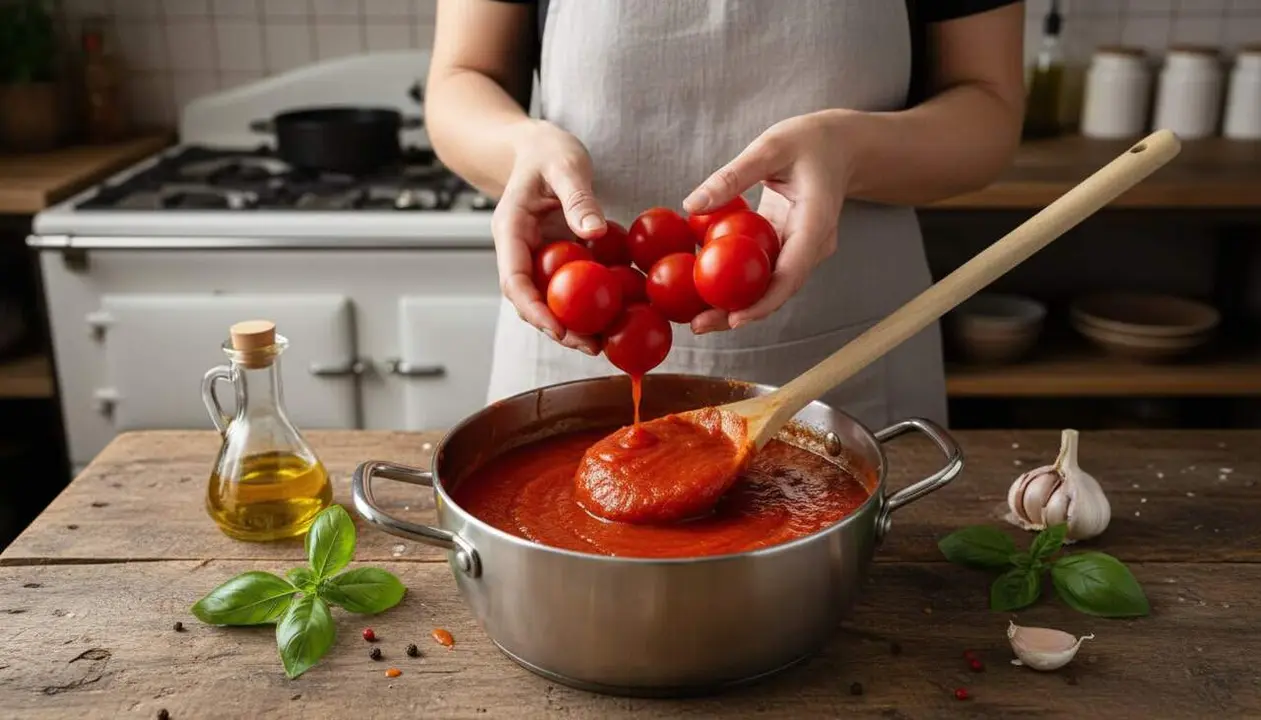
Squeezing the tomatoes to remove the water from the gelatinous cavities where the seeds are located reduces cooking time by up to 30%, preventing the sauce from boiling too much and losing delicate volatile aromas. This allows the natural sugar to concentrate without diluting or bittering the flavor.
How does the removed water affect texture and flavor?
When less water evaporates during cooking, the sauce maintains a smoother texture and a fresher, more balanced taste profile. Also, tomato water is not a residue: it is an aromatic liquid rich in glutamate, perfect for use in gazpachos, vinaigrettes, or as a liquid base in other dishes.
The secret to an intense sauté: sauté the onion and garlic separately
Why not sauté the onion with the tomato?
Sautéing the onion and garlic separately prevents the onion from losing its toasted nuances, which provide depth and a characteristic caramelized flavor. Incorporating these ingredients when the sauce has already reduced the water ensures a more balanced integration of aromas.
Which technique improves the intensity of the sauté?
Cooking the onion and garlic over low heat for 15-20 minutes until they begin to brown, before adding them to the sauce, preserves aromatic compounds that would be lost if cooked together with the tomato. This multiplies the complexity of the final flavor.
Ingredients and process for the perfect tomato sauce
- 2 kg of ripe tomatoes
- 300 g of onion (white or red)
- 1 clove of garlic
- 2 tablespoons of extra virgin olive oil
- Salt to taste
- Sugar to taste
- 1/2 green pepper (optional)
- Aromatic herbs (parsley, chives, basil, thyme) to taste
Detailed steps for a sauce with intact texture and aroma
- 1. Wash and cut the tomatoes in half, squeeze them by hand over a bowl to collect the water and seeds. Reserve this liquid.
- 2. Cut the tomato flesh into small cubes, with skin. A finer cut will facilitate a more homogeneous texture.
- 3. Put the cubes in a tall pot without oil, over low heat. Stir occasionally to prevent sticking.
- 4. When the tomato starts releasing liquid, raise to medium heat and stir often for 20-30 minutes until the sauce thickens and loses its watery appearance.
- 5. Meanwhile, sauté the chopped onion, garlic, and pepper separately with the oil over low heat for 15-20 minutes until they begin to brown.
- 6. When the sauce has reduced all the water, add the sauté, salt, and a little sugar if needed. Cook 5 more minutes to integrate the flavors.
- 7. For a smoother texture, blend with a powerful blender and add the aromatic herbs off the heat to preserve their fresh aroma.
Which tomatoes work best for the sauce?
Which tomato variety is most suitable?
Pear tomatoes, like San Marzano or Roma, are ideal for their low water content, few seeds, and firm flesh that offers great yield. However, cherry tomatoes bring sweetness and very concentrated aroma, although they require more preparation time.
How does the degree of ripeness influence?
A very ripe tomato offers more sugar and aromatic nuances, essential elements for a tasty sauce. On the other hand, varieties like raf or bull’s heart, with much water, are less efficient and make the sauce more expensive.
For these reasons, the best Tomato for sauce is one with a balance between optimal ripening and fleshy texture.
Final tips and uses for tomato liquid
How to preserve and make use of the sauce?
Stored in a jar covered with a layer of oil, the sauce lasts 5-6 days in the refrigerator. Frozen in portions, it can keep up to a year. If made in large quantities, sterilizing the jars with a 30-minute bain-marie is recommended for long-term preservation.
What applications does tomato water have?
Tomato water, rich in natural glutamate, is a versatile ingredient for use in emulsified vinaigrettes with oil and vinegar, as a base for gazpachos, or to enrich cooking water for rice, pasta, or stews, adding a unique aromatic intensity.
Freezing the water in ice cube trays facilitates later use without losing properties. This smart use prevents wasting a key element highly valued in traditional and avant-garde gastronomy.
Making tomato sauce with these tricks transforms a simple ingredient into a key element of the kitchen with a perfect balance between intense flavor, texture, and speed. Using the liquid and respecting textures are keys to achieving a sauce that captivates.
By the way, you can try with a perfectly dressed tomato to accompany this sauce and complete the menu with freshness and character.