Boris Cherny reveals: in 3 years programmers will multiply by 100
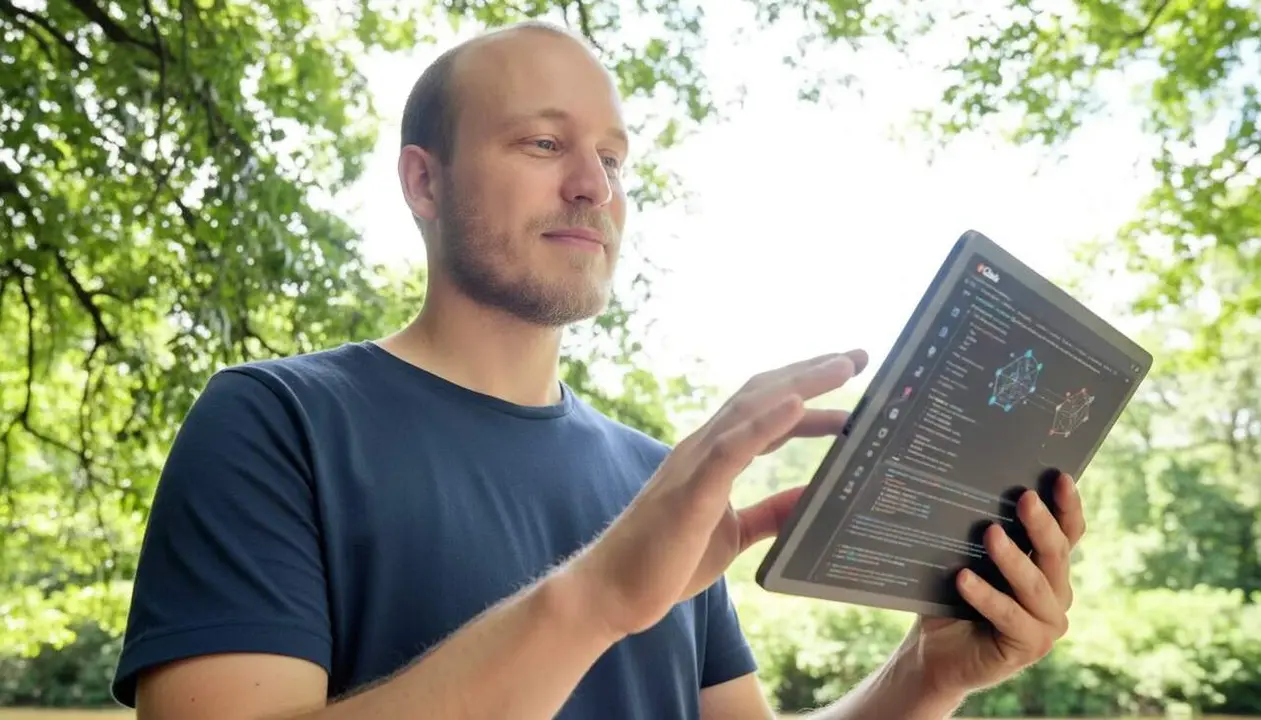

Boris Cherny, creator of Claude Code, claims that in just three years the number of people programming will multiply by 100. This surprising prediction arises after he himself spent six months without writing a single line of code manually.
Many fear that artificial intelligence will eliminate programming jobs, but Cherny bets on a completely different scenario: a massive explosion of developers using AI to create software.
The radical change in programming: what does it mean for the reader?
Understanding this transformation is key for anyone working or wanting to get into the programming world. Cherny’s prediction not only suggests a change in the number of programmers but also in how this profession is conceived, opening the door to many more people.
How has developers’ work changed with AI?
Since assistants like Claude appeared, Cherny does not write code manually. AI generates 100% of the code under his name, showing that intellectual effort is now concentrated on directing these tools rather than programming line by line.
Why won’t programmers be reduced but multiplied?
The key lies in accessibility. Programming no longer requires extensive and technical learning; AI allows anyone to “build” software by asking and instructing the assistant. This opens the profession to a much wider audience.
Boris Cherny’s prediction: Programmers X100 or a new era?
This idea is especially relevant for those interested in technology, work, and the future job market. The concept of a “Programmers X100” could radically transform the labor market and the software industry.
What does the concept "Programmers X10" imply and how might it evolve?
Currently, the trend is to increase programmers’ productivity with AI up to 10 times. This leads to smaller but more efficient teams, raising concerns about job losses.
How could a "Programmers X100" be achieved?
Cherny envisions that instead of decreasing, the number of people interacting with code will skyrocket. This is because the entry barrier will fall and many more “builders” will use AI agents to develop software.
How will the industry and developer profiles change?
For professionals and sector aspirants, this change means adapting to a new role and accepting that the traditional concept of “software engineer” might disappear.
What will happen to the software engineer title?
Cherny believes this title will blur and be replaced by profiles closer to the figure of the "builder," who uses AI tools instead of mastering code manually.
What are the risks and opportunities of this change?
This new paradigm makes programming accessible to more people but also poses adaptation and training challenges to maintain quality and innovation in software development.
| Aspect | Before | With AI |
|---|---|---|
| Programmer role | Write code manually | Direct and configure AI agents |
| Number of professionals | About 20.8 million (2025) | Could reach 2.08 billion (2030, forecast) |
| Mix of disciplines | Deep technical specialization | Integration with other areas and tools |
| Learning | Long and complex | Accessible and AI-assisted |
The revolution Cherny anticipates may seem overwhelming, but it also opens a world of possibilities for those willing to learn and adapt.
2030 could be the year when programming stops being exclusive and becomes a common skill, thanks to artificial intelligence.
The reality is that programming will not disappear, but radically transform, and with it, the professional profile that accompanies it.