The key to making your pasta taste like an amazing sea breeze
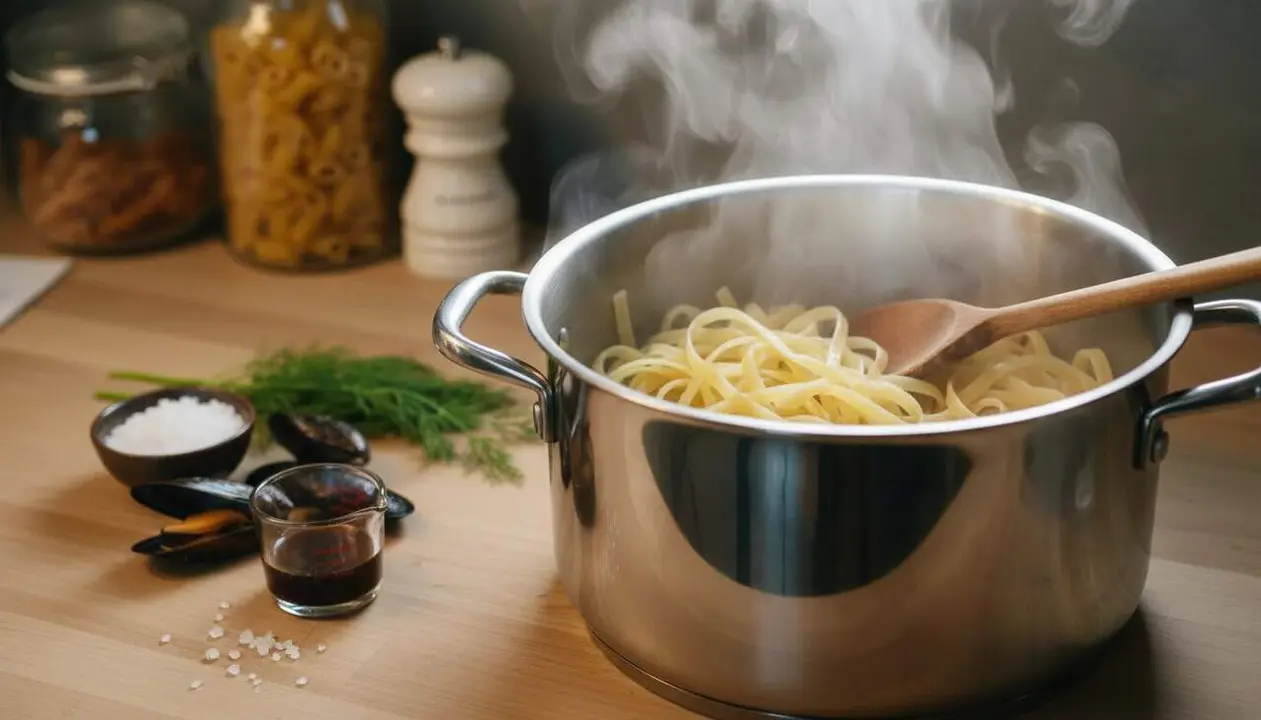

A common scene in many kitchens: boiling pasta and waiting for it to come out perfect. But, what happens when the pasta has no flavor? It is not always the sauce’s fault, nor the type of pasta we choose.
The difference between a bland dish and one that makes you close your eyes with pleasure can lie in a seemingly minimal detail: the water in which we boil it. And not just any water, but one that has a very special taste.
The key is that the water tastes like the sea
⏱️ Cooking time: depending on the type of pasta
🔥 Calories: variable depending on sauce
👨🍳 Difficulty: easy
Why is seawater essential?
The reality is that the water in which we boil pasta must have a salt level similar to seawater. It is not a myth, but a trick that professional chefs use to achieve a more intense and balanced flavor. By adding this salty point to the water, the pasta absorbs the salt from the water during cooking, gaining flavor from the inside and not just on the outside.
If, on the other hand, we use bland water, the pasta will be flat, forcing us to rely entirely on the sauce to add flavor. This mistake is like a sentence: once cooked, the pasta no longer absorbs salt, so it cannot be corrected afterward.
The right amount of salt
It is not about randomly adding salt, but doing it in moderation. The recommended proportion is about 10 grams of salt per liter of water. This roughly corresponds to the taste equivalent of seawater, no more and no less, to achieve an intense flavor without overdoing it. It is also key to add the salt when the water is already boiling so it dissolves well and does not alter the cooking.
Many people prefer to add little salt for fear of it being too salty, but the reality is that most of the salt remains in the water and is not fully transferred to the pasta. Therefore, salting correctly is a gesture that makes a difference and avoids having to add more salt afterward, which can unbalance the dish.
Tips for pasta with authentic flavor
The details that make the difference
Some Italian chefs explain that this trick is one of the most basic and, at the same time, most forgotten secrets. Well-salted pasta has a better texture, cooks more evenly, and integrates better with any sauce. Without this point, pasta cannot shine as it should. Therefore, the key is neither in the sauce nor in the type of pasta, but in the cooking water.
In fact, this technique is a perfect example of the key to understanding that small details in the kitchen are as important as the final result.
Practical application and common mistakes
A common mistake is not measuring the salt or expecting the pasta to take on flavor after boiling. The water must have taste because the pasta absorbs flavor while it cooks. Otherwise, the dish will be bland and unappealing. It is also important to avoid the water evaporating too much, as the salt concentration can vary and alter the result.
Professionals recommend using sea salt and, when possible, mineral water with a saline profile similar to the sea. This ensures optimal cooking and intense flavor. It is curious that something as simple as the salt in the water is a key deposit for a good pasta dish.
Impact on gastronomy and final recommendations
The Italian tradition and the value of flavor
Italian chefs insist that this detail is one of the foundations of their cuisine, where pasta is often the star of the dish. Ensuring that the water has the right amount of salt prevents overusing the sauce or other additives, maintaining authentic and balanced flavor.
According to gastronomic expert Luigi Bianchi (2024), “pasta must not only have texture but flavor, and that starts with the water. It is a basic gesture that many do not value but makes all the difference.”
Tips for your next pasta
- Measure 10 grams of salt per liter of water to achieve the ideal taste.
- Add the salt once the water is boiling, so as not to delay cooking.
- Use sea salt to add minerals and natural flavor.
- Avoid adding salt after boiling, the pasta will no longer absorb it.
- Don’t confuse it with the sauce, the base of the flavor lies in the water.
With these tips, your pasta will gain prominence and stop being a simple side dish to become a dish with its own personality.
The key that separates an ordinary dish from a culinary experience is in the water, a lesson worth remembering every time we put the pasta to boil.
The reality is that this simple and often forgotten detail completely transforms the final result, and this is confirmed by both professional chefs and lifelong pasta lovers.