Schreiber, Mercadona supplier, avoids compensation rulings
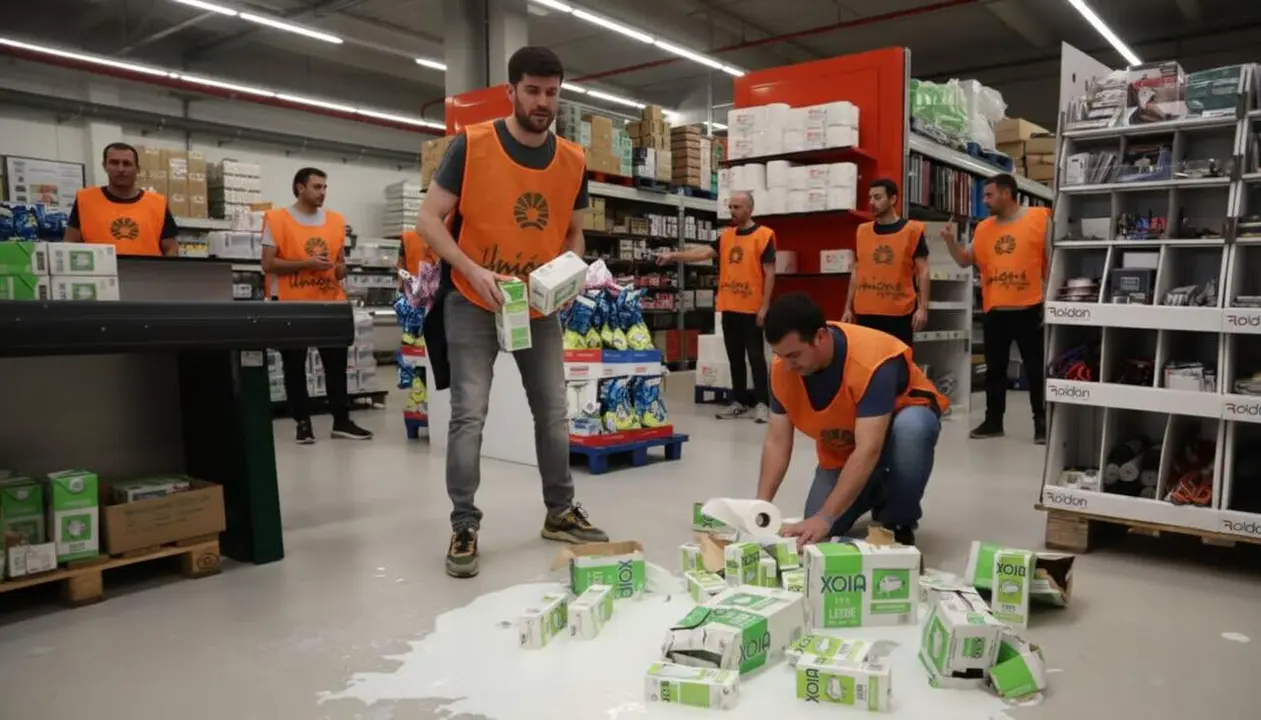

Spanish livestock farmers are fed up and have made it very clear. Amid a price crisis, they not only complain about the market but have staged forceful protests, like when they threw Clun brand milk into commercial establishments, denouncing practices they consider abusive. But not all players in the dairy sector come out equally damaged from this judicial turmoil.
The latest rulings issued by the Provincial Court of Barcelona regarding the milk cartel have caused a business earthquake. How is it possible that giants like Nestlé, Danone, or Capsa have received convictions and compensations, while Schreiber, the main producer of yogurts for Mercadona’s private label, remains outside the harshest spotlight? The answer is neither as simple nor as cold as it seems.
The delicate situation of the dairy cartel in Spain
The ruling that shook the sector clearly recognizes that companies like Lactalis, Nestlé, Capsa, and Danone must compensate farmers with an additional 2% over the price paid for milk, as reparation for the underpayment caused by the cartel that operated between 2000 and 2013. This measure seeks to repair the economic damage suffered by producers, who for years saw their bargaining power weakened by collusive practices.
But here comes the most unusual part: Schreiber Foods, despite being sanctioned by the National Commission of Markets and Competition (CNMC), has avoided these compensations. The judges of section 15 acquitted the American company in several claims, arguing that there is not enough evidence that its participation in information exchanges actually affected the market or the prices paid to farmers.
Schreiber’s limited participation in the cartel
Schreiber’s case stands out due to its very punctual intervention, with a single information exchange about farmers in September 2013. It is not attributed contacts relating to prices or commercial strategies, nor continuous participation like that seen in the rest of the sanctioned companies. This has been key to the exoneration in terms of compensations.
According to the Provincial Court, there is no record that Schreiber made commercial decisions that impacted the price paid to producers, meaning its action does not have enough weight to be integrated into the collusive dynamic that harmed the rest of the farmers and that does affect other manufacturers such as Lactalis or Danone.
Judicial discrepancies and the dissenting vote
Despite this acquittal, there is no unanimity. Judge Luis Rodríguez Vega presented a dissenting vote, arguing that the sanction on Schreiber should be maintained because its participation, although punctual, is part of an overall plan to control the raw milk supply market. According to him, these information exchanges allowed companies to reduce competition and limit the farmers’ bargaining capacity.
This opinion questions the distinction made between Schreiber and the other companies and raises a more critical view regarding the North American multinational’s involvement in the cartel. The tension between judicial perspectives reflects the complexity of a case that still impacts the sector and public perception.
Economic impact and comparative sanctions
Fines and compensations: an evident contrast
The figures of the sanctions imposed by Competition are eloquent. While Schreiber paid less than one million euros, other giants like Capsa received fines up to 21 million, and Danone 20.2 million, with Lactalis close to 22 million euros. These amounts reflect the seriousness with which each company’s participation in the cartel was assessed.
The difference in sanctions affects not only corporate image but also conditions their financial situation and relationships with suppliers and consumers. Schreiber, as the main manufacturer for Mercadona, maintains a prominent position in the dairy market despite the widespread scandal.
The dairy sector context and price negotiation
The situation has highlighted the vulnerability of farmers and their limited power before large multinationals. The sanctioned practices, such as information exchanges, have allowed price manipulation and reduced real competition, directly harming the final producer.
These practices open an ongoing debate about the regulation and control of the dairy market in Spain, as well as the need to guarantee true competition that protects both producers and the final consumer. In this regard, the role of companies like Schreiber must also be considered in a context where it has been shown that not all companies had the same degree of responsibility.
Perspectives and future challenges for the dairy sector
Repercussions for Mercadona and the supply chain
Schreiber, as a key supplier for Mercadona, remains in a privileged position despite its passage through the cartel. This situation raises questions about how commercial relationships are managed and whether these circumstances could affect consumer perception of Mercadona’s private label.
The American manufacturer operates three factories in Spain and invoices more than one billion euros annually, evidencing its strength and strategic importance within the dairy value chain. This position also implies a challenge in terms of corporate ethics and transparency in situations like this.
Regulation and control: the way forward
The milk cartel case has highlighted the need for stricter oversight and regulation to prevent collusive practices that harm the sector. The distinction made by the Court between companies with more or less active participation reflects the complexity of intervening in a market where ties between companies are close.
As a curiosity, the role of the supplier in this scheme must also be analyzed, as supply chains in the food sector often hide more than meets the eye.
Ultimately, the dairy sector faces a future with new regulatory and commercial challenges that will shape the relationship between producers, manufacturers, and distributors.
The reality is that the rulings on the milk cartel have made it clear that not all companies played the same role, and that Schreiber, the visible face of Hacendado yogurts, has managed to avoid the worst part of the convictions despite being in the same boat as giants like Nestlé or Danone.
The debate about responsibilities and compensations remains open, and the sector is awaiting possible future moves that could generate new economic and legal repercussions.
Finally, the situation highlights the importance of fair and transparent competition to ensure the sustainability of a key sector for Spain’s economy and food culture.
The milk cartel and its consequences serve as a warning that, while some suppliers have suffered exemplary sanctions, others such as Schreiber have come out unscathed, which remains a point of controversy and debate in the current dairy landscape.
To conclude, we must not forget that managing these situations has a direct impact on consumer confidence and the perception of the products we find on our tables every day.
Thus, it is clear that the sector will have to continue evolving to respond to demands for transparency and fairness required by both farmers and the general public.
One final note: the interrelation with other markets and suppliers, as in the case of the fourth supplier, shows that the food chain is in constant movement and that oversight must be persistent and up to date.