Three wind farms with 36 wind turbines will affect Terra Alta and Ribera d’Ebre: what changes?
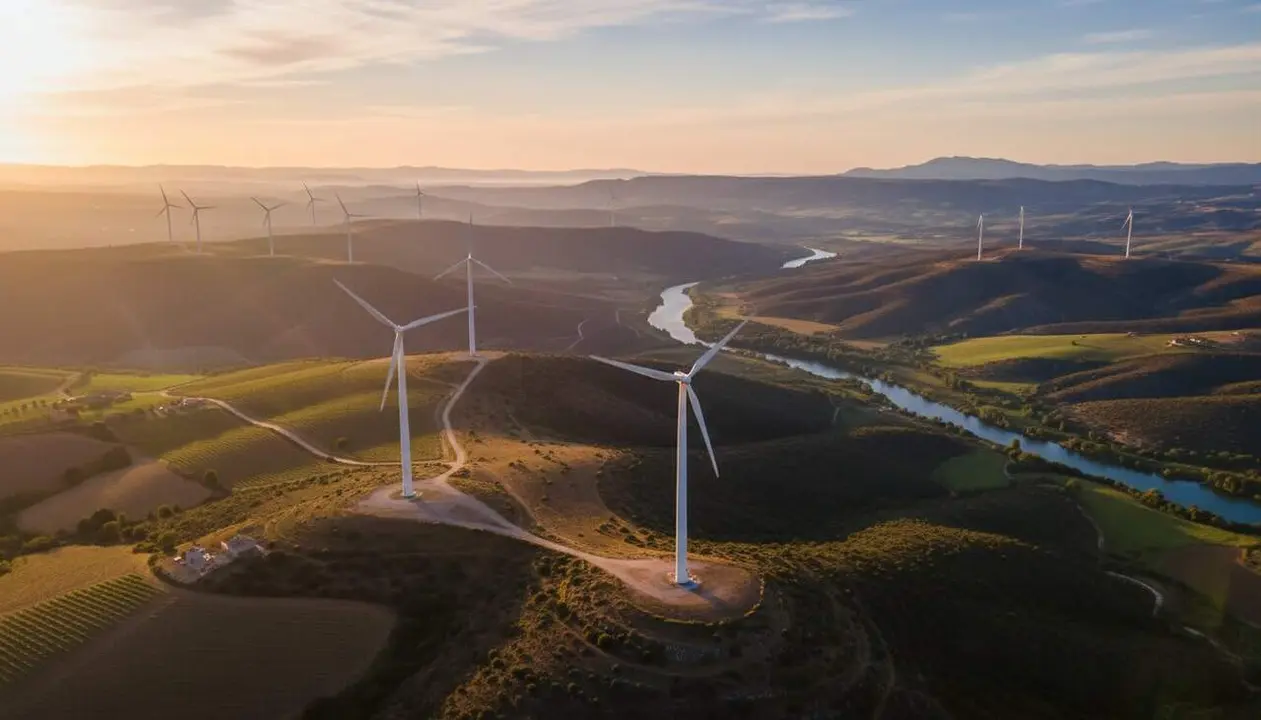

The environmental impact statement and prior authorization for three wind farms in Teruel and the evacuation infrastructure that will cross Terra Alta and Ribera d’Ebre are now open to public consultation. This Green Capital Development project includes 36 wind turbines distributed between Matarranya and Bajo Aragón-Caspe, with a total power exceeding 230 MW.
But what does this mean for the residents of the region? And how will it affect the landscape and daily life of the municipalities involved? Let’s take a closer look.
The wind farms and their infrastructure
Which wind farms will be installed and exactly where?
The project includes three wind farms:
- Paucali, with 9 wind turbines and 63 MW in Maella (Bajo Aragón-Caspe).
- Arlo, with 10 turbines and 65.25 MW in Valldesgorfa, Massalió and Valljunquera (Matarranya).
- Céfiro, with 17 turbines and 110.9 MW also in Massalió and Valljunquera.
Additionally, an energy evacuation infrastructure will connect these farms, passing through municipalities in Terra Alta (Caseres, Batea, Vilalba dels Arcs, la Pobla de Massaluca and Fatarella) and Ribera d’Ebre (Flix and Ascó).
How will these installations affect the territory and its inhabitants?
The 36 wind turbines will significantly change the rural landscape, especially in areas with an agricultural and winemaking tradition. Moreover, the construction and maintenance of the evacuation infrastructure will involve machinery traffic and possible temporary disruptions to local mobility.
But what about renewable energy generation? This can represent an economic boost and employment opportunity, although it will inevitably generate debate among residents about the environmental and visual impact.
Administrative procedure and citizen participation
What does the public consultation imply for residents and town halls?
Public consultation is a key phase for citizens and local administrations to learn about, examine, and submit objections regarding the project and its environmental assessment.
The detailed reports on impact, possible corrective measures, and the layout of the evacuation lines are documents now available for consultation before the project is finally approved.
How can objections be submitted and what are the expectations?
Interested town halls and citizens have a set period to register their opinions and observations. This process may lead to modifications in the original project or strengthening of environmental protection measures.
Public debate and local opinion will be decisive for more consensual and balanced development.
Energy context and impact on the region
Why is this project relevant for Terra Alta and Ribera d’Ebre?
With a growing commitment to renewable energies, these wind farms will provide more than 230 MW, a significant figure that will contribute to reducing emissions and increase the green production capacity in the region.
The municipalities involved are also located in a strategic energy distribution zone, which could generate economic synergies and local development.
What challenges and opportunities arise for the territory?
The main challenge is to reconcile the energy transition with the preservation of natural and cultural heritage, as well as with traditional activities such as agriculture.
This requires careful planning and attentive listening to the voice of the territory, to avoid conflicts and make the renewable impulse also a social benefit.
| Wind farm | Wind turbines | Power (MW) | Location |
|---|---|---|---|
| Paucali | 9 | 63 | Maella (Bajo Aragón-Caspe) |
| Arlo | 10 | 65.25 | Valldesgorfa, Massalió and Valljunquera (Matarranya) |
| Céfiro | 17 | 110.9 | Massalió and Valljunquera (Matarranya) |
The reality is that these energy projects are yet another example of how the territory adapts to new global needs, but also of the tension they generate at a local level. Residents, the environment, and politics will have to find a middle ground where sustainability is real and visible.
Source of the article: Editorial | ACN