Neither driver nor cabin: this is the electric truck that carries up to 7 tons more than a normal one
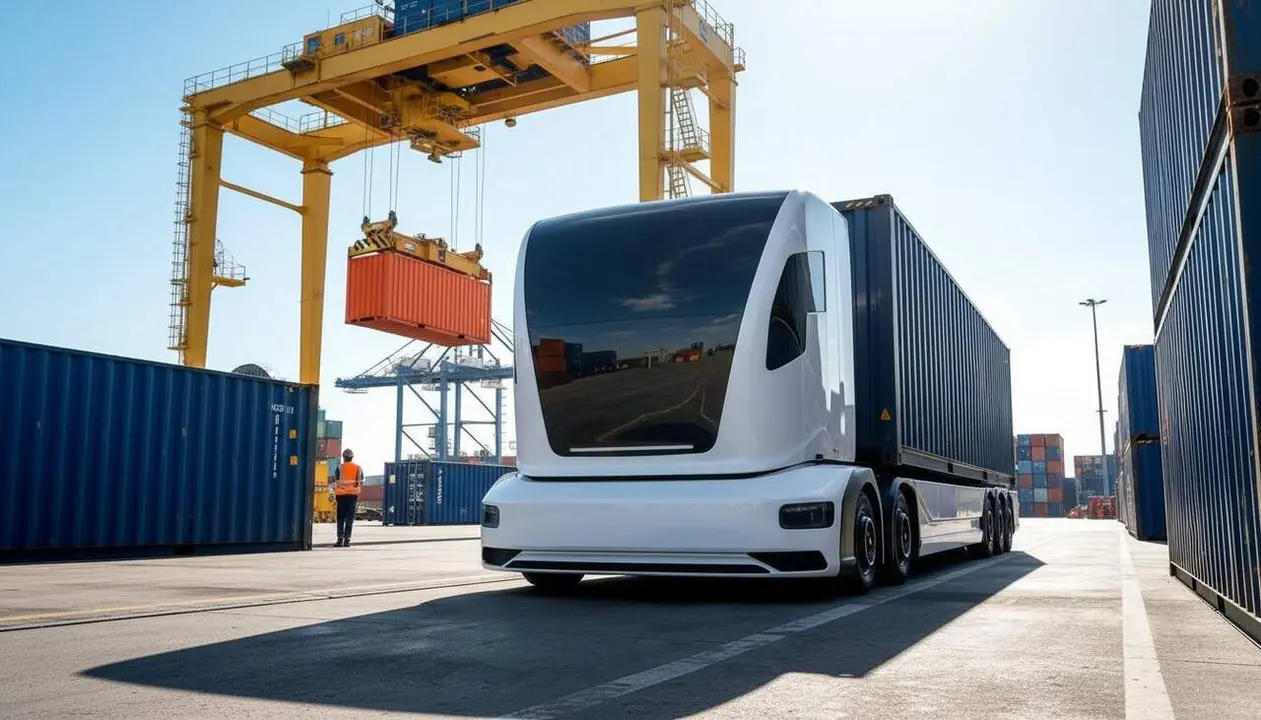

Voltempo is developing an autonomous Smart Trailer that dispenses with the cabin. The concept is built as a continuous rigid structure designed for predictable logistics routes and to take advantage of the space previously occupied by the driver.
The project is being developed in the United Kingdom within the eFREIGHT Autonomous consortium and is based on UK legislation, especially the Automated Vehicles Act 2024, which facilitates controlled testing. (This phase has public support for testing.)
Finally, we come to what many were expecting: according to the project managers, the Smart Trailer could offer **between 5 and 7 additional tons of payload** and **approximately 15% more volume** compared to a conventional articulated truck. This has been achieved by combining the elimination of the cabin with a rigid structure that reduces the total weight to **10–12 tons**, compared to the nearly **19 tons** of a standard electric articulated truck.
What is Voltempo’s Smart Trailer and Why Does It Matter
⛽ Combined consumption: Data not published
💶 Starting price: No official figures
🏁 0–100 km/h: Not applicable
What exactly is it?
It is an integral, electric, autonomous trailer, designed as a rigid 15.6-meter platform where the cargo occupies the space usually reserved for the cabin. The aim is to optimize volume and mass per route.
Why does it matter to fleet managers?
For operational profitability: more useful mass and more driverless service hours increase productivity. This can translate into substantial operational savings for repetitive routes and long logistics corridors.
Capacity, Weight, and Actual Savings
What are the gains in capacity and weight?
The project calculates an increase of 5–7 tons of payload and a volume increase close to 15%. These changes mainly come from the elimination of the cabin and construction as a continuous chassis with materials and design intended for the electric vehicle.
How does this affect fleet costs?
Voltempo estimates operational cost reductions between 30% and 45%, resulting from better vehicle utilization, less labor need, and energy efficiency. The project document also points to a possible decrease in operating costs by up to **37%** in specific scenarios.
Contextualizing these figures is important: a 30–45% saving can transform regional routes but depends on real factors: type of cargo, distances, energy cost, and local regulations. This is not magic; it is a combination of more useful capacity and 24/7 operation on predictable routes.
Schedule, Testing, and Regulatory Challenges
When and where will it be tested?
The first prototype is being built in the United Kingdom and is expected to be completed by September 2027 to conduct tests on a prepared route in South Wales. If all goes well, production could begin at the end of 2027 with deliveries throughout 2028.
What obstacles remain to be solved?
There are technical, operational, and legal challenges: validation of autonomous driving on public roads, safety regulations for cab-less units, and terminal adaptations to accept this type of trailer. The Automated Vehicles Act 2024 opens the door, but the transition requires real-world tests and clear regulations.
How will this affect usual routes?
Initially, it will serve predictable and repetitive routes, such as connections between ports, rail terminals, and logistics centers. These routes are ideal because they limit variability and facilitate operational integration.
What have the key figures said?
Michael Boxwell, Corporate Development Director at Voltempo, stated that technology, legislation, and commercial interest are evolving rapidly and position the UK to lead testing and adoption. Source: project statements. (A statement that underlines commercial optimism.)
| Aspect | Detail |
|---|---|
| Length | 15.6 meters |
| Volume increase | Around 15% |
| Payload increase | 5–7 tons |
| Estimated vehicle weight | 10–12 tonnes |
Why follow this closely? Because these changes can reconfigure routes and logistics infrastructure: terminals, loading platforms, and regulations. Companies operating on regular corridors should evaluate how this type of vehicle might fit into their operations.
Own perspective: as a journalist following transport transformation, this is not just a technological project; it is an opportunity for fleets to rethink the relationship between volume, weight, and operating hours. Repetitive routes are the terrain where the Smart Trailer makes the most sense and where the numbers could come true.
Practical challenges to consider:
- Terminal compatibility: doors and ramps adapted to an integral trailer.
- Maintenance and training: technical team for electrical and autonomous systems.
- Operational safety: protocols for failures and human interventions.
All this happens without complete guarantees; the pilot in the UK will be the ultimate test.
If these tests confirm the numbers, the consequence for logistics is clear: more cargo per vehicle and lower cost per ton transported, but with the operational adaptation that this requires.
Voltempo, Smart Trailer, and the Automated Vehicles Act appear as pillars of a transformation that can start with short, controlled routes and then extend. Now the ball is in the field of real testing and practical regulation.
The reality is that this concept can change how we think about fleets. If the Smart Trailer delivers, companies wanting to optimize costs and capacity will have to adapt terminals, processes, and route planning. The test in the UK will be key to knowing if these advantages translate into real operations.
Frequently Asked Questions
- How much additional cargo does Voltempo’s Smart Trailer gain?
- According to the project, the Smart Trailer can carry between 5 and 7 additional tons of payload and increase volume by approximately 15%.
- Where will the prototype tests take place?
- The first prototype is being built in the United Kingdom and it is planned to test it on a prepared route in South Wales before considering open road tests.
- When could it enter production?
- If the schedules are met, production could start at the end of 2027 and the first deliveries would arrive throughout 2028, according to project forecasts.