Six patents and key data: BYD prepares the big leap to solid-state batteries in 2027
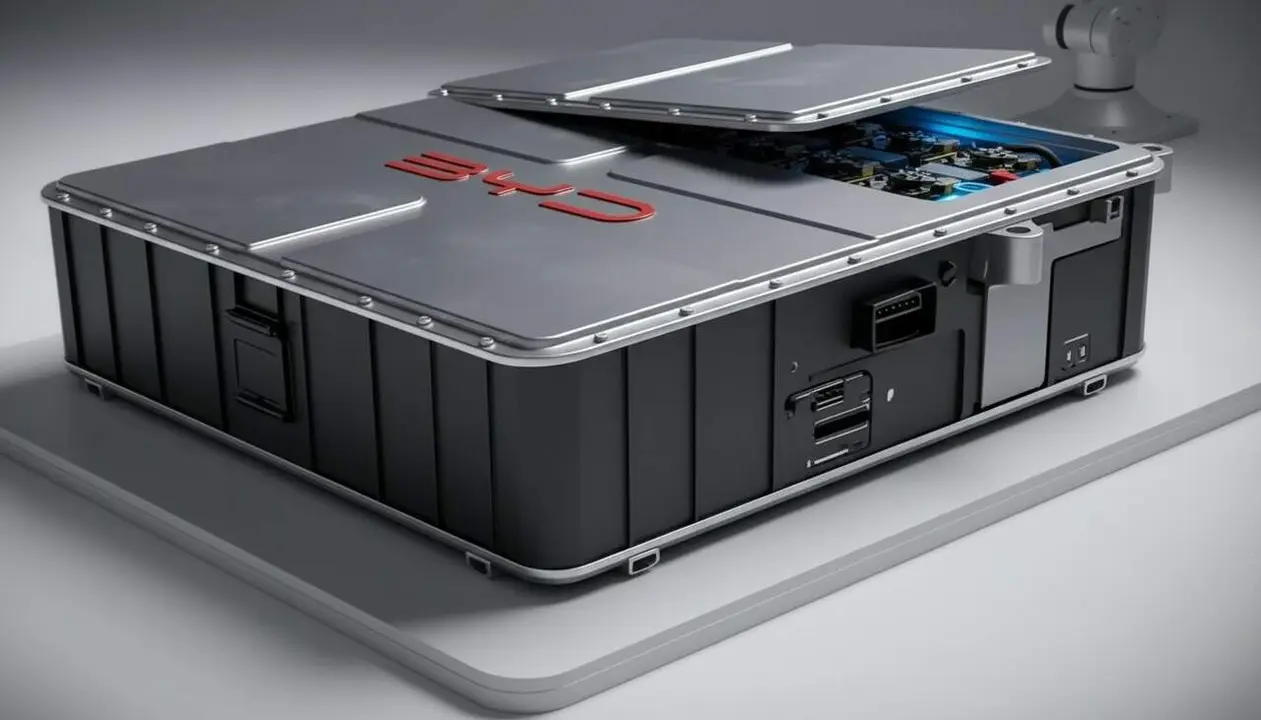

BYD announces a first limited production of solid-state batteries for 2027. This technology, still in the experimental phase, promises to revolutionize electric cars with more range and safety, although the path is still long.
Recent BYD patents show progress in controlling the behavior of solid materials within the battery, one of the biggest current challenges. But what exactly does this mean for the electric cars we will drive?
BYD and the race towards solid-state batteries
This topic is particularly interesting because BYD is one of the major global players in electric vehicle manufacturing, and this move could mark a before and after in the industry. The ability to produce batteries with solid electrolytes, safer and more durable, would put the Chinese brand a step ahead of other giants.
How do solid-state batteries improve on conventional ones?
Current batteries use liquid electrolytes that facilitate ion movement but have safety and durability limitations. BYD works with solid halide and sulfur electrolytes that, despite being more difficult to manufacture, offer lower fire risk and better thermal stability. This translates into more reliable vehicles with a longer lifespan.
What obstacles does BYD face to make this technology a reality?
The main challenge is maintaining a stable bond between the cathode and the solid electrolyte to avoid performance losses. The patents filed by BYD reflect innovative solutions such as dividing the cathode into different zones and using intermediate ion-conducting layers. All this to control internal resistance and prevent premature degradation.
From chemistry to industrial production control
It is crucial to understand that having an advanced chemical formula is not enough; mass-scale manufacturing is another world. For this reason, BYD has registered patents that address the distribution of wetting agents and the standardization of an indicator called “Re” to measure the bond between solid materials.
Why does this “Re” indicator matter?
“Re” measures the percentage of the perimeter of active particles covered by the solid electrolyte. Maintaining at least 60% of this contact is key to ensuring power and durability. Without this control, the battery quickly loses capacity, a problem BYD wants to avoid at all costs.
How does this development affect the local and global industry?
For drivers and manufacturers in Catalonia and Spain, this evolution could mean more competitive electric cars, with better performance and fewer maintenance issues. But it also implies that the energy transition will be a slow and complex process, with 2027 as its first serious trial.
2027, the key year for the first tests
BYD’s first solid batteries will not arrive mass-produced, but as prototypes in camouflaged vehicles. This caution shows that the technology is not yet ready for the general public, but the intention to start testing in 2027 indicates that the future is close.
When will we see cars with solid-state batteries on the road?
Experts like Robin Zeng, president of CATL, believe mass production will unlikely happen before 2030, due to technical complexity and costs. Thus, despite BYD’s efforts, widespread adoption is still a long-distance race.
How does BYD position itself compared to other manufacturers?
BYD seems to be moving faster than others, with six patents showing the company is already thinking about industrial manufacturing rather than laboratory experiments. This could mean a competitive advantage in a market that is still seeking to stabilize this technology.
The reality is that BYD is opening the door to a radical change in batteries for electric cars, but the battle for the technology to be reliable, safe, and affordable continues. 2027 will be a key year to see whether this dream becomes reality or if there is still a long way to go.
Frequently Asked Questions
- What are solid-state batteries and why are they important?
- They are batteries that replace the liquid electrolyte with a solid one, offering more safety, durability, and better performance in electric cars.
- When will BYD start testing these batteries?
- BYD plans to start limited testing with solid-state batteries in 2027 in camouflaged test vehicles.
- When will we be able to buy cars with this technology?
- Mass production is expected not to arrive before 2030 due to complexity and industrial costs.