31,686 Emergencies at hospitals and CAP during the eclipse: the Camp de Tarragona and Terres de l'Ebre lead
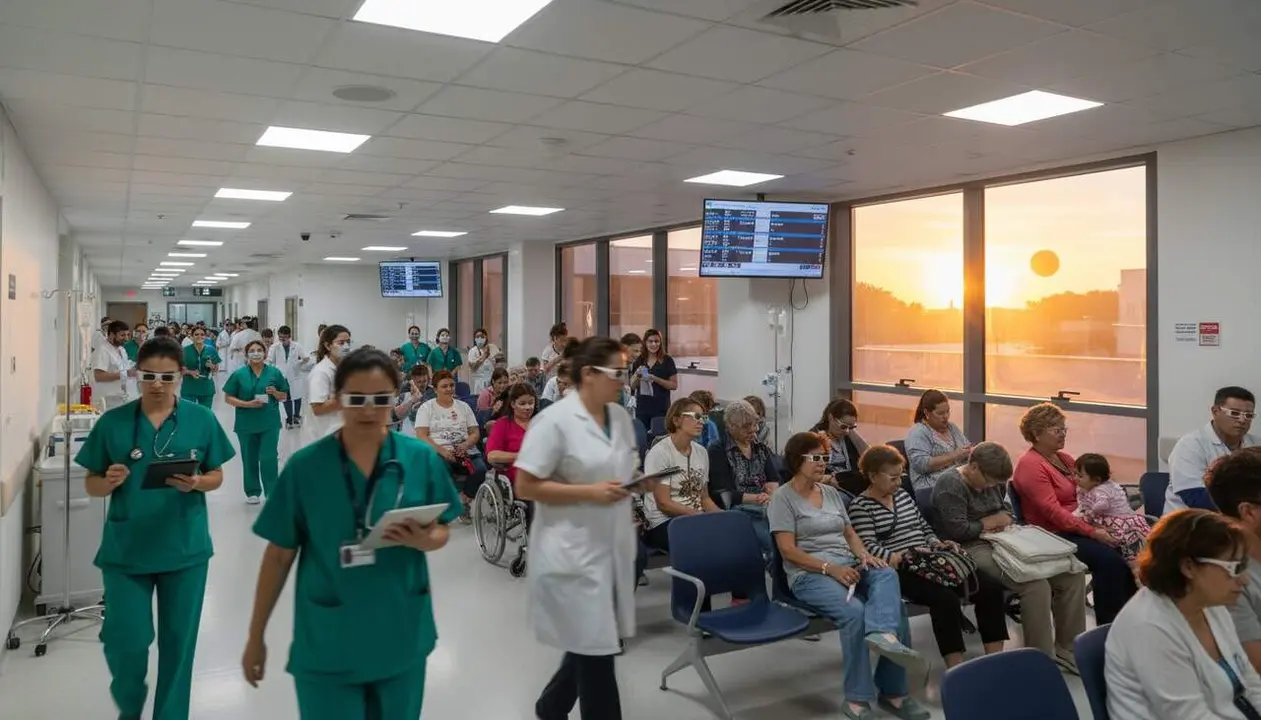

On August 12 and 13, hospitals and CAP centers in Catalonia attended 31,686 emergencies, 4.5% more than the previous week. This increase was concentrated mainly in the Camp de Tarragona and Terres de l'Ebre areas, which experienced an exceptional rise.
The mobility generated by the solar eclipse tested the healthcare capacity of the centers, which had to adapt to respond to the increased demand without losing their usual operation.
The reality of the healthcare surge in Tarragona and Terres de l'Ebre
What exactly happened in these counties?
The Camp de Tarragona saw emergency cases grow from 1,581 to 2,097 the day after the eclipse, a jump of 32.6%. Terres de l'Ebre recorded an increase of 51.9%, rising from 416 to 632. The following day, these figures remained above those of the previous week, with an alarming +61.1% in Camp de Tarragona and +51.8% in Ebre.
Why this difference compared to other territories?
The Department of Health had anticipated high mobility towards these areas and activated specific territorial reinforcements. Other regions, such as Barcelona, Girona, or Lleida, only experienced more moderate variations, although Barcelona Metropolitan North exceeded 8,800 emergencies, a significant figure.
Types of emergencies and healthcare impact during the eclipse
Which types of cases stood out during the deployment?
Traumas were the most numerous the day after the eclipse, with 400 hospital emergencies and 46 in primary care, representing 3.35% and 0.9% of all consultations respectively. Ophthalmological emergencies were 238 in hospitals and 165 in primary care devices, 2% and 3.2% of the total respectively.
How was this increase managed without collapsing the system?
Thanks to the special deployment activated, the ordinary functioning of health services was guaranteed and the slight rise was addressed. The deployment of territorial reinforcements was key to avoiding saturation and maintaining care quality.
Context and comparative data by health regions
How does the situation compare to the previous week?
In Catalonia as a whole, 31,686 emergencies were recorded on August 12 and 13, compared to 30,352 on August 5 and 6, a global increase of 4.5%. Barcelona Metropolitan North went from 7,375 to 8,861 emergencies, Barcelona city from 5,981 to 6,323, and Girona from 3,194 to 3,454.
Which territories showed stability or slight decreases?
Some regions such as Penedès and Central Catalonia maintained similar or slightly lower figures. Penedès recorded 1,969 emergencies versus 1,971 the previous week, and Central Catalonia 1,389 versus 1,458, indicating that the impact was not homogeneous.
| Health Region | Emergencies Aug 12-13 | Emergencies Aug 5-6 | Variation (%) |
|---|---|---|---|
| Camp de Tarragona | 4,565 | 3,113 | +46.7% |
| Terres de l'Ebre | 1,265 | 833 | +51.9% |
| Barcelona Metropolitan North | 8,861 | 7,375 | +20.1% |
| Barcelona city | 6,323 | 5,981 | +5.7% |
| Girona | 3,454 | 3,194 | +8.1% |
| Penedès | 1,969 | 1,971 | -0.1% |
| Lleida | 1,480 | 1,463 | +1.2% |
| Central Catalonia | 1,389 | 1,458 | -4.7% |
| Alt Pirineu and Aran | 641 | 573 | +11.9% |
Source of the article: Editorial / Catalan News Agency