What are the white circles of the DGT for on dangerous curves?
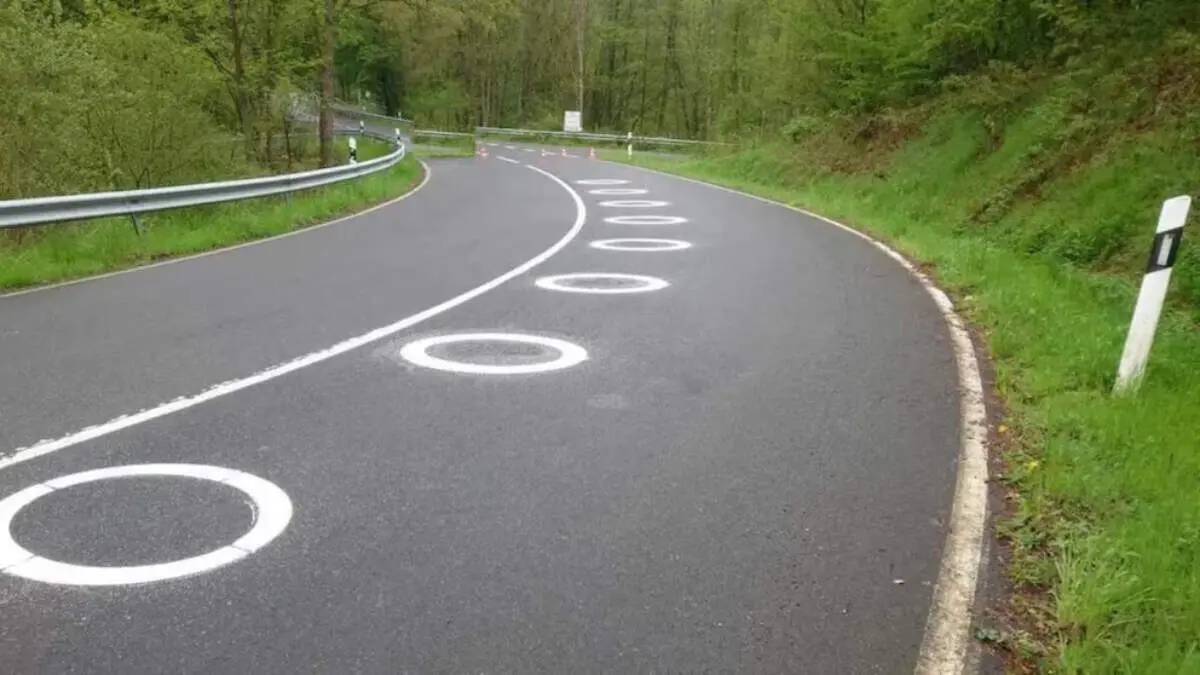

The DGT has started painting white circles on the most dangerous curves to protect motorcyclists, a particularly vulnerable group. This initiative aims to prevent motorcyclists from getting too close to the opposite lane and reduce serious accidents.
Many fatal motorcycle accidents occur on curves, and the DGT is taking action with new road markings to warn of these risks and save lives.
The DGT’s white circles: What they are and why they matter
What do the white circles painted on the road mean?
These white circles are placed near the center line and before or during dangerous curves. They indicate to motorcyclists that they must stay on the other side of the circles to avoid invading the opposite lane. This reduces the risk of head-on collisions, the main cause of serious accidents on curves.
How does this new signage improve safety?
The marking not only defines the safe space to travel, but also alerts to other imminent dangers, such as changes in the road layout or slippery asphalt areas. This dual warning is vital for motorcyclists to anticipate and adapt their riding.
Context and previous tests: the Austrian example and results in Catalonia
How has this measure worked in other countries?
Austria has been experimenting with similar markings since 2016 and, according to the KFV organization, the white circles have achieved an 80% reduction in motorcycle accidents. A spectacular result that inspired the DGT to implement it here.
What experience has Catalonia had before the DGT?
The Catalan Traffic Service conducted a pilot test in 2024 following the Austrian model. The initial signs showed an improvement in safety and better awareness among motorcyclists regarding distance and risk in curves.
Why are motorcyclists the main focus and what you need to know
What is the current state of motorcycle accidents in Spain?
The figures are worrying: in 2025, 304 motorcyclist deaths were recorded, the highest number in a decade. The lack of physical protection and the risks on curves explain this vulnerability.
What has the DGT said about this new measure?
DGT sources explain that the white circles are a tool to reduce invasion of the opposite lane on curves, improving safety and accident prevention. Although a simple measure, its impact can be very large.
With these new markings, the DGT wants to change the way motorcyclists perceive curves and act directly on the main cause of accidents. The reality is that understanding and respecting this signage can save lives.
For motorcyclists and drivers in general, this innovation represents another step toward safer roads and more conscious driving. It is not just a paint mark on the asphalt, but a silent warning that can make the difference between returning home or a tragic ending.
Frequently Asked Questions
- Why has the DGT chosen to paint white circles on curves?
- To prevent motorcyclists from getting too close to the opposite lane and reduce accidents at high-risk points, such as dangerous curves.
- What results have been seen with this measure abroad?
- In Austria, the white circles have reduced motorcycle crashes by 80% since being implemented in 2016.
- How does this new signage affect motorcyclists?
- It forces them to ride separated from the opposite lane, preventing head-on collisions and alerting to other hazards on the road.