3 scenarios for Seat after Volkswagen's 2030 Future Plan: Cupra, Martorell, and 2029

Not officially decided: Volkswagen has approved a restructuring plan, but Seat spokespeople say the decision has not been made. This response is what those seeking certainty about the brand's future need.
Martorell and Cupra are at the center of the debate following the documentation prior to the council; there are rumors about the disappearance of the brand in 2029, but official information is still pending.
What does the 2030 Future Plan say for Seat and Cupra?
Why is this of interest to industry readers and Martorell workers? Because the 2030 Future Plan outlines decisions that could affect jobs, production lines, and the very industrial identity of a brand born decades ago.
What key points does the group’s document include?
The group estimates eliminating up to 50,000 jobs and indicates a 500,000-vehicle overcapacity in Europe, furthermore putting four German plants at risk.
Volkswagen explains that it is necessary to adapt personnel and production capabilities to face competition, especially due to the growth of electric vehicles and Chinese manufacturers.
How is this connected with the possible disappearance of Seat?
According to prior documentation and press information, the council considers the discontinuation of the Seat brand as a measure to reduce complexity and investment burden within the group.
Curious, isn’t it? Wirtschaftswoche published that the plan’s deadline is set at the end of 2029; this timeline is what has sparked speculation in Barcelona and Martorell.
What will happen in Martorell and production?
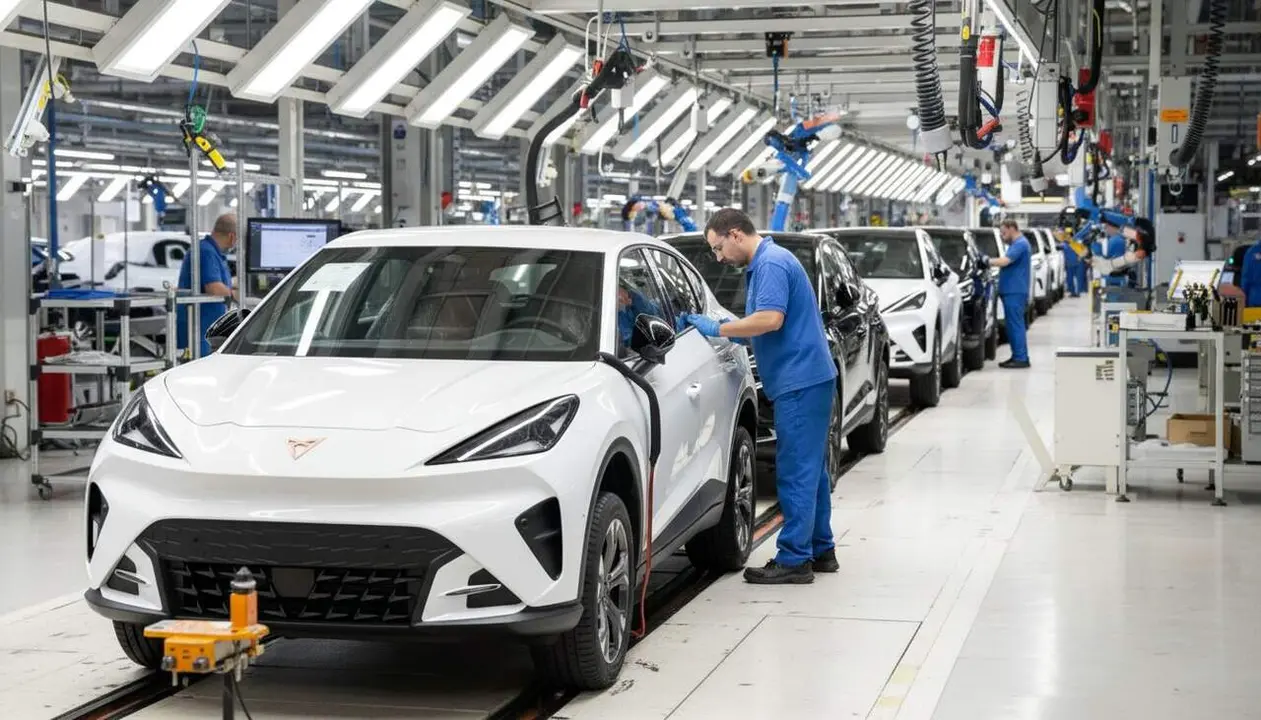
Why does this matter to the people of Martorell and buyers? Because Martorell is the plant that currently manufactures models for Cupra and its reuse or reassignment will affect employment and the local vehicle offer.
What have Seat’s spokespeople said?
Seat spokespeople have said the decision has not been made and that the global context has changed significantly, impacting the automotive sector.
This institutional tone seeks to buy time while Volkswagen defines the concept of sustainable and competitive production for European plants before June 2027.
Will Martorell become an exclusive Cupra factory?
Official information points to focusing the corporate structure on manufacturing Cupra, as Cupra vehicles are more profitable per unit according to the group’s documentation.
This means more expensive models and higher margins, but also concentration of risks: fewer brands, less diversity, less margin for local variants.
Scenarios and local consequences
Why is this section relevant for Catalan industrial policy and workers? Because Seat employs more than 15,000 people and is a key piece of the Catalan industry; any strategic change will impact staff and the local economy.
What scenarios are realistic according to the documentation?
We can summarize three scenarios: continuity with adaptations, transformation towards Cupra as a priority brand, or slow dissolution as a brand with transfer of assets and staff to other group brands.
Each option has different implications regarding investment, planned models (for example delays in renewals like the Ibiza), and the survival of proprietary brands.
Which European plants and timelines appear in the Plan?
The document points to four German plants at risk: Emden, Zwickau, Hannover, and Neckarsulm, and mentions staggered assignment studies between 2031 and 2034.
| Plant | Risk / observation |
|---|---|
| Emden | At risk; alternatives study |
| Zwickau | At risk; possible reassignment 2031–2034 |
| Hannover | At risk; will be studied |
| Neckarsulm | At risk; alternatives under study |
The table is not exhaustive, but useful for comparing risks.
Oliver Blume wants to use the program to prepare the company for Chinese competition and the electric transition, according to published information; this goal explains much of the pressure on brands like Seat.
But what is really happening with the brand? The answer is neither a black whale nor a honeymoon; it is business, numbers, and strategy.
Note for the critical reader: the decision about Seat’s disappearance appears in prior documentation and has circulated in specialized press, but there is no definitive order officially communicated by Seat.
Additional context: the group says there is a 500,000-vehicle production overcapacity in Europe and that a sustainable production concept will be developed before June 2027 for European plants.
Foreseeable impacts on the Spanish market include launch delays, model reassignments, and a bigger bet on Cupra within the group.
In summary: not everything is decided, but the pressure is real.
Final reflection: the decision about Seat combines industrial strategy and market pressures; Martorell, Cupra, and the 2030 Future Plan are protagonists of a chapter to be decided in scenarios and timelines still open. It is essential to closely follow official communications to gauge the real scope of restructurings.
The reality is that public information presents scenarios but does not offer a closed verdict: Seat, Cupra, and Volkswagen remain in play and the 2029 date is the backdrop that has put society and the local economy on alert.
Frequently Asked Questions
- Is Seat’s disappearance already confirmed by Volkswagen?
- No: documentation and the press have talked about a scenario with a 2029 date, but Seat states the decision has not been made.
- What will happen to the Martorell plant?
- According to information, Martorell could focus on manufacturing Cupra and high-margin models, but final plans will depend on the group’s reassignment studies.
- How many jobs are expected to be lost within the group?
- The group’s global plan talks about a potential reduction of around 50,000 jobs worldwide, according to published documentation.