20,000 tires buried in Maine: the method just tested by the University of Maine against mud and
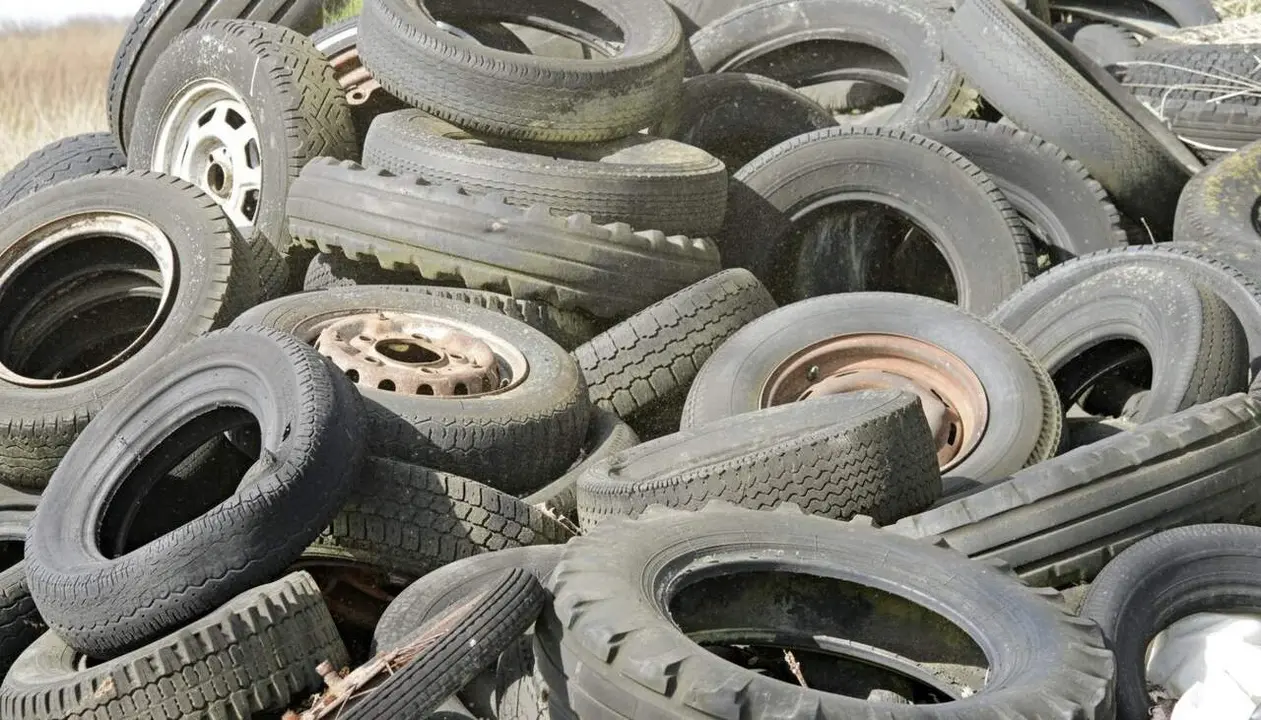

Engineers from the University of Maine have buried tires beneath Dingley Road in Richmond to reduce frost heave and mud. It is a practical intervention and—if it works—it could change how certain rural roads are maintained.
Dana Humphrey, a civil engineer at the University of Maine, leads the study and the team has installed sensors to monitor temperature and soil behavior during the winter (without showing all data yet). The project generates both local expectations and skepticism.
Details of the intervention on Dingley Road
Why does it matter to the reader? Because many rural roads suffer the same problem: frost heaves that crack the pavement and thaws that leave mud impassable. If this technique holds up, it could save maintenance costs and improve access in remote areas. Moreover, it applies directly to Richmond and similar areas in Maine.
How was the experiment carried out?
Quick answer: the team cut tires and placed them as a bed beneath the gravel on Dingley Road in Richmond.
Details: the tires were cut into pieces of 5 to 7.5 centimeters and spread along a section. The goal was to create a light and porous layer that acts as insulation and internal drainage. This arrangement reduces pressure on the soil and improves water flow, according to the project description.
What materials and measurements were used?
Quick answer: tire pieces (5–7.5 cm), layers of gravel, and a sensor network.
Details: several layers of gravel were placed above the tire layer to create a conventional surface. The team installed one hundred sensors to monitor temperatures at different points along the section during winter. (This information allows comparison between points with and without tires.)
Why the solution can reduce mud and frost heave
For local readers, the relevance is clear: better drainage and fewer frost heaves mean fewer closures and less costly repairs. The physical properties of rubber and the way it is placed are key to understanding the effect.
Do the tires act as insulation and drainage?
Short answer: yes; rubber is less dense than gravel and the voids favor drainage.
Explanation: the tire layer is lighter than gravel and exerts less pressure on the soil. This, combined with the spaces between fragments, improves water flow and provides some thermal insulation that may reduce the soil’s freezing depth. In other words: less ice at the base means less heave and less mud when thawing arrives.
How durable is it against traffic and time?
Short answer: the team is testing durability, including a trial on an asphalt section in North Yarmouth.
Explanation: beyond Dingley Road, researchers propose using tires as light fill in retaining walls and testing them under asphalt in North Yarmouth to assess how they withstand routine traffic and heavy vehicles. Durability is the main unknown, which is why tests include sensors and long-term observations.
Impact on waste and replicability
For the environmentally conscious reader and waste management concerns, this can be doubly interesting: infrastructure solution and waste reuse. The experiment addresses a specific problem in Maine and raises questions about replicating it elsewhere.
Does this method reduce tire accumulation in Maine?
Short answer: potentially yes; Maine discards approximately 1.2 million tires annually, and the study seeks an outlet for part of that waste.
Details: reusing tires as construction material may reduce accumulation in large dumps. Researchers specifically aim to cut down the 1.2 million tires yearly by offering a practical alternative for certain rural road sections and applications such as retaining walls.
Can this technique be applied in other geographic settings?
Short answer: it depends on soil type, traffic, and local regulations.
Explanation: the concept is versatile but not universal. Factors such as climate, subgrade type, and environmental regulations influence viability. The University of Maine team considers that if the Dingley Road trial and North Yarmouth tests are positive, a protocol can be designed to adapt the technique to other regions.
The University of Maine experiment, led by Dana Humphrey, combines engineering solutions and waste management to tackle a very local problem: rural roads that turn into mud tracks in winter. The project aims to address two needs: improving road resilience and reusing tires that currently end up in large dumps. The test has a clear control measure (sensors) and planned steps to validate durability (tests under asphalt in North Yarmouth). Now we must wait for concrete comparative data to know if the system is practicable on a large scale and cost-effective for municipalities and road managers (and if it really reduces maintenance expenses).
The reality is that this project combines technical solution and waste management; the key will be proving that 20,000 cut tires placed in a section like Dingley Road (Richmond) offer real benefits without unexpected costs. If results confirm the effect, it could open a way to reuse tires in other municipalities, especially in areas with frost and mud problems. Dana Humphrey and the University of Maine team continue gathering data and observations.
Frequently Asked Questions
- How many tires were used in the trial on Dingley Road?
- Approximately 20,000 tires cut into pieces were used to create the layer beneath the gravel in the tested section.
- Why were the tires cut into small pieces?
- The tires were cut into 5–7.5 cm pieces to create a porous layer that acts as insulation and facilitates drainage without excessively increasing the volume.
- Are the tires safe for the environment when buried like this?
- Researchers are examining this; the idea is to avoid accumulation in dumps and use tires in controlled applications, but possible emissions or leachates over the long term must be assessed.