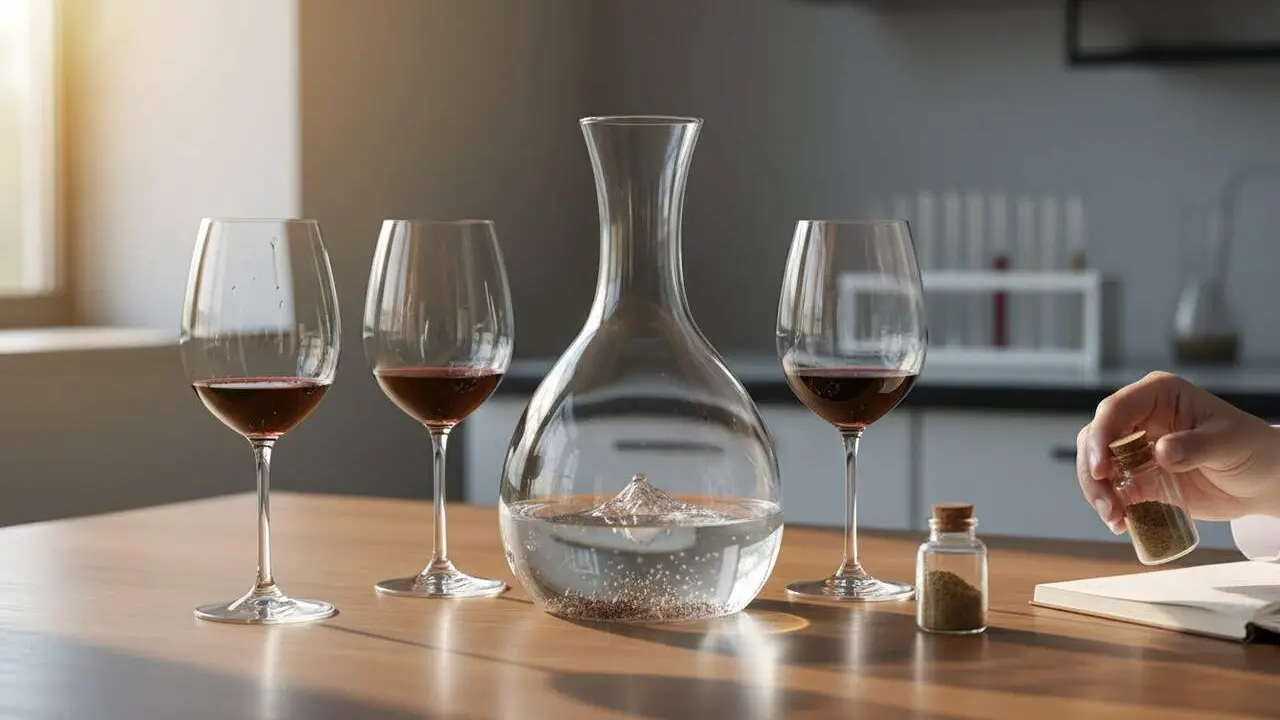
Sodium alginate reduces the risk of calcium tartrate settling in Tarragona wines by up to 32%

Sodium alginate is able to significantly reduce the formation of calcium tartrate precipitates, a growing problem in the wine sector. This discovery, involving the University Rovira i Virgili, opens the door to a natural and accessible solution for wineries of all sizes.
When you find sediment in a bottle of wine, the suspicion of a defect or poor quality is the most common reaction. But these precipitations are not only harmless, but their increase is due to changes in the grape composition caused by climate change. And this is where sodium alginate comes into play.
How does sodium alginate work to control sediment?
What is this natural polymer and why does it matter?
Sodium alginate, extracted from algae, is a polymer with gelling properties that, when dispersed in wine, forms a structure that traps the calcium ions responsible for calcium tartrate. Thus, by removing this compound, it prevents the crystals that cause sediment from forming.
Why is it better to capture calcium before crystals appear?
Eliminating calcium before bottling prevents sediment from appearing months or years later, a problem that is complicated to control with conventional methods. This strategy is more effective and keeps the wine’s properties intact.
Impact and results of the study with different types of wines
How does alginate affect wine quality?
The researchers applied the treatment to white, red, and even dealcoholized wines. Changes in physicochemical and organoleptic properties were minimal, with only slight color variations in some cases.
What are the key figures of the results?
The treatment reduced the calcium concentration by between 27% and 32% in conventional wines and between 10% and 21% in dealcoholized wines. This reduction translates into greatly improved stability against calcium tartrate formation.
What future does the use of alginate have in the wine sector?
Is it a viable alternative for local wineries?
The proposed technique is more accessible than current technologies, which require specialized equipment and are costly, especially for small wineries. This could transform how wines are protected against sediment.
When could this solution be widely applied?
Despite its great potential, the use of sodium alginate is not yet authorized in the winemaking process. More research is needed to ensure its efficacy and safety under various conditions before it is widely implemented.
This study shows that a natural compound like alginate can make a difference in the quality and stability of wine, especially in a region with as much tradition and passion for wines as Tarragona. The combination of science, nature, and tradition has never been so promising.
Ultimately, the future of sediment could be about to change thanks to a polymer we only knew until now for its relation to algae and the food industry. And this, surely, is news for everyone who loves wine and the land that produces it.
Sources consulted
- Universitat Rovira i Virgili – Study on the use of sodium alginate to reduce calcium tartrate in wines
- Foods. Sodium Alginate Decreases the Concentration of Calcium in Wines – Original scientific publication
Article source: Universitat Rovira i Virgili