The URV designs a strategy with Alginate to eliminate deposits in wine bottles
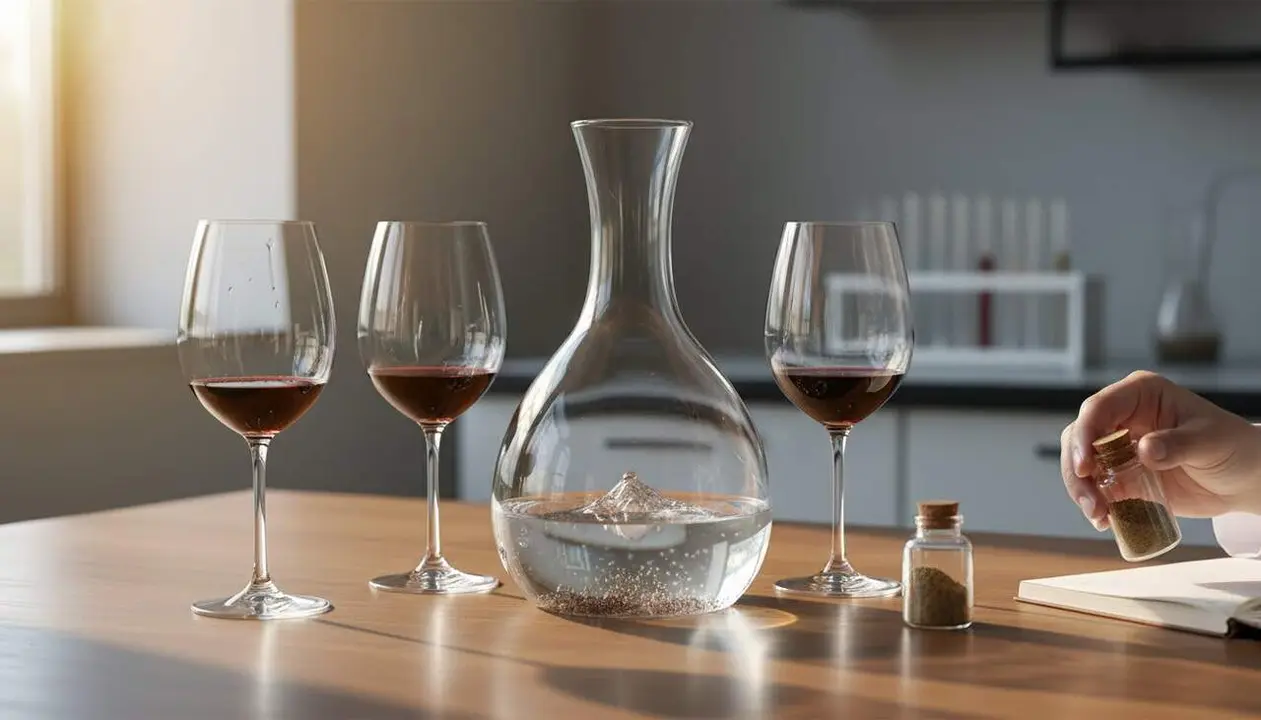

The URV has created a method that uses sodium alginate to remove the calcium that causes tartrate deposits in wine bottles. This natural innovation prevents the formation of deposits and does not alter the flavor or texture of the wine.
Many consumers are reluctant when they see sediment at the bottom of the bottle, even though it is harmless. This new technique promises to change the perception and the perceived quality of the product.
How does sodium alginate work to fight tartrate deposits?
What is sodium alginate and how does it act in wine?
Sodium alginate is a natural polymer extracted from algae. When added to wine, it creates a structure that captures calcium ions responsible for calcium tartrate, the main cause of tartrate deposits. Subsequently, this compound with the calcium remains retained and can be removed through conventional filtration.
What advantages does it have compared to other methods?
Unlike current technologies that require expensive and specialized equipment, the use of alginate is based on a natural compound and a simpler process. This can especially benefit small wineries, which until now have had difficulties applying effective solutions.
Impact on wineries and consumers in the province
How does this innovation affect local producers?
Wineries in the area could adopt this technique to minimize losses due to deposits and improve the image of their product. The reduction of tartrate deposits can open doors to more demanding markets and increase consumer confidence.
Why should consumers pay attention?
Seeing sediment in the wine often leads to distrust, even though it does not affect quality. With this strategy, the wine maintains all its organoleptic properties without the visual effect that scares many buyers, thus improving the consumption experience.
Limitations and future of the use of sodium alginate
When will this technique be applicable in the winemaking process?
Currently, the use of sodium alginate during winemaking is not officially authorized. Research is at an advanced stage, but regulatory approvals will be necessary for its commercial implementation.
What steps follow to consolidate this project?
Researchers are working to demonstrate that this method does not alter the properties of the wine and is safe. It will also be necessary to adapt it to different types of wineries and scale the technology without significantly increasing costs.
| Aspects | Sodium Alginate | Other Technologies |
|---|---|---|
| Cost | Low, no need for specialized equipment | High, require specific machinery |
| Safety | Natural and safe, extracted from algae | Depends on the method, may require chemical additives |
| Impact on wine | No significant alterations | May modify physicochemical characteristics |
| Ease of application | Easy integration into filtration processes | Can be complex and costly |
Source of the article: Editorial / Catalan News Agency