Antoni Brosa wins the award for best thesis in digital humanities 2025
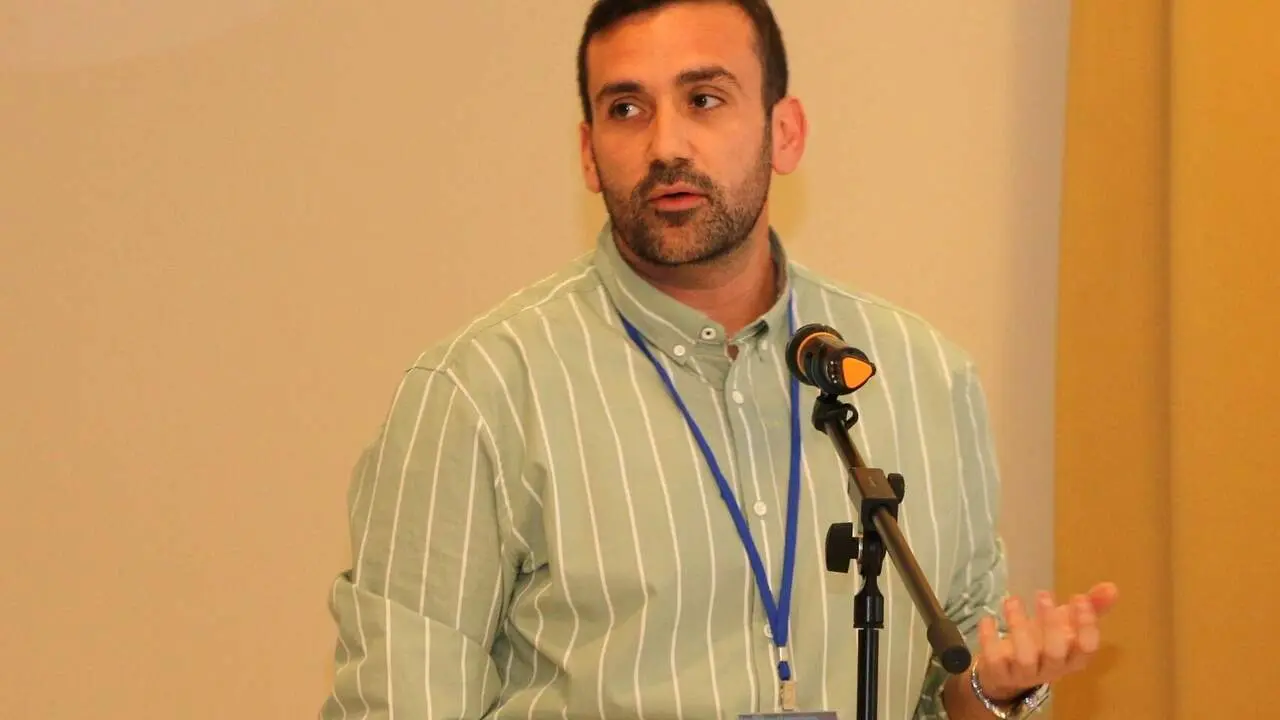

Antoni Brosa Rodríguez has made a mark at URV with his doctoral thesis, which has revolutionized the way linguistic universals and multilingual processing are understood.
This research, awarded the Prize for the Best Doctoral Thesis in Digital Humanities 2025 by the International Society of Hispanic Digital Humanities and the BBVA Foundation, stands out for its originality and scientific rigor.
The mathematical model that shakes linguistics
A pioneering review of Greenberg’s universals
The thesis GLU – A Gradient Model for Language Universals is not a mere compilation of studies. Brosa proposes a model based on fuzzy logic that rethinks the well-known linguistic universals of Greenberg.
This mathematical approach offers a new perspective to analyze how common features across different languages are distributed and interrelated, a topic that seemed almost closed.
Innovation in artificial intelligence for minority languages
Another strong point is its practical application: developing artificial intelligence models that improve natural language processing, especially for minority languages that have fewer digital resources.
This opens the door to more inclusive and personalized technologies, an ongoing challenge in the field of computational linguistics.
International recognition and interdisciplinarity
An award that speaks of prestige and rigor
The prize awarded by the International Society of Hispanic Digital Humanities and the BBVA Foundation is one of the most prestigious in its field.
The jury, composed of experts in linguistics, philology, computer science, artificial intelligence, and other humanistic and social disciplines, highlighted the interdisciplinary and innovative nature of the thesis.
Previous awards and Brosa’s trajectory
Before this recognition, Antoni Brosa’s thesis had already been awarded by the Spanish Society of Linguistics, a clear indicator of its quality and impact.
The associate professor in the Department of Romance Philologies and member of the Research Group in Mathematical Linguistics (GRLMC) thus continues to promote research in digital humanities at URV.
Contributions and future of research in digital humanities
New models for linguistic analysis
The mathematical model presented by Brosa is a turning point for the analysis of linguistic universals, which until now had been mostly done with qualitative methods.
This paradigm shift allows for more precise and flexible treatment of linguistic data, especially in multilingual contexts.
Practical and technological applications
The integration of models in artificial intelligence systems can transform how problems like machine translation, language recognition, or the preservation of endangered languages are addressed.
These tools are key to democratizing access to linguistic technology and preventing only majority languages from having a digital presence.
An award that smells of radical change, although most of us will continue speaking as always, but at least someone already knows how to explain it with numbers.
Source of the article: Universitat Rovira i Virgili