La Ràpita hosts the first meeting of yoked bulls: 7 animals and 14 villages on September 12
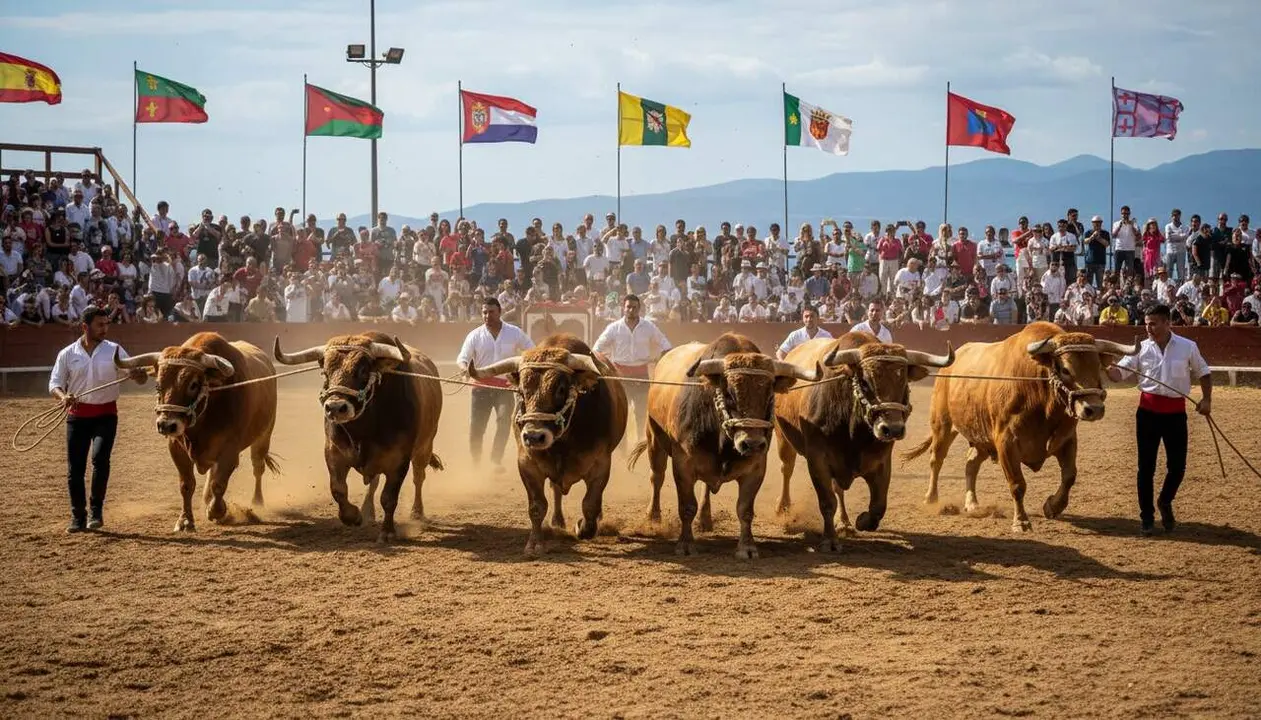

La Ràpita will be the setting for a unique celebration with capllaçat bulls and the participation of fourteen towns from the Terres de l'Ebre. This event, which will be held on September 12, arrives for the first time in the region and promises excitement and tradition in a much-anticipated act.
Driven by the Penya Bou Capllaçat de la Ràpita, on the occasion of its 50th anniversary, the initiative brings together seven bulls from local farms and a community of towns that will make this day a memorable event.
What is the capllaçat bull gathering and why is it of interest to La Ràpita?
What does it mean that the bulls are capllaçats?
Capllaçat bulls wear a capllaça, a piece that covers the head and controls their behavior. This traditional practice symbolizes the connection between livestock farming and local culture, an element that defines this gathering.
Why is La Ràpita the host of this first gathering?
The Penya Bou Capllaçat de la Ràpita, with fifty years of history, has promoted this festival to strengthen relationships between livestock farms and towns in the region. Organizing it in La Ràpita reinforces the city's role as a cultural and traditional meeting point.
What will the day be like and which towns will participate?
Which towns from the Terres de l'Ebre will be present?
Fourteen towns from the Terres de l'Ebre will participate, in addition to Albocàsser, a special guest from Castelló. This diversity invites a representative and unified showcase of the livestock culture of the area.
What will the schedule and timings of the exhibitions be?
The bull exhibitions will begin at five in the afternoon on Saturday, September 12, offering an afternoon full of excitement and tradition for all attendees.
What importance does this gathering have for the culture and people of the Ebre?
How does this gathering affect the residents and local culture?
The gathering strengthens the sense of community and keeps rooted traditions alive. It allows residents to share experiences and recover a cultural heritage that is lived through livestock farming and celebration.
Why has it been chosen to celebrate it now, after fifty years of the Penya?
Celebrating this anniversary with the gathering is a tribute to the Penya's history and an impulse to ensure that these traditions are not lost, but continue to evolve and connect generations.
Source of the article: Editorial / Catalan News Agency