Vila-seca appoints the justice of the peace and their substitute for the 2026-2030 period

Vila-seca already has a new justice of the peace and substitute for the next four years. An appointment that has gone unnoticed by some, but that directly affects the resolution of minor conflicts in the municipality.
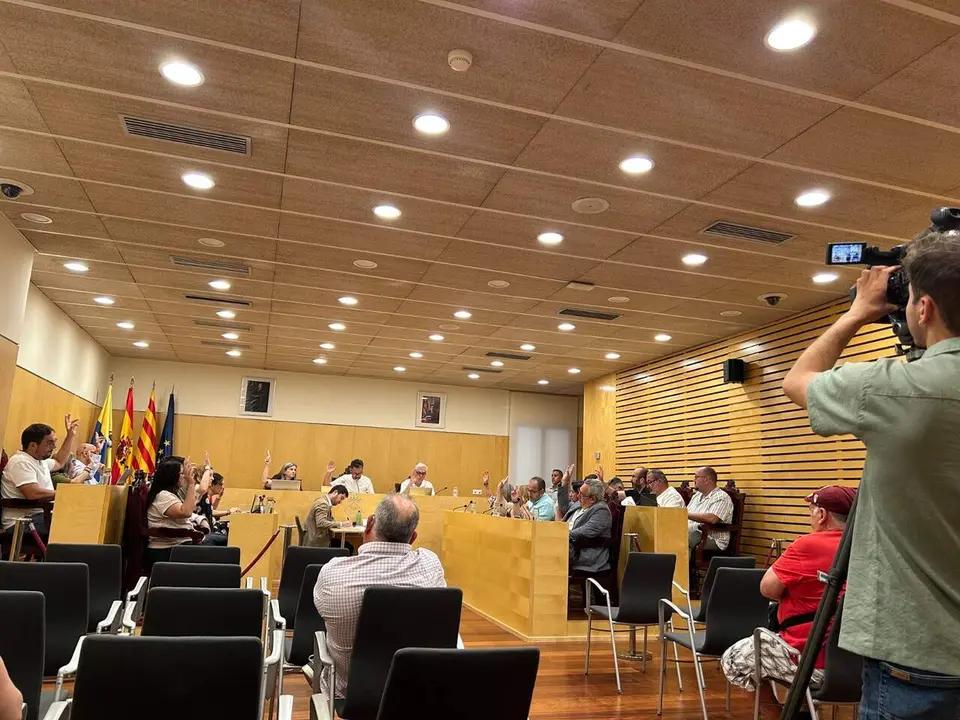
The plenary session of the Vila-seca City Council, held on June 19, 2026, approved this appointment after a vote with some absentee councilors and several motions on the table, some accepted and others not.
The appointment of the justice of the peace and their substitute
What does it mean and who is behind it?
The position of Justice of the Peace is a key figure for managing small local conflicts without the need to go to common courts. This time, residents Josep M. Pujals Vallvé and Fernando José Martínez Sánchez will repeat in the roles of main and substitute, respectively, for the 2026-2030 period.
Curiously, despite the importance of the role for the citizens, the appointment is decided at a plenary session in which some municipal groups choose not to participate in the vote, such as Vila-seca en Comú. This leaves it in a rather routine tone, but nonetheless necessary.
How was the vote conducted?
The vote was held individually and secretly, depositing the votes in a ballot box. Even so, the councilors from Vila-seca en Comú did not participate, which marks an interesting dynamic within the Corporation. The other groups gave their approval for Pujals and Martínez to continue in the position.
The repetition of names shows that, barring surprises, continuity is favored in a traditional institution of the municipality.
Motions debated in the plenary: which were approved and which were not?
Approved motions
- Improvement of intercity public transport and mobility: the motion presented by Vila-seca en Comú was approved with 16 votes in favor, 3 abstentions, and 2 votes against. The groups Vila-seca Segura, Vila-seca en Comú, and Decidim Vila-seca supported the initiative, while PSC abstained and VOX voted against it.
Rejected motions
- Safe zone for sport fishing at Pineda beach: proposed by VOX, it received only 5 votes in favor and was rejected.
- Withdrawal of the pilot plan of mossos d'esquadra in educational centers: presented by Vila-seca en Comú, it received few votes in favor and many abstentions, and ultimately did not progress.
- Promotion of a time-use strategy in Vila-seca: although it received 8 votes in favor, the majority voted against, leaving the proposal unapproved.
The plenary as a local political thermometer
Internal dynamics and positions
The motions presented clearly reflect the diversity and tensions within the council. The approval of a mobility motion contrasts with the rejection of other initiatives with a more social or environmental nature, and this speaks for itself about the current balance of forces in Vila-seca.
On the other hand, Vila-seca en Comú's decision not to participate in the vote for justice of the peace can be interpreted as a gesture of rejection or simply a political strategy that leaves the institution in the hands of the other groups.
Practical details and plenary data
The session was held at 7 p.m., with attendance by the majority of councilors. The vote was public in the sense that votes were deposited in a ballot box, but individual, which ensures some secrecy and avoids obvious pressures.
All in all, Vila-seca maintains a political structure where continuity in key positions and disputes over social and mobility issues are the daily norm. And this, if you notice, is the most interesting part.
Residents now await to see how these decisions translate into everyday life, while the municipality continues to set its political pace with motions that sometimes seem more like a shadow play than real action.
Source of the article: Vila-seca City Council