Why it is trendy to carry a cart on your next trip

Analog film photography transforms a trip into a slow and memorable experience. When you carry a roll, every shot is a decision; digital impatience turns into anticipation. This piece explains why many young people choose this practice and what they gain in terms of visual and social culture.
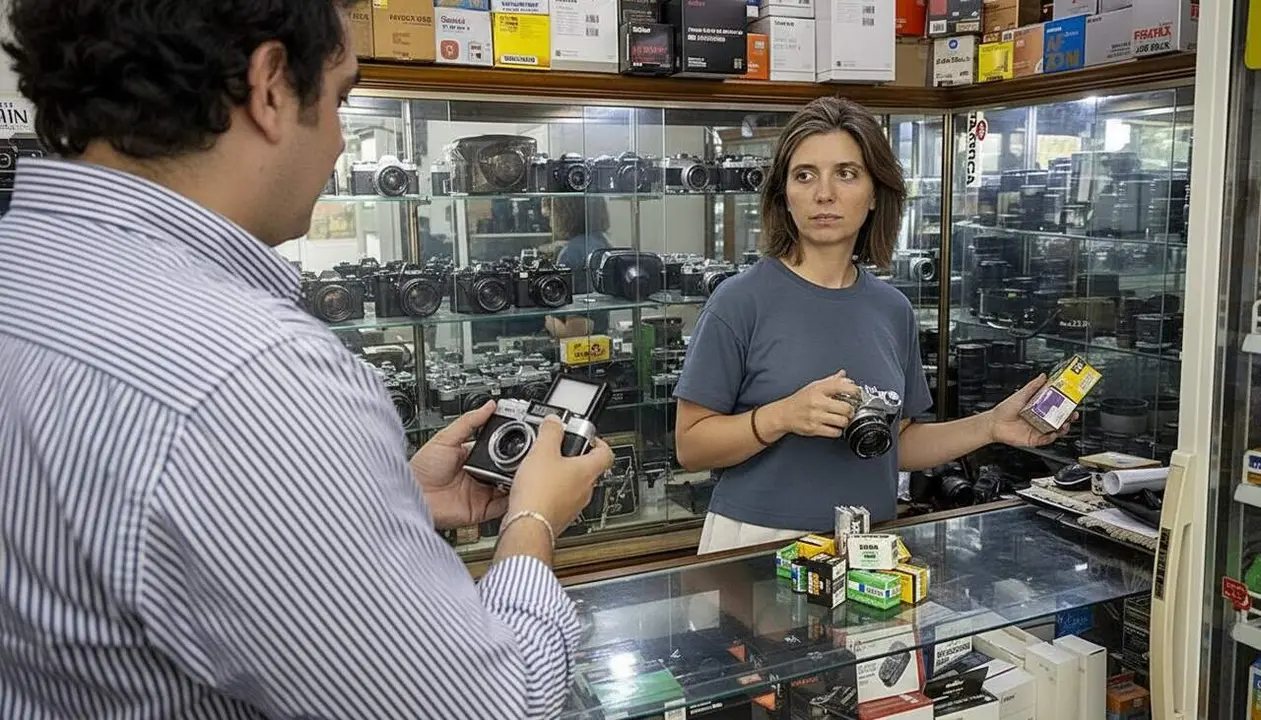
Many readers will see themselves represented: students, travelers who want to disconnect, and enthusiasts who want to recover lost rituals. The phenomenon is detected at points of sale like Casa Pibe in Madrid, where buying a pack of 24 or 36 exposures has become a ritual before the trip (without revealing yet how to do it, that will come later).
Source: report by Carmen Burné (08/24/2026) gathering testimonies and observations at the Casa Pibe shop in Madrid; the details of the phenomenon come exclusively from this text.
What does a Roll bring to a trip?
Why does this matter to the reader? Because the way we take photos changes how we remember a trip. If you want photos that take time to appear and gain value over time, this interests you.
What immediate benefits does it have?
Direct answer: It reduces the obsession with quantity and improves attention to composition.
Instead of taking hundreds of images without thinking, a roll forces you to prioritize. This results in intentional photographs: more care for light, the moment, and the narrative. And socially? It brings prestige among friends: being the roll bearer makes you the person who creates memories for the group. Microphases. And yes, there is some rebellion against digital immediacy.
Why does an image that takes weeks to exist have more value?
The delay alters perception. Waiting for development creates a story: surprise is part of the experience. Also, imperfection (exposure error, graininess) becomes quality, not a flaw. It’s an aesthetic and an attitude.
Who benefits and how does the community change?
Why does this specifically affect the reader? If you are young or care about your images, understanding who adopts the roll helps you appreciate its cultural and practical achievement.
Is it for Generation Z?
Direct answer: Many young people find an attractive contradiction: nostalgia with a social touch of modernity.
The generation that grew up with phone cameras sees in the roll a way to differentiate. It’s not just fashion; it’s a ritual that turns the photo into a social object. Casa Pibe notices this in demand: people who have never developed negatives buy rolls and then return with travel stories.
And seasoned enthusiasts?
The more veteran ones gain renewal. Some restart for the tactile satisfaction and to recover techniques (mixing films, homemade processing, etc.). These retro enthusiasts act as support points for novices: exchange of tricks, recommendations for paper and places to develop.
How to start: practical steps to take a Roll on a trip
Why is it useful for the reader? Because moving from wanting to trying requires a practical and short guide; no complicated rituals but clear steps to avoid frustration.
What materials do I need?
Direct answer: A functional analog camera, a roll (24 or 36 exposures), and a place to develop or scan images.
Just that. And an attitude: accept that not everything will come out perfect. If you don’t have a camera, look for simple single-lens models or reuse the old one you find at home. When buying the roll decide 24 or 36 exposures depending on your aversion to repeat purchases; 24 forces you to think more (according to the report, many choose 24 to slow down the rush).
Step by step for the trip
- Buy roll: choose a pack of 24 or 36 exposures (brand at personal discretion).
- Load the camera: follow model instructions; watch out for light and film spool.
- Choose ISO: adjust according to film (low ISO for day, higher for indoors or night).
- Shoot with intention: think composition, control light, don’t be carried away by quantity.
- Store the roll: avoid extreme humidity; don’t expose the negative to light before developing.
- Develop or take to lab: choose a local lab or learn home development if you want to control the process.
- Scan: digitize to share (if you want) without losing the physical object.
Verification checklist — signs you are ready to try it:
- You have bought or recovered an analog camera.
- You understand the difference between 24 and 36 exposures.
- You dare to accept the uncertainty of not seeing the photo immediately.
- You have access to a lab or an option to develop/scan.
| Format / Exposures | Ideal for |
|---|---|
| Roll 24 | Experience the process with more care; fewer photos, more decision. |
| Roll 36 | Long trips or large groups; less worry about running short. |
Maintenance and prevention tips: carry a case, avoid sudden temperature changes, and store negatives in a dry place. If you buy at a local store like Casa Pibe, ask for lab and film recommendations; they can guide you to options for digital copies after developing.
The reality is that analog photography is not an elitist escape: it’s a different way of looking. If you seek rhythm, tangible value, and a community that shares techniques, the roll gives you that. Remember the keywords: analog photography, roll, and ritual. You can start small; then comes the taste (and the collection).
Frequently Asked Questions
- What is the difference between 24 and 36 exposures?
- 24 forces you to shoot with restraint; 36 gives more margin. Neither choice is better; it depends on how you want to manage the limitation.
- Where can I develop if I don’t live in Madrid?
- Many cities have specialized labs; ask local shops or look for community workshops. There is also a pick-up and distance shipping service.
- Is it expensive to start with rolls?
- The initial cost can be modest (a used camera and some film packs). Developing has a recurring cost, but no large investment is needed to try.