The Prades Potato loses up to 60% of the Crop: the heat advances the campaign

Necrosis will cause a loss of between 40% and 60% of the IGP Patata de Prades crop. The intense heat has stressed the plants, affected the development of the tubers, and has advanced the campaign by one week to fifteen days.
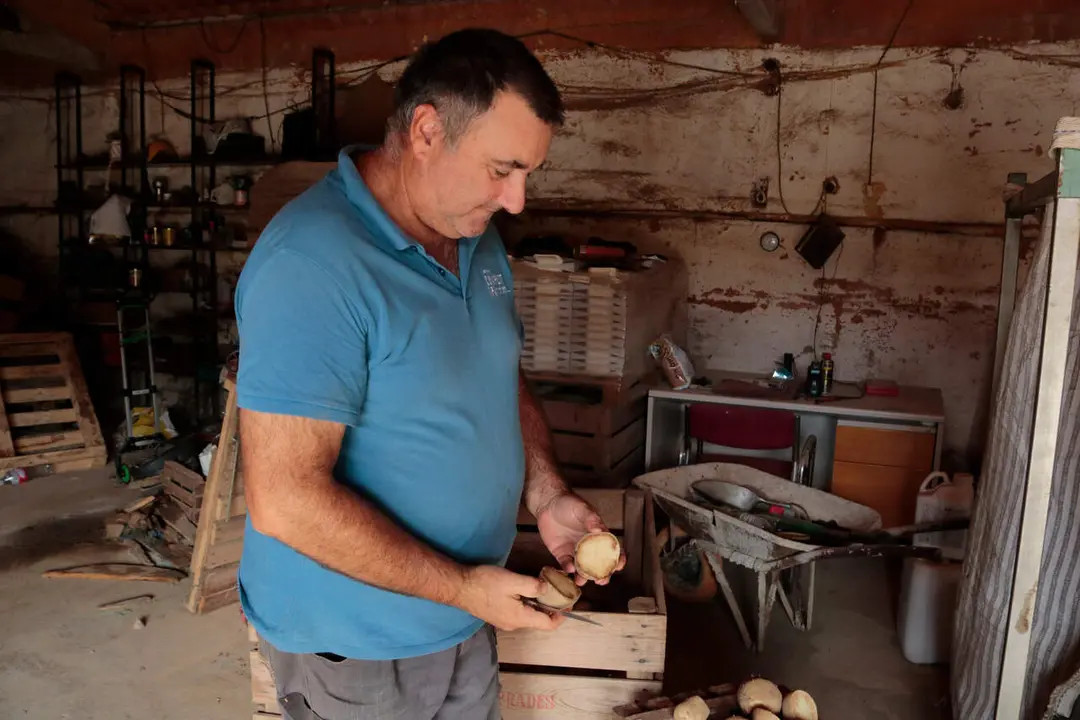
In the warehouses, farmers are already doing slow, manual work: separating the potatoes that can bear the IGP seal from those that hide brown spots inside. The expected yield is about 30,000 kilos at most, far from the 300,000 kilos recorded 25 years ago.
Heat leaves the Prades Harvest at a minimum
What part of the harvest will be lost?
Necrosis will cause a loss of between 40% and 60% of the IGP Patata de Prades crop, according to Eugeni Coll, president of the organization. The damage compromises the development of the tubers and requires checking the pieces before putting them up for sale.
In the case of Enric Domènech, one of the youngest farmers in the sector — despite being over fifty years old — the discard will reach approximately half of this year’s production. In addition to heat-induced necrosis, the damage caused by the wireworm is increasing.
The figure gives a clear idea of the blow taken by a crop with fewer than ten farmers dedicated to producing potatoes with the IGP seal. The farms are spread across the municipalities of the Muntanyes de Prades, so the problem is not concentrated on a single operation.
| Aspect | Data reported |
|---|---|
| Expected loss | Between 40% and 60% |
| Maximum expected harvest this year | 30,000 kilos |
| Production 25 years ago | About 300,000 kilos |
| Farmers with IGP seal | Fewer than ten |
What caused the damage?
High temperatures are one of the causes of necrosis. Eugeni Coll explained that for many consecutive days, there were temperatures of 30, 35, and 34 degrees, while at night the temperature dropped very little. This thermal stress harmed the plant and the development of the potatoes.
The heat has even altered the usual crop calendar. If in previous years planting was done between early May and harvesting reached early September, this year the work was brought forward to mid-April and late August.
The plant does not look at the calendar. When the temperature stays high for days and the nights do not cool enough, the rhythm of the crop changes. For the farmers of Prades, this means starting earlier and discarding more potatoes, a combination that leaves little room to correct the outcome.
Sale with IGP seal postponed until the end of September
Why will farmers wait before selling?
The sale of potatoes with the IGP denomination will be delayed until the end of September to facilitate the selection of affected tubers. The delay will allow better identification of pieces showing external signs related to necrosis.
The main clues are early sprouts and hardness of the potatoes. However, necrosis mainly manifests with brown spots inside, so inspection requires experience and careful observation.
- Farmers separate tubers destined for the IGP.
- The selection is done manually and slowly.
- Premature sprouts and hardness can alert to damage.
- Sale with IGP seal is postponed until the end of September.
This delay is no minor matter for a product with such limited production. Each piece that passes the filter represents a part of the harvest that can still reach the market with the protected designation.
What is at stake for the producers?
Farmers fear that affected potatoes will harm market confidence. Enric Domènech warned that consumers could lose trust in these potatoes not only this year but also in future harvests.
The concern has a very concrete root: the producer knows which potatoes they harvested, but they cannot assume that all those leaving the warehouse will be the ones they expected to sell. Domènech summarized it as follows: the potatoes he brought to the warehouse were those he thought he would sell, but those that will come out for sale will not be the same.
At this point, the IGP seal stops being just a commercial identification. It becomes the result of piece-by-piece selection, done under the trained eyes of the farmers. And this year, that selection will be particularly demanding.
A crop that now produces ten times less
How has Prades Potato production changed?
The expected production this year is about 30,000 kilos at most, while 25 years ago approximately 300,000 kilos were harvested. The difference is 270,000 kilos, leaving the current harvest at one-tenth of that figure.
This decline helps to understand why a loss of between 40% and 60% weighs so heavily on the municipalities of the Muntanyes de Prades. This is not a crop with hundreds of producers who can compensate for a bad season: there are fewer than ten farmers with production intended for the IGP seal.
For the reader, the data also explains why potatoes with denomination cannot be treated like any other crop. When the maximum expected production is 30,000 kilos and a significant part is discarded, each inspection at the warehouse weighs heavily on the final result.
What options is Enric Domènech considering?
Enric Domènech is considering further diversifying his agricultural production due to the situation. At present, he works with walnut, hops, hazelnut, mountain apple, vegetable garden, and potatoes.
His operation shows how farmers try to spread risk among various crops. This year, potatoes are hit by necrosis and wireworm, while the rest of the productions are part of a broader agricultural activity.
Domènech’s situation is not very different from that of other Patata de Prades producers, who have also advanced planting and harvesting due to the high temperatures. The calendar has shifted, the harvest has been reduced, and the selection work has multiplied. The potato arrives earlier; calm does not.
The IGP Patata de Prades faces a campaign with an expected loss of between 40% and 60%, a sale postponed until the end of September, and a maximum harvest of about 30,000 kilos. Behind these figures are fewer than ten farmers, hours of manual selection, and the need to protect confidence in a product that now produces ten times less than it did 25 years ago.
Frequently Asked Questions
- How much of the IGP Patata de Prades harvest will be lost?
- Necrosis will cause a loss of between 40% and 60% of the harvest, according to Eugeni Coll, president of the IGP organization.
- When will potatoes with the IGP seal go on sale?
- The sale is postponed until the end of September. Farmers want more time to manually separate affected tubers.
- How many kilos of potatoes are expected to be harvested this year?
- The harvest will be, at most, about 30,000 kilos. Twenty-five years ago approximately 300,000 kilos were harvested.
- How is necrosis detected?
- The main evidence is the brown spots that appear inside. Premature sprouts and tuber hardness may give external clues.
Source of the article: Ariadna Escoda Padilla / Catalan News Agency