Constantí transforms Livestock Manure into Biogas: IRTA's trial at Mas Bové
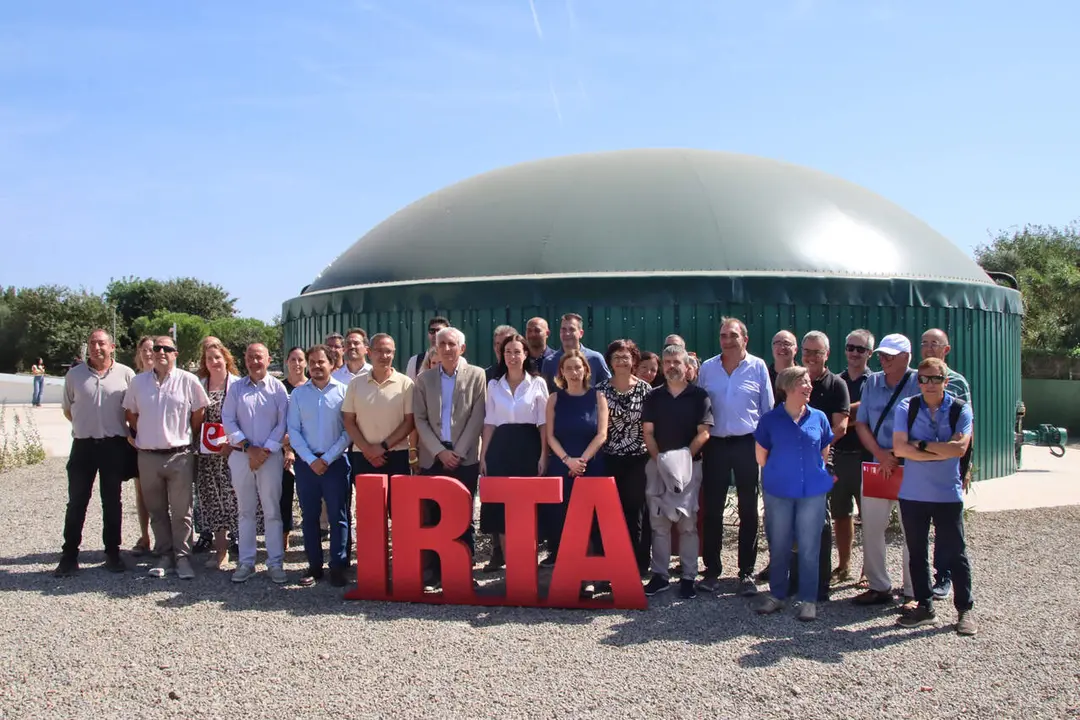

IRTA has launched an experimental plant in Constantí that transforms livestock manure into biogas, fertilizers, and treated water. The Mas Bové facility will work with organic matter from pig and poultry farms in the area.
For farmers in Tarragonès, the proposal has a very specific meaning: what comes out of the farms can be turned into energy and products useful for the primary sector. And, incidentally, the plant itself will be able to use part of the energy it produces.
What is being launched at Mas Bové?
Why is this Plant relevant for Constantí?
The Mas Bové facility is a research space of the Institute of Agrifood Research and Technology, IRTA, dedicated to biogas. The project is located in Constantí, in Tarragonès, and is based on a very specific material: livestock manure from pig and poultry farms in the area.
This places the municipality within a trial that directly connects farming activity, research, and energy production. It is not a plant presented as infrastructure distant or disconnected from the territory, but a facility that will receive organic matter from nearby farms and study how to turn it into new resources.
The idea is simple to describe, although the technological process has more complexity: livestock manure enters a transformation chain and yields three main outputs.
- Biogas, which can be used to produce energy.
- Fertilizers, useful for the primary sector.
- Treated water, obtained within the same process.
The key is the change of use. A waste stops being just waste and becomes part of a system that generates energy and products. This is the logic IRTA wants to study at Mas Bové, with an experimental plant designed to analyze this technology.
How will the Manure circuit function?
The plant will be fed with organic matter coming from pig and poultry farms in the area. This input will feed the biogas production process and allow examination of how fertilizers and treated water can be obtained simultaneously.
The project does not propose a single output. The same livestock-origin material is treated to generate different resources, a matter that explains the experimental value of the facility. It is not just about making gas and that’s it.
According to the provided information, the energy produced will serve both the farms and the plant itself. Therefore, the planned circuit links the origin of the organic matter with the energy consumption of the farms and the research facility.
The sequence can be summarized as follows:
- The pig and poultry farms in the area provide organic matter.
- The experimental plant transforms it using biogas technology.
- The process generates biogas, fertilizers, and treated water.
- The obtained energy is directed to the farms and the Mas Bové plant.
This sequence is the core of the experiment. IRTA is not only commissioning a facility but testing how this technology can fit in an environment with farming activity and the need to manage manure.
What energy goal does the Government have?
How many terawatts of Biogas are aimed to be produced?
For the reader in Tarragonès, the plant in Constantí is part of a broader Government strategy: to reach production of up to 2 terawatts of biogas annually by 2030, an amount that would equal 7% of Catalonia’s consumption.
This figure gives political scale to the local project. Mas Bové is an experimental plant, but the goal accompanying it looks beyond its installations and relates research with an energy production target for the whole of Catalonia.
The percentage also helps understand what the forecast represents: biogas should cover the equivalent of 7% of Catalonia’s consumption. The Constantí plant alone is not presented as the answer to this figure; it is a research piece within a strategy that wants to expand this technology.
The difference between the two levels is significant:
| Scope | What the available information indicates |
|---|---|
| Constantí | IRTA experimental plant at Mas Bové. |
| Raw material | Livestock manure from pig and poultry farms in the area. |
| Expected results | Biogas, fertilizers, and treated water. |
| Catalan goal | Up to 2 terawatts of biogas annually by 2030 and the equivalent of 7% of Catalonia’s consumption. |
What can the trial contribute to the primary sector?
The trial can provide knowledge about a technology that tries to unite waste management, energy, and products for the primary sector. IRTA’s information presents livestock manure as the starting point of a process with more than one use.
This connection is especially significant because the organic matter will come from local farms and the energy produced can return to these farms. The project, therefore, describes a local circuit: the farms provide material and can receive energy.
There is also another specific output: fertilizers. The plant does not focus exclusively on biogas production but incorporates this result within a set formed by energy, fertilizers, and treated water.
The clearest reading is this: Mas Bové tests if livestock manure can stop being the end point of the process and become the starting point of other resources. Now it remains to see what IRTA’s research contributes and how it fits with the production goal announced by the Government. No smoke — only biogas, if the trial works as planned.
The experimental plant in Constantí thus concentrates three elements: applied research, organic matter from nearby farms, and an energy goal linked to Catalonia. Livestock manure will be transformed into biogas, fertilizers, and treated water, while the obtained energy will be allocated to the farms and the installation itself. The local project and the 2 terawatts goal form part of the same commitment.
Frequently Asked Questions
- Where is the biogas experimental plant?
- The plant is located at IRTA’s Mas Bové facilities, in the municipality of Constantí, in Tarragonès.
- What does the Constantí plant transform?
- The facility transforms livestock manure from pig and poultry farms in the area into biogas, fertilizers, and treated water.
- What will the produced energy be used for?
- The energy will serve both the farms supplying the organic matter and the experimental Mas Bové plant itself.
- What is the Government’s goal for 2030?
- The Government aims to produce up to 2 terawatts of biogas annually, equivalent to 7% of Catalonia’s consumption.
Source of the article: Eloi Tost / Arnau Martínez / Catalan News Agency