What does the traffic sign with two cars and four lines mean
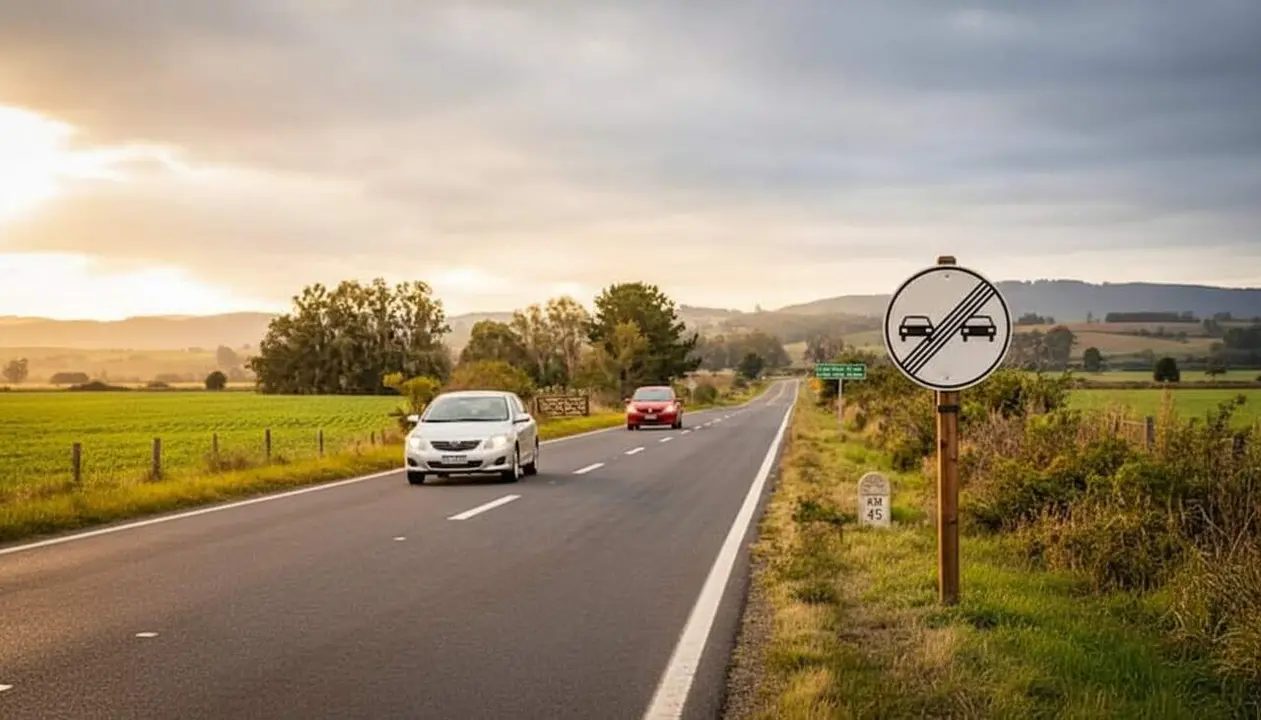

The sign with two cars together on a white background and four diagonal lines indicates the end of an important road restriction. It is not a symbol you see every day, but understanding its message can prevent confusion and accidents.
If you have ever wondered when you are allowed to overtake on a two-way road, this sign is the answer you were waiting for. However, it is not an invitation to overtake at any cost or at any time.
The sign that just told you "now you can overtake"
Why does this strange sign matter? Well, more than it seems for drivers traveling on two-way roads with a single lane in each direction. This indication is part of the National Traffic Law, 24,449, and serves to mark that an overtaking prohibition has ended on that specific section.
In other words, when you encounter this sign, the road is telling you that you can now consider making an overtaking maneuver, as long as visibility, horizontal road markings, and traffic permit it.
What does this sign not mean?
Very important: it is not a free road to overtake without thinking. If the road still has two thick orange lines in the center, overtaking is not allowed. This indicates dangerous zones, such as curves or slopes, where visibility is limited and the risk of a head-on collision is high.
This sign is placed on stretches with reduced visibility, narrow roads, or areas with slopes and requires patience until the next section is safer.
How to know when it is safe to overtake after the sign?
What requirements must you check before overtaking?
Before risking an overtaking maneuver, you must make sure of three basic but vital things: no vehicle is coming from the front, visibility is sufficient to complete the maneuver without problems, and the horizontal road markings allow it.
If anything does not fit, it is best to wait. Even if you are eager to save time, reckless overtaking is a clear source of accidents.
Why do these signs exist beyond fines?
It is easy to think that we follow the rules just to avoid fines. But the true purpose is to prevent accidents. Most traffic accidents come from human errors, distractions, or poorly calculated maneuvers.
Knowing and respecting this specific sign helps reduce risks and protect lives, both yours and others'.
What do experts say about this sign?
How does it affect local road safety?
Road safety professionals insist that this sign is not trivial. On roads like the N-340 or sections of the C-58, where visibility and space are delicate, clearly marking the end of an overtaking restriction prevents many head-on collisions and confusion.
According to DGT sources in 2026, ignorance of this sign can increase the risk of accidents by 15% in certain areas.
Is it common for drivers to know this sign?
Neither. This sign is little known and many drivers do not understand its real meaning. This usually happens because it does not often appear in basic manuals for obtaining a driving license and is also not commonly seen on urban roads.
Therefore, experts recommend reviewing and updating driver training to include these less common but critical signs.
Respecting this sign and all traffic rules is not just a matter of fines or points, but a tool to make roads safer and avoid tragedies. So, next time you see two cars together on a white background with four diagonal lines, you will know it is telling you that you can overtake now, but with caution and care.