Hyundai copies BYD with a 496 km electric car that revolutionizes Europe
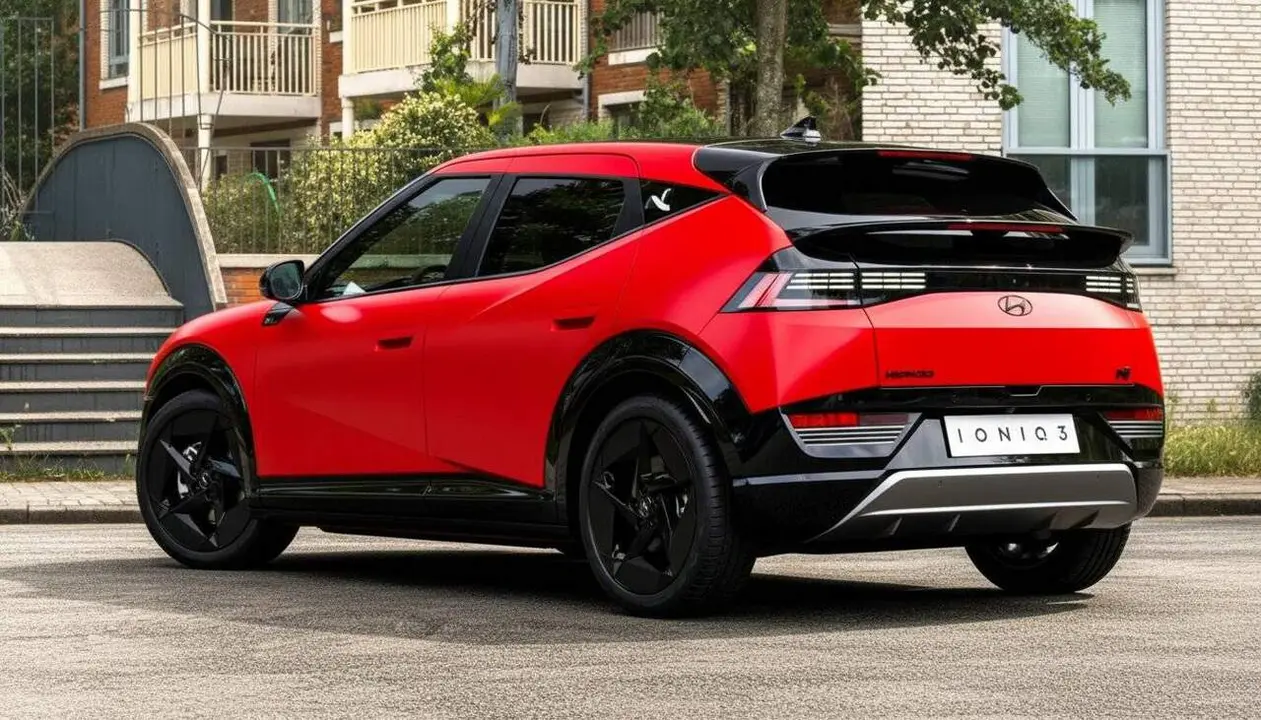

Hyundai bets big on a compact electric car promising up to 496 km of range, a figure that shakes the competition and comes after an investment of 250 million euros in its plant in Turkey. They want to repeat BYD’s success in Europe with a formula that seems copied in detail.
But, why is Turkey key in this move? The answer is not only in the dimensions or power of the vehicle, but in a strategy that combines smart production and commercial advantages that leave many brands behind.
Hyundai IONIQ 3: an ambitious compact electric aiming to succeed in Europe
For the Catalan reader thinking about their next car, the Hyundai IONIQ 3 arrives just where it’s needed. Watch out: the compact segment is one of the best sellers, and this model is reinforced with an aerodynamic coefficient (Cd) of only 0.263, dimensions ranging from 4.155 meters to 4.17 meters in the N-Line version, and a width of 1.8 meters. These figures aren’t just cold numbers, but an invitation to think of a vehicle that is practical and sporty at the same time.
The trunk also draws attention: a total of 441 liters, with 322 liters in the main compartment and 119 under the floor, a capacity more than generous for a compact electric that needs to move agilely through the streets of Barcelona or Girona, without giving up space.
What performance does the IONIQ 3 offer?
Hyundai offers two versions that fit different needs. The first features a 99.5 kW (135 HP) motor with a 61.0 kWh battery, capable of offering the 496 km of range that makes everyone turn their eyes to it. The second, more compact, with a 107.8 kW (147 HP) motor and 42.2 kWh battery, reaches 344 km of range. Both versions reach a top speed of 170 km/h and accelerate between 9.0 and 9.6 seconds to go from 0 to 100 km/h.
Is this compact really competitive?
Without a doubt. The combination of range, power, and space makes it a very attractive option for those looking for a truly usable electric car. Its sporty appearance in the N-Line version is also a plus for those who don’t want to give up style.
Hyundai’s formula: a smart copy of the BYD model in Europe
Why has Hyundai chosen Turkey to manufacture the IONIQ 3?
Producing an electric car in Turkey is no coincidence but a masterstroke repeating BYD’s strategy. Turkey maintains a Customs Union with the European Union that eliminates tariffs and allows vehicles made there to enter the EU as if they were local. This means considerable savings that make a difference in price and competitiveness.
What advantages does this strategy bring to Hyundai?
Thanks to production in İzmit, Hyundai not only reduces costs but also gains in logistical agility. The 250 million euros investment in this plant seems designed to replicate the success BYD is having in Europe, which has already advanced with factories in Turkey and Hungary.
What makes BYD’s formula so successful and how does Hyundai adopt it?
What are the keys to BYD’s success that Hyundai imitates?
BYD has proven that manufacturing in Turkey and leveraging proximity to Europe is a decision that pays off. The IONIQ 3 model incorporates elements like a 14.6-inch screen, also common in BYD models, showing that Hyundai not only copies production but also the technological experience consumers like.
Why does this imitation make sense for European consumers?
The truth is that customers want real range and competitive prices, two points where BYD has set the standard. Hyundai, by copying this formula, positions itself to face the dominance of Chinese electric cars and consolidate its presence in a market that leaves no room for error.
The 250 million euros investment in Turkey and the decision to manufacture the IONIQ 3 there are no coincidences but a calculated move to take on BYD and gain market share in Europe with a compact electric car that promises much more than just paper numbers.
In short, Hyundai has learned BYD’s lesson and puts it into practice in a market where every detail counts. The IONIQ 3 is much more than a car: it is proof that competition forces innovation, but also copying when necessary.