Stainless steel brake discs: less wear and up to 300,000 km

When you think of vehicle pollution, you surely think of the smoke coming out of the exhaust pipe. But what about the particles released from brake wear? The Euro 7 regulations are already starting to set limits on these emissions, especially the particles smaller than 10 microns that penetrate deeply into the lungs.
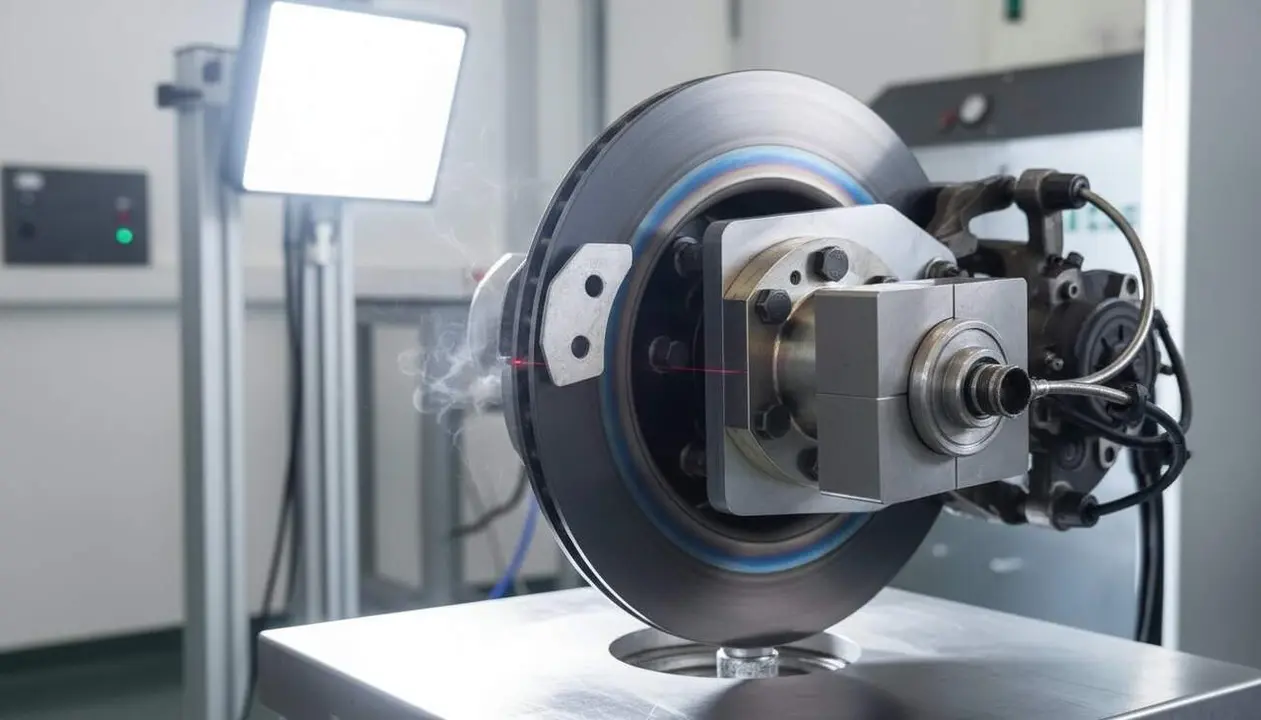
That is why the German development of nitrided stainless steel brake discs is a radical change. They not only reduce wear by up to 85% less, but also extend the lifespan to an impressive 300,000 km, a figure that makes you rethink trips to the workshop.
Nitrided stainless steel discs: what makes them so special?
A surface that lasts
The secret lies in nitriding, a treatment that hardens the surface of the steel without losing its internal structure. This means they withstand heat and wear much better, a key combination for brakes.
Unlike cast iron discs that deform starting from 650 °C, nitrided stainless steel maintains its stability even under extreme conditions. This is crucial so that the discs do not lose effectiveness when the brake is fully engaged.
Comparison with other materials
Carbon-ceramic brakes are amazing, but their price makes them almost exclusive for supercars. Coating traditional discs with special materials is still an industrial headache.
In contrast, nitrided stainless steel is a more affordable and scalable solution, combining resistance and durability without breaking the bank.
Manufacturing and weight advantages
More efficient shaping
These discs are not made by cutting thick blocks of iron, but are obtained through shaping. This optimizes the material and allows making them thinner, but with a larger diameter.
The result? A lighter system that can reduce the car’s unsprung weight by up to 5 kg. It may seem small, but in vehicle dynamics it makes a difference.
Less weight, more range
In electric cars, every kilogram counts. Less weight means less energy consumption and better road behavior. This energy saving is a direct gain for range and overall efficiency.
A braking system designed to last a lifetime
Radical change in maintenance
Until now, changing discs every 40,000 km was standard. With these stainless steel discs, the idea is that they hardly need to be replaced throughout the vehicle’s lifetime.
This implies less waste, less material consumption, and less money spent on workshop visits. A plus for both the economy and the environment.
Regulation and future
With Euro 7 imposing emission limits of up to 3 mg/km in electric vehicles, current systems fall short. This new type of disc meets these challenges with ease.
Tests at the Technical University of Chemnitz confirm that the system complies with SAE J2522 (AK Master) standard, demonstrating stability and repeated efficiency without losing performance.
Applications and impact
Cities like Amsterdam or Paris are beginning to analyze fine brake particle pollution, especially in urban fleets and public transport, where wear is constant.
Integrating these discs in urban electric vehicles and high-intensity fleets could represent a significant leap in reducing non-exhaust emissions.
| Feature | Nitrided Stainless Steel Discs | Conventional Discs (Cast Iron) |
|---|---|---|
| Wear | Up to 85% less | High |
| Lifespan | Up to 300,000 km | Approximately 40,000 km |
| Weight | Reduction of up to 5 kg | Heavier |
| Thermal resistance | Maintain properties up to >650 °C | Lose stability starting at 650 °C |
| Euro 7 Regulation | Compliance and surpassing | Challenges to comply |
The reality is that these stainless steel discs can transform how we see the braking system, not only improving durability and weight but also contributing to cleaner air and smarter maintenance economics.