More than 60% of truck drivers and bus drivers admit to driving fatigued: what is happening this 2026?
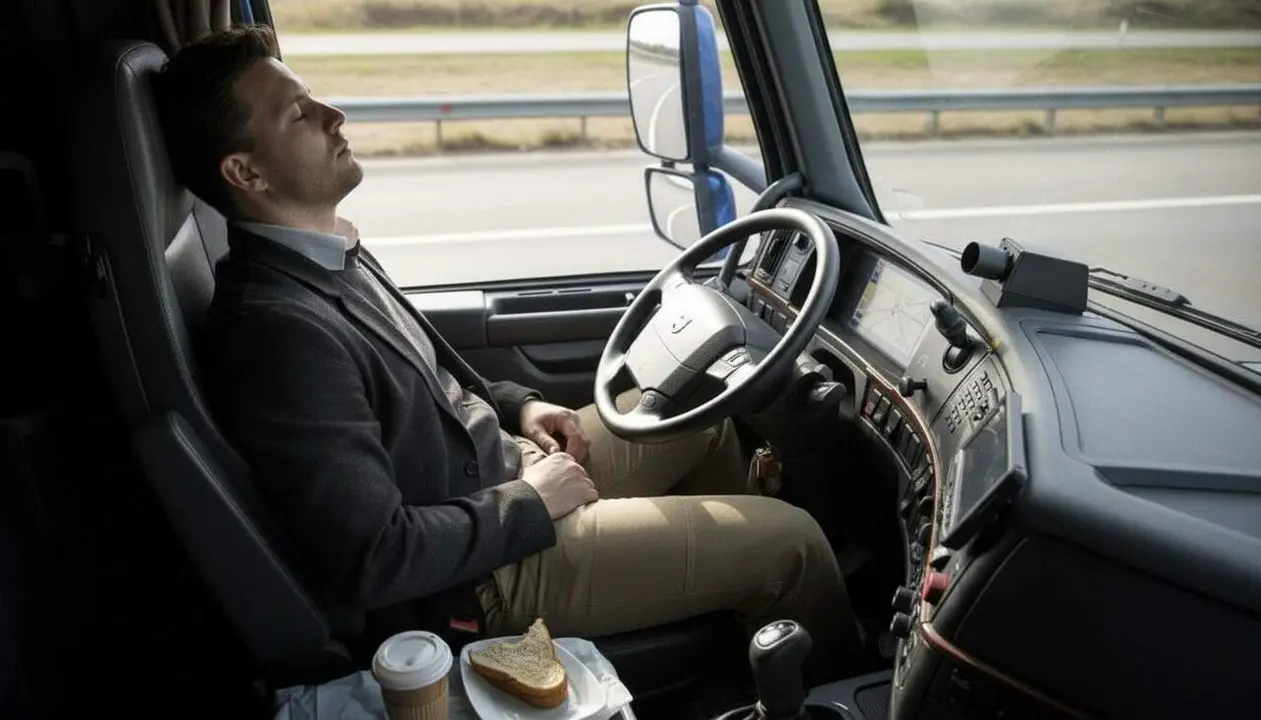

More than 60% of truck drivers and 66% of bus drivers admit to regularly driving while fatigued. This figure, which might seem like a bad joke, is the reality shaping the road transport sector in 2026.
Fatigue at the wheel is not just a personal problem, but a clear symptom of the labor and regulatory challenges professional drivers face in Europe. And this has not been detected by just anyone, but by the European Transport Workers’ Federation (ETF) and the police network ROADPOL, who have recently focused attention on this latent danger.
More than 60% of truck and bus drivers: what does this fatigue imply?
If you are in the profession or spend a lot of time on the road, you know fatigue is an all-too-common companion. But why is it relevant that more than 60% of truck drivers and 66% of bus drivers admit to being fatigued? Because behind these figures lies a serious risk to road safety and a structural problem that cannot be solved merely with sporadic checks.
How have these figures been reached?
During the Action Day Against Fatigue at the Wheel, held on June 21 — the longest day of the year, you know, ironically perfect for talking about tiredness — ROADPOL and the ETF brought together drivers, unions, and authorities at the border between Belgium and Germany. There, experiences and data were shared that make it clear that fatigue is the ghost haunting European roads.
Drivers received informational material and a debate was encouraged about the risks of fatigue and the need to comply with rest and driving times. But the problem does not end here: economic pressure, long working hours, and irregular schedules are the underlying culprits.
What is the authorities’ perspective?
The prominent presence of ROADPOL, with its Secretary General Damyan Vladinov and tachograph expert Frédéric Martin, brought to the table the importance of the effective enforcement of European regulations to control driving and rest times. However, they also acknowledged that enforcement is not easy and that joint work is required to prevent fatigue from ending in road tragedies.
Working conditions and fatigue: a duality that cannot be ignored
Why does this matter to professional drivers? Because fatigue is a reflection of schedules that don’t fit, hours and hours behind the wheel without quality rest, and an economy that demands more with fewer resources.
What factors worsen the situation?
The ETF has clearly warned that fatigue is not just a matter of personal health, but stems from long working days, irregular schedules, and insufficient rest periods. And this, combined with economic pressure, creates a perfect breeding ground for fatigue.
At the event, organized by the Belgian unions ACV-Transcom and BTB ABVV with the support of the Luxembourgish OGBL, spaces were created to listen to drivers, share experiences, and expose the raw reality.
Why is it so difficult to change this landscape?
The answer lies in the sector’s structure: without regulatory changes and stricter enforcement, fatigue will continue to be a constant threat. Companies imposing 15-hour or longer shifts and insufficient rest do not help to reduce this problem.
What measures are being taken and what remains to be done?
The reality is that, as much as ROADPOL and the ETF work to raise awareness and enforce controls, there is still a long way to go. The only way to stop this trend is with a combination of better working conditions, more control, and real awareness of the danger fatigue represents.
What is the importance of complying with rest times?
ROADPOL experts insisted that respecting driving and rest times is key to avoiding accidents. But, as drivers know, this is not always possible due to job and logistics pressures.
What do drivers and unions say?
Drivers, in an open debate, did not mince words. They denounce endless shifts, economic pressures, and the impossibility of resting well. The ETF union calls for structural changes to reverse this problem which, if not addressed, will continue to put everyone’s safety at risk.
| Type of driver | Percentage admitting to driving fatigued |
|---|---|
| Truck drivers | More than 60% |
| Bus and coach drivers | 66% |
Fatigue at the wheel is no longer a hidden problem; it is an issue that affects road safety and has names and surnames: professional drivers. And if you wonder, no, it’s not just bad luck or a bad day, it is the direct result of a system that does not support the driver.
If we want safer roads, we need to listen to these numbers and, above all, act.
Fatigue among professional drivers is not just an alarming figure, but a cry demanding urgent changes in working conditions and regulatory compliance. Only then can we prevent more than 60% of truck drivers and 66% of bus drivers from continuing to do what no one wants: drive fatigued.
Frequently Asked Questions
- Why is fatigue so high among truck and bus drivers?
- Because of long working days, irregular schedules, and insufficient rest periods, according to the ETF and ROADPOL.
- What measures are proposed to reduce fatigue at the wheel?
- Improve working conditions, strictly enforce rest times, and increase awareness about the associated risks.
- What is the responsibility of the authorities on this issue?
- Ensure the effective enforcement of European regulations and coordinate controls to prevent driving while fatigued.