Martin Sander (Volkswagen): Explains the future of gasoline cars
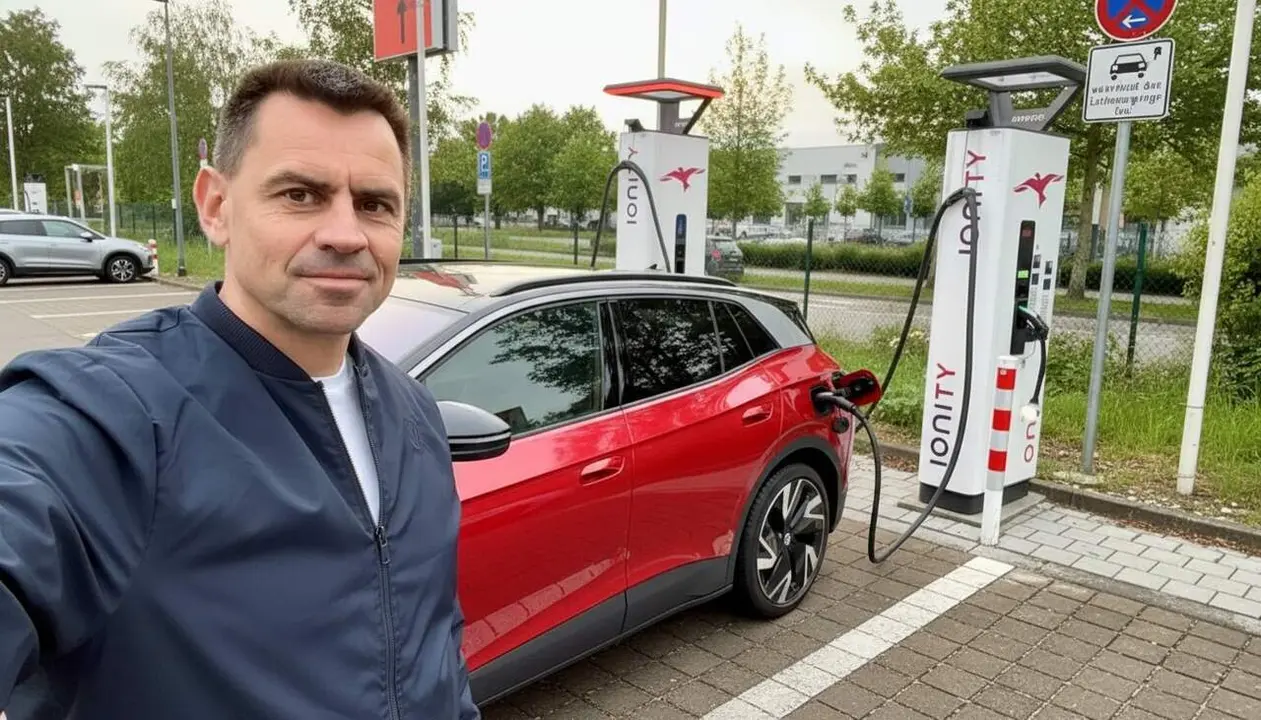

Martin Sander, from Volkswagen, assures that gasoline cars are living their last years as a common means of transportation. With the electric vehicle revolution at hand, comparisons with the disappearance of horses as a mode of transport are more than apt.
The key question is: how and when will drivers abandon combustion engines? And according to Sander, the answer is not in bans, but in convincing the public of the real advantages.
Volkswagen’s vision on the future of gasoline cars
Why does this matter to local drivers and enthusiasts? Because the automotive industry is on the verge of a change that could radically transform our roads and the way we use vehicles.
What has Martin Sander said about the transition?
The global head of Volkswagen in sales, marketing, and aftersales believes that electric mobility will advance much faster than expected. Sander compares the end of combustion engines with the disappearance of horses, saying that "today we hardly see any in cities, and the same will happen with gasoline."
How will this affect consumers?
The executive criticizes the approach based on bans, which only generates rejection. Instead, Volkswagen bets on improving the user experience, accessibility to charging, and the real cost of energy to make people prefer electric vehicles voluntarily.
The future of combustion engines: a residual option by 2035
Why is this relevant for Catalan drivers? 2035 is just around the corner and will mark a definitive turning point for gasoline cars.
What forecast does Volkswagen make for the year 2035?
Sander expects that if the charging infrastructure and the market evolve well, only 3-5% of buyers will still be interested in thermal engine vehicles, leaving gasoline almost as a historical curiosity.
What does this transformation imply for the industry?
This evolution would represent a historic change, since for more than a century gasoline and diesel have dominated mobility. The shift will be so radical that the industry will have to adapt to a new landscape where electric vehicles are the norm.
The role of China and Volkswagen’s European strategy
What does China have to do with us? Much more than it seems, since Volkswagen learns from the most advanced electrification market to stand on par with new competitors.
How does Volkswagen draw inspiration from China?
The company uses Chinese experience to improve efficiency, reduce costs, and leverage economies of scale to compete against Chinese manufacturers, who have gained significant prominence in recent years.
Why won’t some electric models arrive in Europe?
Volkswagen does not plan to sell extended-range electric vehicles in Europe that it does market in China, as it considers that demand for this technology will be limited here, clearly betting on pure electric vehicles.
The reality is that the coming decade will define whether this bet prevails or if there is still room for other technologies. But it is clear that for many drivers, the gasoline car will be history like horses.
Frequently Asked Questions
- When does Volkswagen foresee gasoline cars to disappear?
- Martin Sander estimates that by 2035 only 3-5% of buyers will want combustion cars, leaving them almost obsolete.
- Why does Volkswagen not bet on extended-range electric models in Europe?
- They believe demand will be limited and bet on pure electric vehicles to better compete in the European market.
- How does Volkswagen want to convince drivers to leave gasoline?
- They want to improve charging infrastructure, reduce time and costs, and offer a better experience rather than just imposing bans.