What does the traffic sign with a car and four lines mean
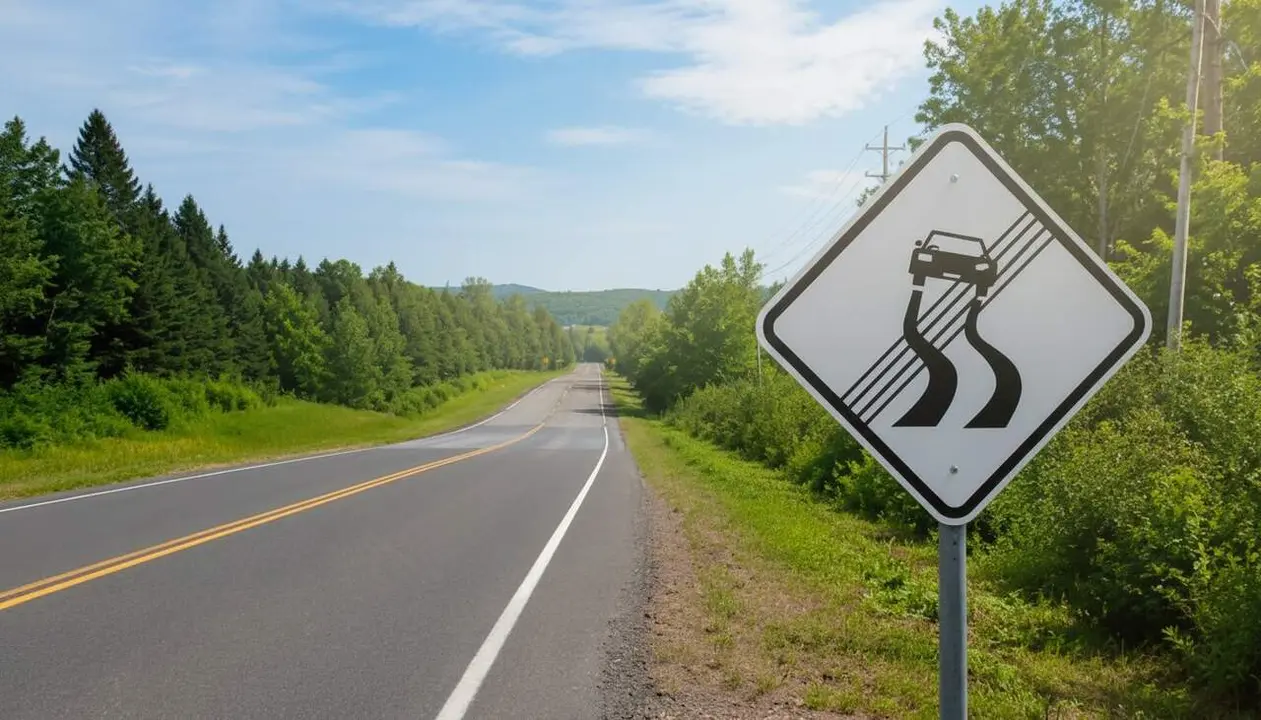

The traffic sign with a car on a white background and four diagonal lines indicates the end of a slippery road zone. This symbol is key to helping drivers travel more safely after an area where the pavement may cause a loss of traction.
Many drivers do not recognize this sign, and this can be a risk on routes and highways. Knowing how to interpret it correctly can make the difference between maintaining vehicle control or suffering an accident.
What exactly does the sign with a car and diagonal lines on the road represent?
The key here is to understand that the sign with a car in the center and four black diagonal lines is not just a random image. It marks the end of a zone where the pavement could have been slippery due to factors such as moisture, gravel, or poor asphalt condition. Unlike the sign that warns of the beginning of this dangerous zone—where the car appears skidding—the diagonal lines indicate that this condition is no longer in effect.
But this does not mean driving is completely safe: experts recommend not to regain usual speed suddenly, but to do so prudently and maintain attention.
Why is this sign key for drivers?
The answer is clear: this sign warns that there is no longer an immediate risk of losing traction, but the context of the road segment may still be delicate. This is particularly relevant for those driving on routes where moisture or gravel can persist beyond the signage.
Therefore, its presence helps make safer decisions and avoids sudden accelerations that could cause incidents.
Is this a common sign on Argentine roads?
In Argentina, the signage system includes this sign within the group of preventive signs, which warn of road conditions before or after a risk zone.
Although less known than speed limit or stop signs, the slippery road sign is fundamental for accident prevention. The DGT and local experts recommend that drivers keep it in mind to adapt their driving.
How are traffic signs organized in Argentina, and where does this one fit?
What are the four main groups of signs?
Signs are divided into four main categories to organize traffic and avoid risks:
- Regulatory or prescriptive: impose limits and prohibitions, such as maximum speed or no overtaking zones.
- Preventive: warn of imminent danger situations, such as sharp curves or slippery roads.
- Informative: provide information about services, distances, or destinations, especially useful on routes and tourist areas.
- Temporary: alert about temporary situations, such as construction or detours.
The sign with white background, a car, and diagonal lines clearly fits within the preventive group but indicates the end of this warning.
What role does it play in accident prevention?
This sign helps prevent loss of vehicle control by helping anticipate a change in road conditions. Its correct interpretation causes the driver to moderate speed and maintain caution until the road is completely safe.
Therefore, it is more than a simple symbol; it is a silent but vital tool for road safety.
How to act after seeing the sign indicating the end of a slippery zone?
What are the recommendations of road safety experts?
Although the sign indicates that the dangerous section has ended, professionals recommend not accelerating suddenly and maintaining concentration. The road may continue to be wet or gravelly a few meters beyond.
It is key to keep a safe distance from other vehicles and avoid abrupt maneuvers or overtaking until confirming that the asphalt is in good condition.
What is the importance of tire and vehicle condition in these zones?
Safety does not depend solely on signage, but also on the vehicle. Worn tires or those with inadequate pressure reduce control, especially on slippery surfaces.
Regularly checking tire tread and brake systems can be the difference between avoiding an accident or facing unexpected problems.
The sign is not an invitation to relax but a warning to stay vigilant.
Traveling the road with awareness and respecting this indication is the best way to protect yourself and others.
The truth is that this sign, although discreet, saves lives and should be better known by all drivers in the country.
Frequently Asked Questions
- What does the sign with a car and four diagonal lines on the road indicate?
- It indicates that a zone where the road could be slippery, such as due to moisture or gravel, has ended, and the dangerous condition is no longer in effect.
- Should I immediately regain normal speed after this sign?
- No, it is recommended to accelerate progressively and maintain caution since pavement conditions may persist a few meters further.
- How does tire condition affect safety in slippery zones?
- Worn tires or those with low pressure reduce traction, increasing the risk of losing control on wet or unstable surfaces.