5 facts about the Phantom 3500 that explain why Otto Aerospace wants to shake Tesla
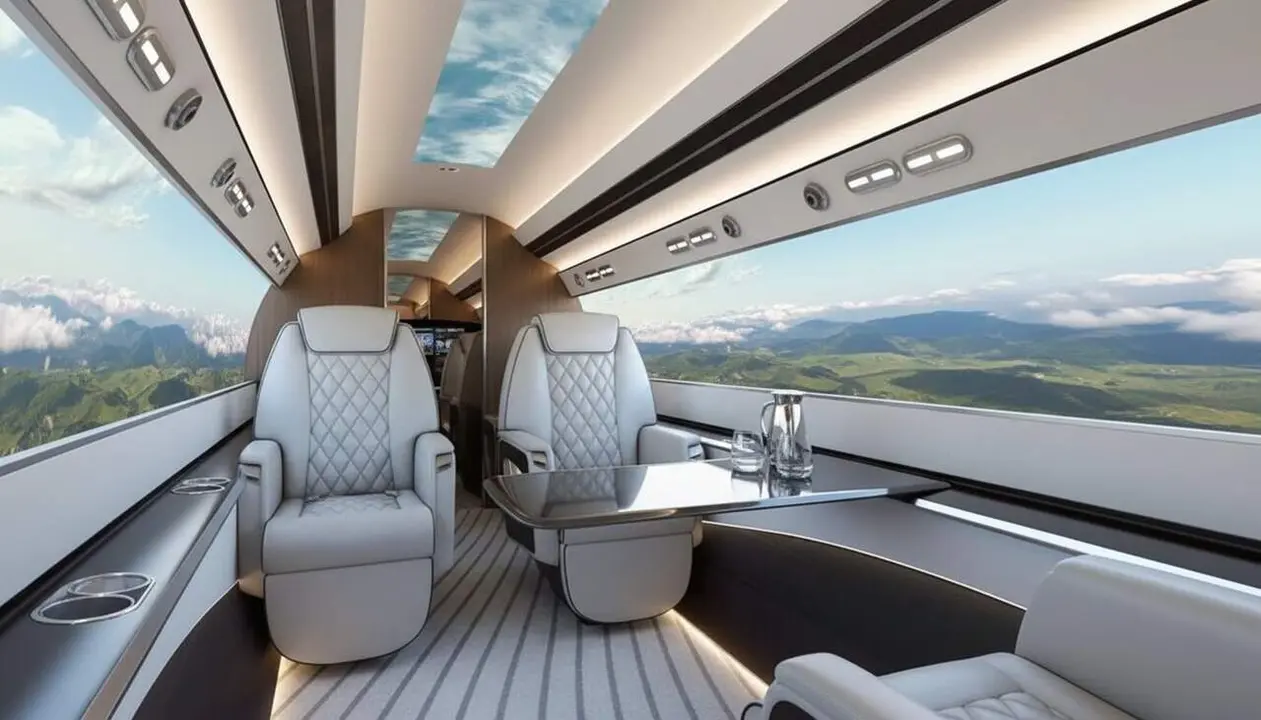

A windowless private jet sounds like a lab experiment. But Otto Aerospace wants to sell it as their big idea: less drag, less consumption, and a cabin that looks you in the face with giant screens. Yes, as if Tesla had landed in aviation.
The thing is, this is not just about technological posturing. The Phantom 3500 promises some very serious data, a bit unsettling and, for some passengers, downright strange. And this is where it gets interesting.
Otto Aerospace and the Phantom 3500: what exactly do they want to change?
Otto Aerospace wants to turn the Phantom 3500 into a more efficient, less polluting, and cheaper-to-manufacture private jet. Why does it matter? Because the executive aircraft market is obsessed with speed and luxury, but almost never with the energy bill.
The US company had already caught attention with the Celera 500L, that bullet-shaped prototype that promised a lot and, so far, has fallen halfway. Now it returns with a more aggressive idea: if you can't make the jet bigger, make it sleeker. And there you have it.
Why does wing design matter so much?
The secret is the laminar flow fuselage. Said without magic: the shape of the plane’s body is designed to make the air pass with as little resistance as possible. Less friction. Less effort. Less fuel.
You can see this in the numbers the brand provides: 45% less consumption than a similarly sized and weighted aircraft. The argument is strong, yes, but it should also be viewed with a critical eye: it is not a certified consumption and the savings depend on many flight conditions. The theory sounds sharp; real air, not so much.
What numbers does this jet provide?
The Phantom 3500 states 435 liters per hour on sustained cruise. It can carry between six and nine occupants, reaches a range of 6,482 km, and flies up to 51,000 feet. And yes, it has two Williams FJ44 engines, not a showroom whim.
Compared to other light jets, the figure is not bad. An Embraer Phenom 300E moves around 598 liters per hour, but with less range. However, comparison with a commercial aircraft is unfavorable to the Phantom: per passenger, the impact remains much higher. So much luxury to end up consuming more than a regular flight? Exactly.
| Data | Phantom 3500 |
|---|---|
| Passengers | Between 6 and 9 |
| Estimated consumption | 435 liters per hour |
| Range | 6,482 km |
| Cruise altitude | 51,000 feet |
Screens instead of windows: genius or rich whim?
Here comes the most talked-about twist: the cabin has no side windows. Instead, the sides and roof integrate high-definition screens the brand calls Super Natural Vision. A very Silicon Valley move and very far from flying “as usual.”
For passengers, this may sound like futuristic luxury or premium claustrophobia. Those who like to watch the clouds on their own will find it a step backward disguised as modernity. Those who want light, information, and a more “cinematic” experience will like it. Period.
What does Otto gain by eliminating the windows?
No openings mean the structure gains strength and the design can be more efficient. Fewer windows also means fewer weak points, less weight, and theoretically, better aerodynamics. The brand sees business; the engineers, room for improvement.
The funniest detail is that the argument sounds a lot like that of some modern cars: less glass, more screen, more “experience.” Only here you’re not going 120 on the AP-7 highway, you’re tens of thousands of feet high. And yes, seeing the horizon in ultra-high definition can impress. Or make you feel strange. Depends on the day.
Could it become a flying advertising room?
Otto does not specify what the screens will show, but the range is obvious: outside landscape, flight data, augmented reality, and yes, also hungry advertisers. If the future is digital, someone will surely be thinking about how to monetize every second of view.
The idea has a useful side: when the seat next to you blocks the window and the glass is scratched, the screen does a better job. But it also opens an uncomfortable door: how much do you want your gaze to be “guided” inside a private jet? Technology is cool, but controlling the experience also matters.
Certification, timeline, and the detail that complicates everything
The Phantom 3500 is not yet a commercial reality. It is currently undergoing certification before the Federal Aviation Administration of the United States, and that is the usual bottleneck where many aeronautical promises deflate. Aviation forgives little. None at all.
Former CEO Paul Touw pointed out in a FlightGlobal interview in 2025 that the first flight could arrive in 2027, while commercialization is expected in about five years. In 2026, the CEO position has passed to Scott Drennan. Change of pilot. Same ambitious story.
What does the industry say about this move?
An aviation mechanic consulted by specialized publications usually sums up these projects with a dry phrase: “Aerodynamics dazzles in PowerPoint; certification rules the hangar.” The phrase is good because it grounds the fantasy where it belongs: in rules, tests, and a thousand adjustments.
A FAA spokesperson, in public statements about aeronautical certification in 2026, also stressed that any new design must demonstrate safety, manageable maintenance, and operational reliability before going big. In other words: looking revolutionary is not enough. You have to really be.
Why does this project say so much about the future of luxury?
The order for 300 units from Fexjet, valued at about $5.85 billion, shows that someone is taking it seriously. And this is no longer an afternoon whim. It’s an industrial bet with money, timeline, and expectations.
The underlying reading is clear: the private jet market wants to keep selling exclusivity, but with less climate guilt. The problem is that math is stubborn. Less emissions doesn’t mean zero emissions, and less fuel consumption per plane does not automatically make a private jet an innocent product. The reality is that the Phantom 3500 tries to combine two things that often clash: whimsy and technical improvement. And that, whether you like it or not, says a lot about the times we live in.
The Phantom 3500 wants to sell a very simple and very ambitious idea at once: flying with less friction, less consumption, and more screen than window. If it succeeds, Otto Aerospace will have made a strong mark on the sector’s table. If not, it will remain another brilliant prototype that wanted to be Tesla before knowing if the market wanted that future.
Frequently Asked Questions
- Does the Phantom 3500 really have no windows?
- It has none on the sides or the cabin roof like a conventional jet. Otto Aerospace replaces them with high-definition screens featuring the Super Natural Vision experience.
- How many passengers can it carry?
- The model is designed for between six and nine occupants. It’s a private jet, so comfort weighs as much as technical data.
- When could it fly for the first time?
- Former CEO Paul Touw pointed out in 2025 that the first flight could arrive in 2027. However, commercialization is still considered several years away.
- Does it consume less than other jets?
- The company states 435 liters per hour and 45% less consumption than similar aircraft. Nonetheless, the figure is not certified and should be taken with caution.
- Why is this project so interesting?
- Because it tries to unite aerodynamics, less consumption, and a fully digital cabin. It’s a proposal that can change the conversation about private aviation.