3 tickets with Spanish motorcycles that the EU just saw: Impala, Antorcha, and Metralla
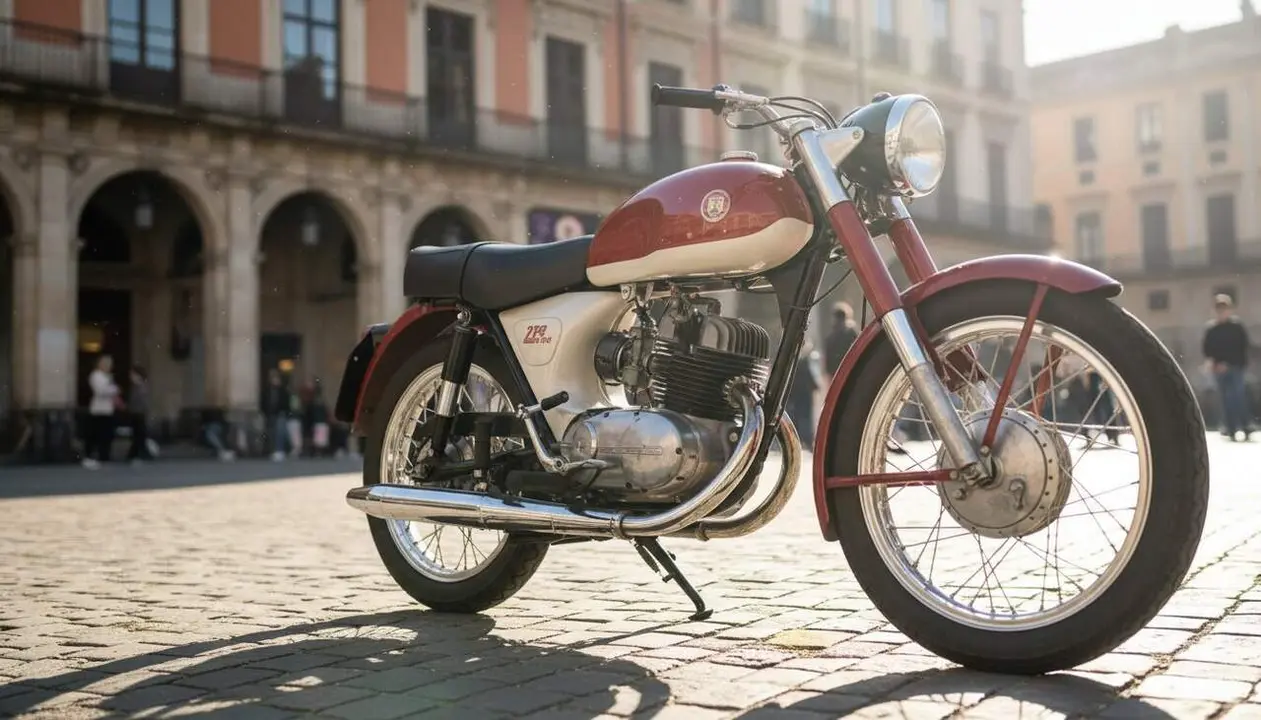

Yes: the European Union has launched a consultation for a redesign and AI has already proposed motorcycles as protagonists, with names like Montesa Impala, Derbi Antorcha, and Bultaco Metralla. The folder of proposals circulates online and has sparked debates (and memories) about what it means to see a motorcycle on a banknote.
The issue is not only aesthetic: the proposal touches on Spanish industrial identity and nostalgia, and the technology that produces it—the AI—does not always respond as we would like. We have prepared our version of three banknotes and explain how and why we chose them.
Why is this of interest to the reader and the history of the Spanish motorcycle?
For those living the motorcycle culture in Catalonia and the rest of Spain, seeing an Impala or an Antorcha on a banknote would be a symbol. It is not just a postcard: it is industrial, sentimental, and cultural recognition.
How does this affect local identity?
Answer: Putting motorcycles on banknotes is to reivindicate a history of industry and street culture in a visual key. For the Catalan reader, this means seeing the memory of works, workshops, and routes such as the N-340 or the AP-7 in summer recognized.
The image of an Impala still smells of old gasoline and new plastic on an ITV morning. The Montesa Impala evokes trips to the village; the Derbi Antorcha recalls the everyday mobility of the sixties; and the Bultaco Metralla symbolizes the sporting ambition of an era.
What did the original source say?
Antonio Regidor published the piece where these designs generated with Gemini AI appear and acknowledged the limitations of the technology in the final image.
The three designs: our proposal and the limits of AI
For the reader who wants to see details: we explain what we put on each banknote and why, and where the AI failed. This section is of interest because it clarifies visual decisions and the practical problems we face when entrusting the creative direction to a generative model.
Which models appear and on which banknote?
Answer: we proposed the Montesa Impala for the 5 euro note, the Derbi Antorcha for the 10 euro, and the Bultaco Metralla for the 20 euro. This assignment seeks to combine historical popularity and graphic readability on lower denominations, very much in contact with the public.
In the process, we tried to have the Impala 250 come out with its urban profile, but the AI (Gemini) often replicated skewed shapes; with the Derbi Antorcha we sought popular simplicity—the well-known “palette”—and the Bultaco Metralla had to appear with a competitive air, although the final result left us a bit cold.
How did the AI work and what problems did we find?
Answer: generation with Gemini AI was fast but imprecise in historical details and human portraits. This prevented, for example, inserting the portrait of Leopoldo Milà with the fidelity we would like.
AI tends to combine styles, invent ornaments, or distort proportions: useful for quick ideas, less useful for a design that should pass aesthetic inspection. Gemini AI signed many of the images circulating, but our experience shows the need for continuous human adjustment.
Creative and practical consequences: what could happen from here?
It is relevant because it raises questions about identity, Eurozone regulation, and the use of AI in official elements. The reader should know that we are in symbolic territory, but with real implications about how we remember our industry.
Could these designs ever become official?
Answer: very unlikely; the European Union regulates the motifs of banknotes and the process is complex. AI-generated ideas serve more as a cultural exercise than a formal proposal.
The public consultation launched by the European Union allows ideas, but the final selection goes through technical, security, and institutional acceptance criteria that go beyond aesthetics.
What practical takeaway do we make?
The main lesson is that AI is a conceptual tool, not a final magic solution. To make an official banknote requires intense human work: engravers, security providers, and a verifiable history behind each image.
This does not detract from the exercise's value: projects like ours serve to open conversations and remember names like Paco Bultó or Leopoldo Milà in a broad cultural context.
The reality is that our proposal with the Montesa Impala, the Derbi Antorcha, and the Bultaco Metralla is above all a gesture of memory and imagination: we have turned archetypes into digital designs to make people think. If the European Union listens to these voices, it would be a symbolic victory for the Spanish industry and for our street culture; if not, at least you have an idea to discuss at the next neighborhood meeting or in the ITV queue. Who knows if in a few years some image of these prototypes will end up in an exhibition or a local museum foundation.
Frequently Asked Questions
- Why is it suggested to put motorcycles on banknotes?
- Because motorcycles like the Impala, the Antorcha, and the Metralla represent industrial memory and everyday mobility for many generations.
- Who generated these designs?
- The images were created with artificial intelligence tools (mentioning Gemini AI at the source) and have been organized by the team publishing the piece.
- Could they be approved by the European Union?
- It is unlikely; the EU requires security criteria and consensus that go beyond a visual exercise generated with AI.