Stimulating environments improve recovery after a stroke

A clinical trial led by the Rovira i Virgili University aims to incorporate social, recreational, and musical activities during the rehabilitation of stroke patients in Tarragona. This project proves that creating more stimulating environments can be key to improving functional, cognitive, and emotional recovery after a cerebrovascular accident.
The first weeks after a stroke are crucial because the brain takes advantage of its plasticity to reorganize itself. For this reason, URV and the Hospital del Mar have launched the RehArt project, which complements conventional therapy with activities that promote this plasticity in a different hospital environment.
The RehArt project and its impact in Tarragona
What is it and why is it of interest to the people of Tarragona?
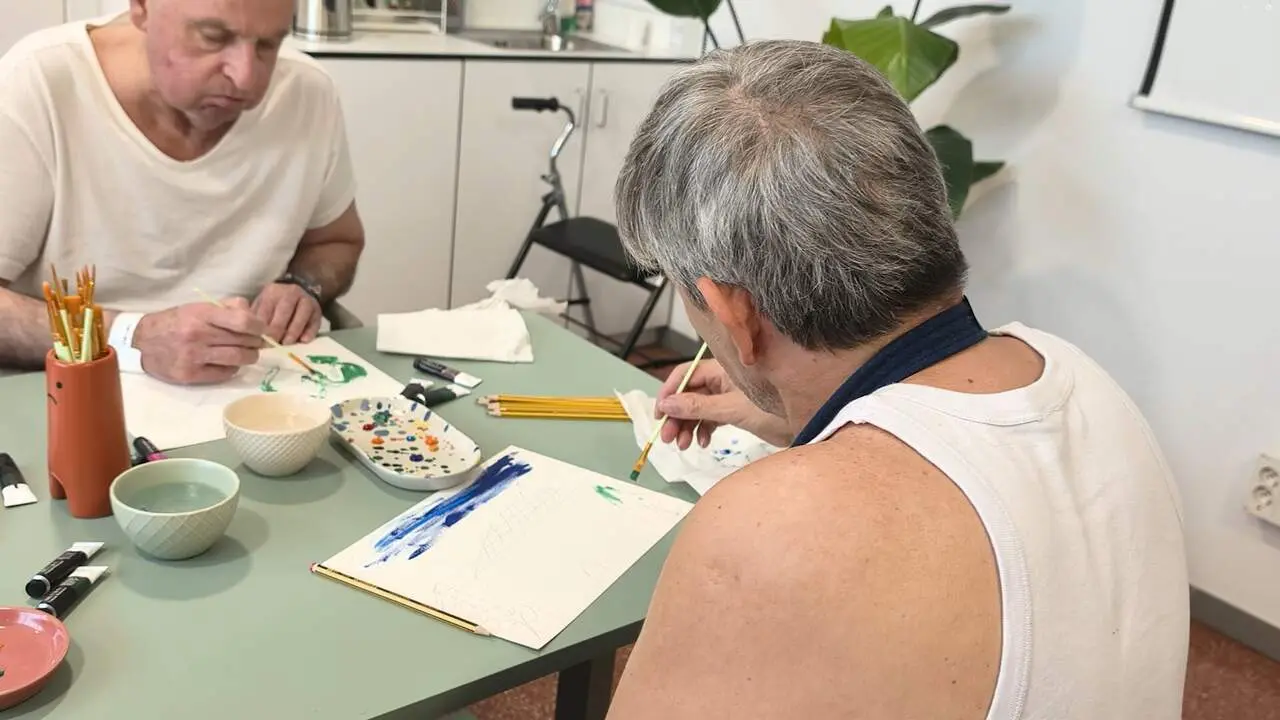
Recovery after a stroke can be slow and difficult. Therefore, at the Neurological Rehabilitation Unit of the Centre Esperança, where the trial is conducted, the first "enriched environment" in Spain has been created. This space is not a cold and impersonal hospital, but a place designed to encourage the active participation of patients in activities that motivate them and seem meaningful.
In Tarragona, where the incidence of stroke is a public health challenge, this initiative can mark a before and after in how rehabilitation processes are designed. Those affected in Tarragona will be able to benefit from a therapy that is more attractive and effective, which not only treats the body but also the mind and emotion.
How is the enriched environment configured and what does it offer?
The space is full of resources like books, board games, art materials, music, and indoor gardening activities. The goal is for patients to continue with their hobbies and interests during their stay, accompanied by family members and caregivers, which reinforces the feeling of normality and autonomy.
The design involved the participation of more than one hundred people, including patients, family members, and professionals, ensuring that the space is truly adapted to the real needs and local culture of Tarragona and its surroundings.
Clinical and economic evaluation of rehabilitation with stimulating activities
What methodology does the trial follow and what results are expected?
The study includes ninety participants who have suffered a moderate or severe stroke. They are grouped into three: one receives only conventional rehabilitation, another combines this with activities in the enriched environment, and a third carries out individualized activities in the room.
The researchers measure functional, cognitive, and emotional progress at admission, discharge, and one month later to determine the effectiveness and durability of the benefits. This analysis is key to knowing whether Tarragona can incorporate these spaces into its healthcare offer.
What economic impact does implementing these environments in Tarragona’s healthcare system have?
The project also examines the resources required for this intervention to ensure its application is sustainable and efficient in the public system. This is of great interest to Tarragona, where the management of healthcare resources is a constant issue and where solutions are sought that add value without overburdening budgets.
Economic viability will determine whether the model can be expanded and offer more human and effective rehabilitation to more patients in Tarragona.
How is rehabilitation experienced in Tarragona with the enriched environment?
How does this model affect patients and their families?
Patients participate in group sessions of ninety minutes five days a week, guided by occupational therapists. The activities are personalized and include special attention to music, a resource that improves neuroplasticity and emotional state.
For families and caregivers in Tarragona, this proposal means a space to share, participate, and see rehabilitation as a more active and hopeful process.
Why does URV choose Tarragona to promote this model?
URV has a social responsibility that goes beyond teaching and research. This project is a clear example of how the university connects with the health and social needs of the province, providing innovative solutions that can transform citizens’ lives.
With support from the Ministry of Science, Innovation and Universities, Tarragona positions itself as a leading territory in stroke rehabilitation, with a model that prioritizes the person and the community.
This clinical trial opens the door to a new way of understanding rehabilitation in Tarragona, more human and effective, which can change the lives of many people affected by a stroke.
If you want to learn more about this initiative or are involved in the recovery of someone close, this information can be key.
Frequently Asked Questions
- What is an enriched environment in rehabilitation after a stroke?
- It is a hospital space designed to offer social, recreational, and musical activities that promote the functional, cognitive, and emotional recovery of patients.
- How does a patient in Tarragona benefit from this project?
- They can participate in personalized activities that complement conventional therapy and improve motivation, autonomy, and recovery after stroke.
- When will the clinical results of the RehArt study be seen?
- Assessments are made at admission, discharge, and one month later to check the progress and durability of the benefits.
Source of the article: Rovira i Virgili University