Education allocates 4.4 million to the Terres de l'Ebre to renovate 52 schools between 2026 and 2028
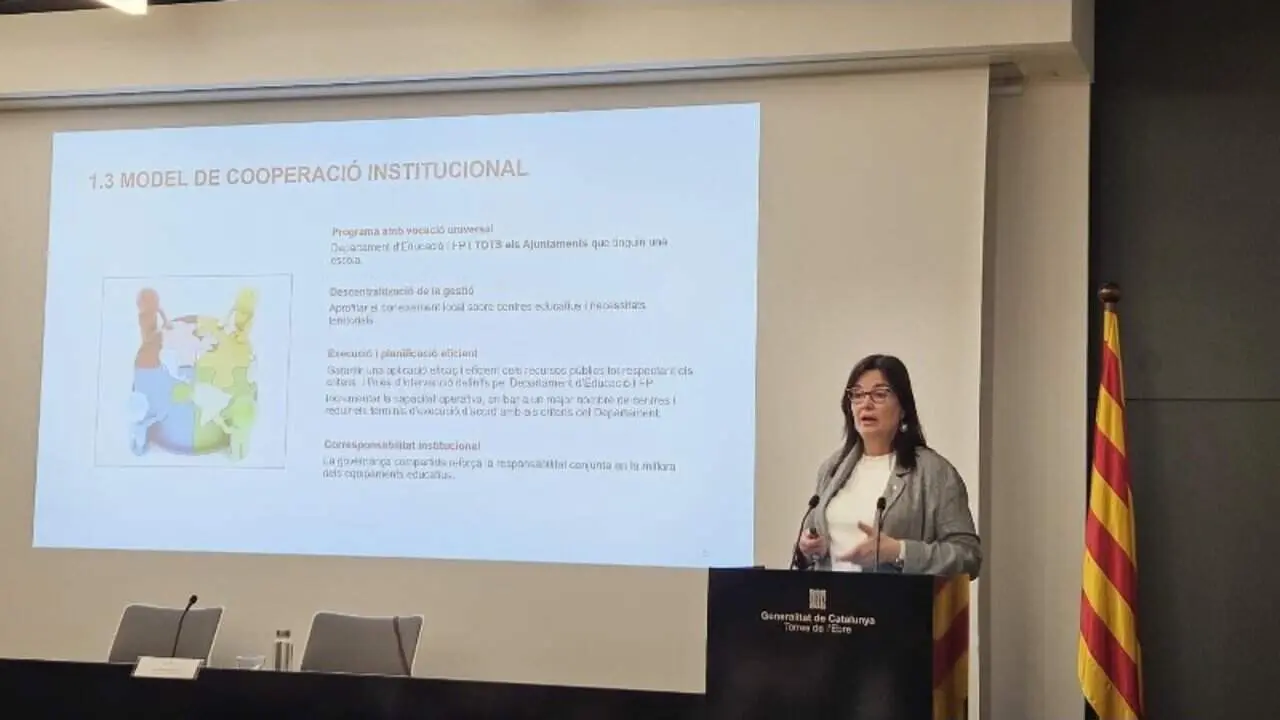

The Department of Education and Professional Training will allocate more than 4.4 million euros to the Terres de l'Ebre for the renovation and improvement of 52 public educational centers between 2026 and 2028. This investment comes with a 100% advance payment to ensure the speed of the transformation of school infrastructures.
Improving the condition of school buildings is a key challenge to guarantee safe and functional facilities. This program stands out for prioritizing preservation, energy efficiency, and the inclusion of rural municipalities, a point that is especially important to the locals in the area.
Distribution and criteria for prioritizing works in Terres de l'Ebre
How are the funds distributed among the municipalities?
The distribution of the 4,451,345.40 euros is based on three fundamental criteria: number of students aged 3 to 12, age of the buildings, and evaluation of the rurality of the municipalities. This last point is key for small towns, which receive an additional contribution to ensure territorial equity.
What does the building age criterion mean for the town councils?
Centers built or renovated before 2007 will receive 37,300 euros per building, except modular ones or those with a government agreement for new construction. In this way, the renovation of the oldest centers is prioritized to extend their useful life.
Types of planned actions and benefits for the educational community
What renovations will be carried out in the educational centers?
The works include renovation and improvement of buildings, replacement of elements such as roofs, carpentry, boilers, bathrooms, kitchens, and dining rooms, as well as energy efficiency measures and accessibility improvements. Asbestos cement will also be removed to eliminate health risks.
What impact do these improvements have for students and teachers?
With these actions, safer, more sustainable, and more comfortable facilities are guaranteed, improving educational quality and everyday experience. In addition, inclusion of students with special needs is favored thanks to improved accessibility.
The role of rurality and commitment to educational equity
Why is special attention given to rural municipalities?
Rural municipalities receive between 6,000 and 10,000 additional euros, plus 130 euros per student, to offset difficulties linked to geographic dispersion and ensure that the educational system does not abandon these areas.
How does this program reinforce the commitment to territorial equity?
This plan reflects the Department of Education's commitment to balancing educational conditions between urban and rural areas, ensuring that all students in Terres de l'Ebre have access to public centers under optimal conditions.
| Type of criterion | Amount assigned | Comment |
|---|---|---|
| Number of students (3-12 years) | 130 euros per student (rural) | Additional support to avoid inequalities |
| Building age | 37,300 euros per pre-2007 building | Prioritizes older centers |
| Additional rural contribution | 6,000 to 10,000 euros | Depends on the municipality's rural rating |
With the new program, the Department of Education and Professional Training wants to ensure that schools in Terres de l'Ebre not only remain standing but are functional, safe spaces adapted to current needs. It was about time that educational reform arrived with such forcefulness to an area that often lags behind in investments.
This economic boost will not only change the physical landscape of the centers but also strengthen the sense of community among teachers, families, and students, who will see their schools adapting to current times. Furthermore, the prioritization of rural municipalities means educational equity ceases to be a utopia.
If you are a local resident or responsible for a public center in Terres de l'Ebre, this news affects you directly: the investment is real, urgent, and with a clear schedule until 2028.
The challenge now is for these works to be carried out efficiently and transparently, so that every euro reaches where it is most needed and translates into tangible improvements for the educational community.
Article source: Govern.cat