Tarragona removes shared scooters: parking will be for bikes and motorcycles

Tarragona terminates the shared electric scooter service due to repeated and significant breaches. The decision affects the service operator, not private scooters, which may continue to circulate in accordance with current regulations.
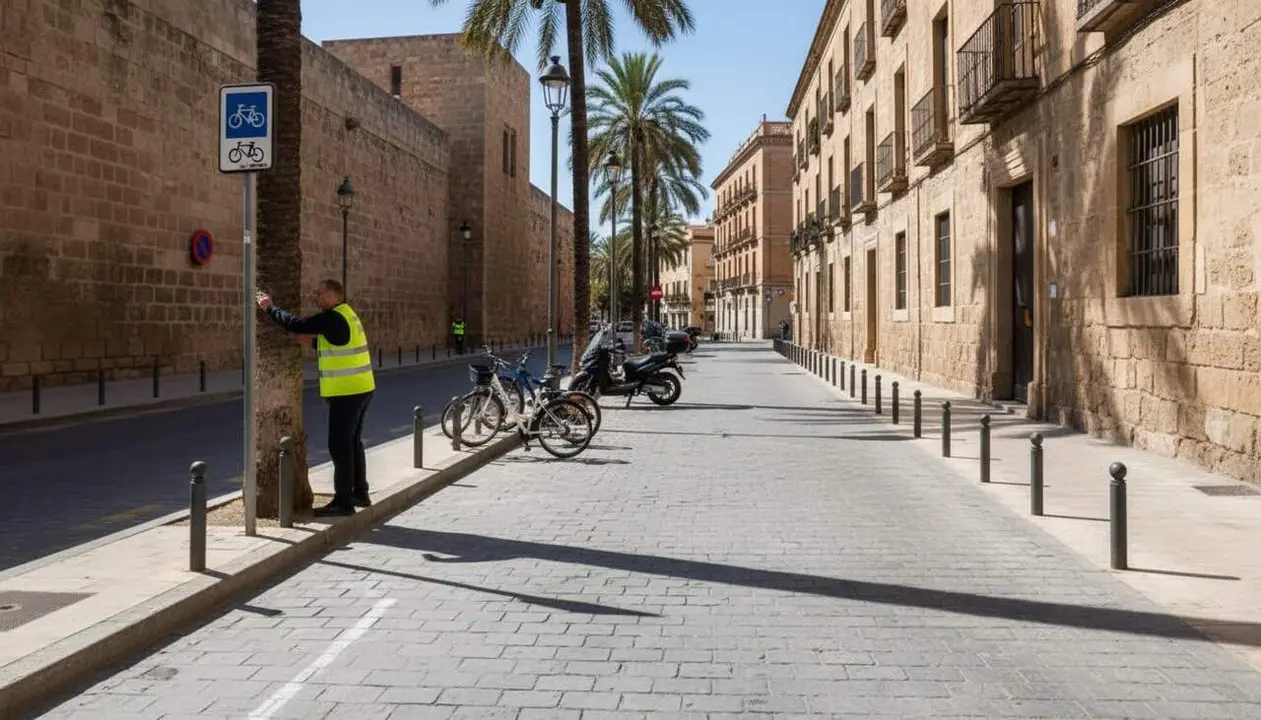
The current parking points will not simply disappear: the City Council will study each location and convert them into spaces for bicycles or motorcycles. The change brings order to a service that, according to the municipal report, has ended up generating problems with parking, circulation, and coexistence in public spaces.
What has failed in Tarragona?
For residents, the decision matters because shared scooters occupied spaces that are part of the daily route along sidewalks, accesses, and ramps. The council considers that the deficiencies were not isolated cases but structural problems that the operator has not effectively corrected.
Why is the shared service disappearing?
The contract has been terminated after evaluating a model that has not been consolidated as expected. The City Council states that the company has repeatedly and significantly breached the agreed conditions and the corrective measures that had been requested.
The Mobility Councillor, Sonia Orts, defended that the decision is not based on a punctual impression. “After these years we have enough experience to assess the service, and the decision is made based on facts,” she affirmed.
This nuance is relevant: the council does not present the withdrawal as an administrative whim but as the result of an evaluation period. The problem, according to municipal information, is that the detected incidents have persisted despite corrective measures.
What breaches has the report detected?
The report points to a lack of effective control over the parking of Personal Mobility Vehicles, PMVs. There were vehicles outside the authorized zones, occupying sidewalks, accesses, and ramps, and in some cases obstructing the passage.
This occupation especially affects people with reduced mobility, who may encounter a barrier precisely where the passage space should remain free. It is not a decorative issue nor a war between modes of transport: it concerns the specific use of the sidewalk.
- Scooters parked outside authorized zones.
- Occupation of sidewalks, accesses, and ramps.
- Obstacles in passage routes, especially for people with reduced mobility.
- Circulation in spaces exclusive to pedestrians and prohibited areas.
- Breaches of basic traffic rules and helmet use.
- Inappropriate behavior associated with minute-based rental.
The document also indicates that the percentage of infractions among users of rental PMVs is higher than that of privately owned vehicles. For the council, this difference points to operator control deficiencies.
What will happen with the parking spaces?
The change will be especially noticeable in the public street points reserved until now for shared scooters. For the reader moving around Tarragona, the practical question is simple: what will be in that space when the operator's vehicles are no longer there?
How will the current spaces be transformed?
The parking spaces will be converted, according to the characteristics and needs of each location, into spaces for motorcycles or bicycle parking. The City Council still needs to study each point before deciding its specific use.
This means that an identical conversion has not been announced for all locations. One space may end up designated for bicycles and another for motorcycles, depending on the needs of each site.
Sonia Orts summarized the municipal criterion with a phrase: “We are not eliminating mobility spaces, but reorganizing them.” The formulation may sound administrative, but it has a straightforward translation: the square meters will continue to serve a transportation function, although the vehicles parked there will change.
The reorganization also solves a paradox of the service. The points created to organize scooters could end up causing disorder when vehicles were left outside enabled zones or hindered passage. The space was there; the control, according to the report, was not sufficient.
Will private scooters be able to continue circulating?
Yes. The termination of the shared service does not affect private electric scooters, which may continue circulating in Tarragona according to current regulations.
The difference is between the shared rental model and private ownership. The council withdraws the former due to contract breaches but does not announce a ban on private scooters nor a general change in the rules governing their circulation.
This point avoids a common confusion: the disappearance of the operator does not mean micromobility disappears. Scooters will continue to be part of urban mobility when privately owned and used according to existing rules.
What kind of Mobility does Tarragona want to maintain?
For users, the withdrawal of the service will only make sense if the freed space and transport alternatives work better. The City Council assures that the decision does not change its commitment to sustainable mobility but separates this commitment from a specific service that has not met expectations.
Does the withdrawal change the commitment to sustainable Mobility?
No, according to the council. The City Council states it will continue working to strengthen public transport, walking, bicycle use, the cycling network, micromobility, and other alternatives to private vehicles.
The central idea is that sustainable mobility does not depend on a single application or a single company. A shared service can leave; the need to move does not. Therefore, the council argues that each model must be evaluated according to criteria of utility, efficiency, and safety.
The municipal statement includes one condition that directly affects daily life: alternatives must be useful, efficient, and safe. It is not enough to occupy public space with new vehicles if they end up blocking ramps, sidewalks, or accesses.
What will the new order have to demonstrate?
The new distribution must allow that spaces for bicycles or motorcycles respond to the needs of each location. The source does not yet specify how many parking spots will change nor when each conversion will be implemented.
This lack of schedule makes the next step clear: first, study the points and then decide their use. The council has announced the general criterion but has not yet detailed the final parking map.
The case leaves a very local lesson. When a mobility service occupies public space, its utility is measured not only by the number of available vehicles but also by how it coexists with those who walk, cycle, park a motorcycle, or need an obstacle-free ramp.
The contract termination, the conversion of parking spaces, and the continuity of private scooters define three different decisions. Tarragona withdraws the shared model, maintains private micromobility, and reorganizes public space. Now the result will be seen at street level, where contracts cease to be papers and become free sidewalks, useful parking, and safer journeys for residents.
Frequently Asked Questions
- Why does Tarragona terminate the shared scooter service?
- The City Council states that the operator has accumulated repeated and significant contract breaches and that corrective measures have not been effective. The report also points to road safety problems, coexistence, and the use of public space.
- What will happen to scooter parking spaces?
- The current parking spaces will be studied one by one and converted, according to the needs of each location, into spaces for motorcycles or bicycle parking.
- Will private electric scooters continue to circulate?
- Yes. The withdrawal affects the shared service, not privately owned scooters. These can continue to circulate in Tarragona according to current regulations.
Source of the article: Editorial / Catalan News Agency