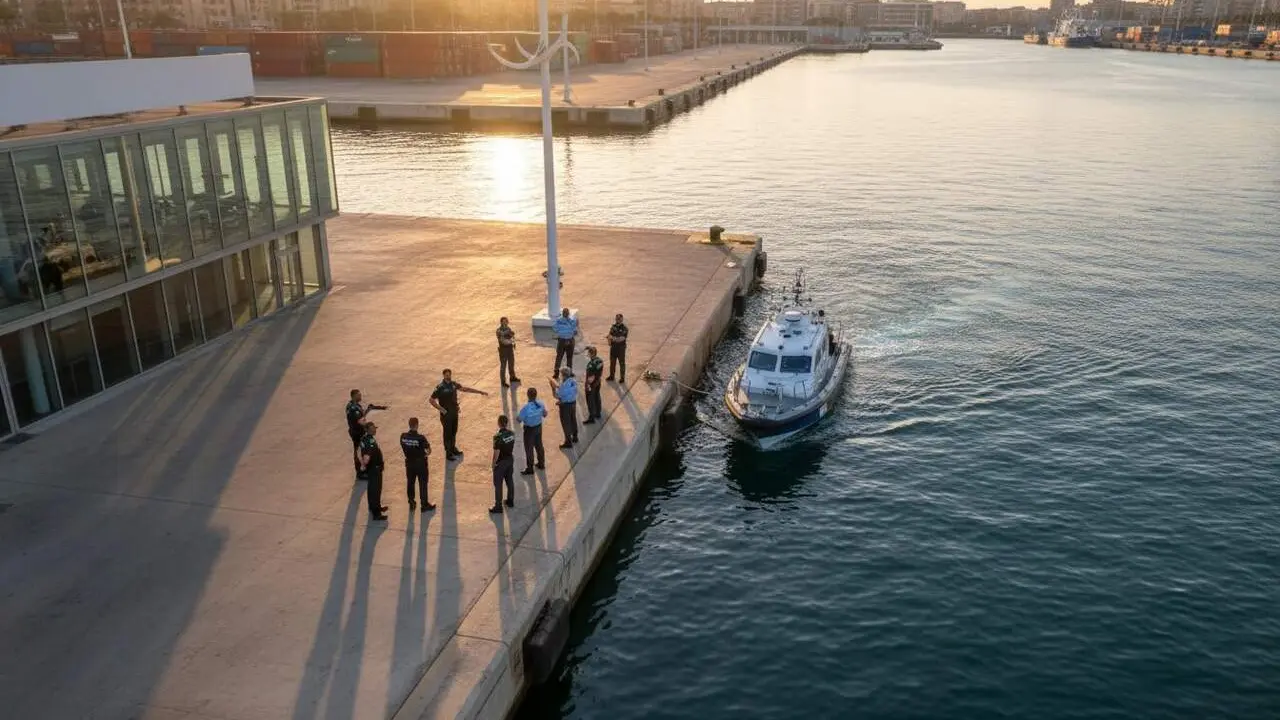
JUCIL stands up to the transfer of the port of Tarragona to the Mossos
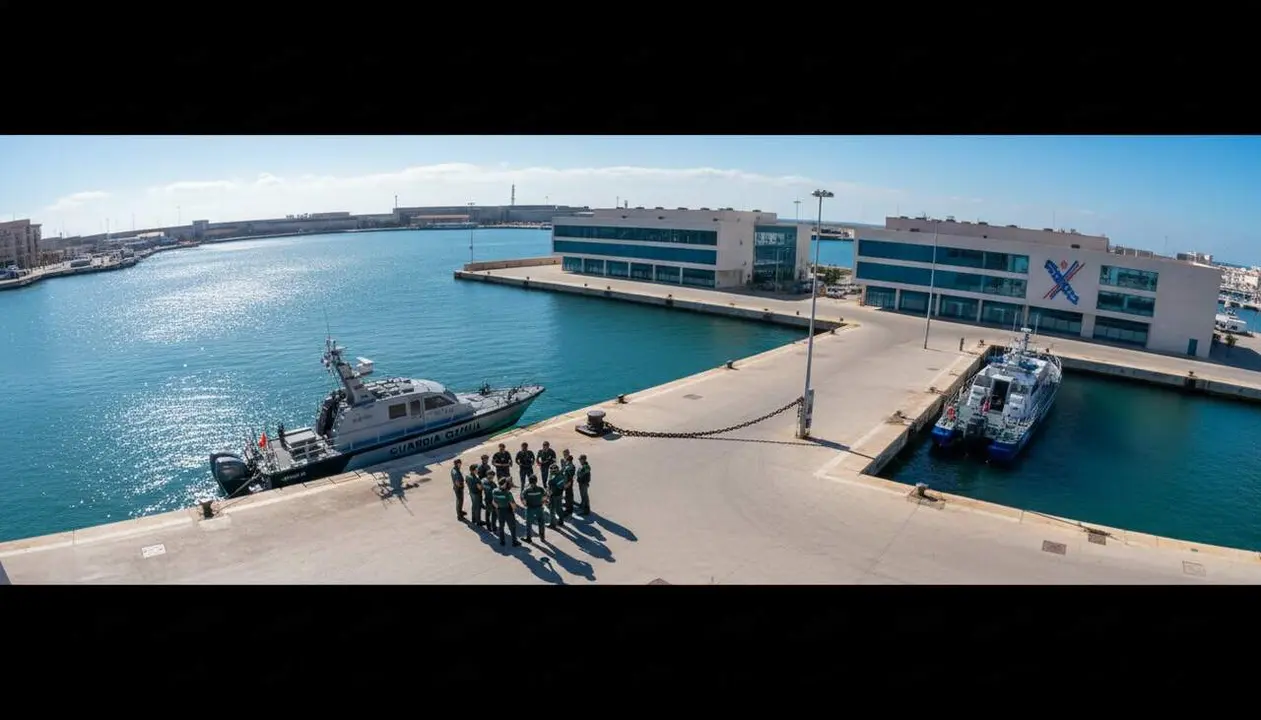

JUCIL wants to stop the transfer of space at the port of Tarragona to the Mossos d'Esquadra. The Civil Guard association argues that the operation lacks the necessary legal justification and could effectively alter the distribution of powers in a port of general interest to the State.
The complaint comes after the group recalled an unfavorable report from the State Attorney's Office issued in 2024. It now points to changes in political positions within the Govern and the Port Authority as the context in which, according to its version, the green light is being sought for the presence of the Catalan police.
What JUCIL denounces about the port of Tarragona
What spaces are intended to be transferred to the Mossos?
JUCIL denounces attempts to transfer spaces and facilities located within the Port Police station of Tarragona to the Mossos d'Esquadra. The association presents this action as a decision with effects that would go beyond a simple allocation of offices.
The nuance is important. According to JUCIL’s statement, the issue is not limited to who occupies a facility, but concerns the possible installation of a Catalan police unit within a port area. For the group, that presence could end up consolidating a distinct police function in a space considered of general interest to the State.
The organization describes the operation as a “transfer” and states that this is not an isolated event. Their interpretation is that the handing over of facilities would be part of a broader sequence, with the first scenario being Tarragona and the next goal, according to JUCIL, the port of Barcelona.
- The designated spaces are inside the Port Police station of Tarragona.
- The transfer would benefit the Mossos d'Esquadra.
- JUCIL claims the move could affect police competencies.
- The association links the case to a possible follow-up strategy at the port of Barcelona.
What legal argument does the association mention?
JUCIL holds that the maneuver lacks the necessary legal motivation. The association supports its complaint with a specific precedent: in 2024, the State Attorney’s Office reportedly issued an unfavorable report against the transfer of space to the Regional Environmental Unit, known as URMA.
This precedent occupies a central place in the group’s position. Their argument is that if there was already a report opposing a previous transfer, any new attempt to assign facilities should have a clear and sufficiently explained legal basis.
The source does not provide the full content of the report nor details its foundations. Therefore, this data allows understanding JUCIL's stance but does not resolve the legal debate. What is clear, however, is the association's objection: in their view, the transfer would not be supported by adequate justification.
| Element | Position expressed by JUCIL |
|---|---|
| Spaces | Facilities within the Port Police station of Tarragona. |
| Beneficiary indicated | The Maritime Police of the Mossos d'Esquadra. |
| Precedent | Unfavorable report from the State Attorney’s Office in 2024 concerning a transfer to URMA. |
| Risk denounced | A de facto transfer of powers within a port of general interest to the State. |
The dispute over police competencies
Why does JUCIL speak of a de facto transfer?
JUCIL uses the expression “de facto transfer of powers” because it understands that the transfer of spaces could facilitate a permanent presence of the Mossos at the port. It does not assert that there is a formally approved transfer, but warns that the occupation of facilities could produce a similar practical effect.
The difference between an administrative decision about spaces and a formal change of competencies is at the heart of the controversy. The association fears that authorization presented as a physical transfer could end up serving to expand the Catalan police’s role within a state port.
This point matters to any reader wanting to separate confirmed facts from accusations. The available information includes a complaint from JUCIL and its warnings but does not include a definitive ruling or an explanation from the Port Authority that confirms the measure’s scope.
The language used by the organization is particularly strong. It describes the initiative as a maneuver and holds that it could force a change of competencies without following the legal procedure that, in their opinion, would be necessary.
What relationship does JUCIL establish with political changes?
The association links the new transfer attempt to changes in political offices within the Govern and the Port Authority. According to their version, these changes would have created the conditions to attempt to greenlight the establishment of the Catalan police at the port of Tarragona.
JUCIL also relates the decision to central government concessions made to keep the support of separatist forces. This accusation appears in the organization’s statement and forms part of its political interpretation of the case.
It is important to keep the attribution clear: this is a complaint made by JUCIL, not a verified conclusion in the available content. The source does not include a response from the central government, the Govern, the Port Authority, or the Mossos d'Esquadra to these claims.
Therein lies the informative key. The conflict combines an administrative issue — the use of certain facilities — with a political interpretation of the territorial distribution of police functions. JUCIL places both issues on the same axis and calls to stop the operation before, in their opinion, it produces broader consequences.
The scenario JUCIL proposes for other ports
What does it fear might happen after Tarragona?
JUCIL claims that the transfer in Tarragona would be the first step of a planned strategy to satisfy the aspirations of the Mossos d'Esquadra and the Generalitat. The association states that the subsequent goal would be to replicate a similar operation at the port of Barcelona.
The warning turns the Tarragona case into more than a dispute over a headquarters. For JUCIL, what is at stake is whether a local decision could become a model applicable to other ports.
The source, however, does not provide a timeline for that supposed second phase nor details which specific spaces would be affected in Barcelona. It also does not confirm that a decision has been made regarding that port. The available data is the association’s warning and its assertion that the goal would be to "disembark" there in a similar manner.
The choice of the word “disembark” reinforces the alert tone of the statement. JUCIL presents the possible arrival of the Mossos to these spaces as a gradual expansion, not as a punctual action.
What elements remain to be clarified?
The known content allows identifying the complaint but leaves several questions open about the true scope of the transfer. These issues should be clarified before considering a change of competencies proven.
- What specific resolution would authorize the transfer of spaces.
- Which facility or facilities would be handed over.
- What would be the operational purpose of the Maritime Police of the Mossos.
- What legal basis would the decision have.
- What response do the Port Authority, the Govern, and the central government provide.
- Whether there is any equivalent project for the port of Barcelona.
The absence of these details does not remove the relevance of the complaint, but it does require presenting it precisely. JUCIL has expressed its opposition and described the risk it attributes to the operation; the source does not provide the final administrative decision nor the position of the indicated institutions.
From an informative perspective, that distinction is decisive. One thing is the alert from a professional association, another is the confirmation that a transfer of powers has actually occurred. Confusing these two levels would turn a political and legal complaint into a closed matter when it still does not appear so in the available information.
The dispute over the facilities at the port of Tarragona brings together three issues: the use of police spaces, the legal basis of the transfer, and the possible effect on competencies. JUCIL calls to stop the operation because it considers it the start of an expansion toward other ports, while official explanations about its scope remain pending. For the reader, the key is to distinguish the complaint made from the decisions ultimately adopted and to follow whether new documents or institutional responses emerge.
Frequently Asked Questions
- What does JUCIL denounce at the port of Tarragona?
- JUCIL denounces attempts to transfer spaces and facilities from the Port Police station of Tarragona to the Mossos d'Esquadra. The association believes the measure could facilitate a de facto transfer of powers.
- What legal precedent does JUCIL cite?
- The association recalls that the State Attorney's Office issued an unfavorable report in 2024 against a space transfer to the Regional Environmental Unit, URMA.
- What does JUCIL fear might happen in Barcelona?
- JUCIL states that Tarragona would be the first step of a subsequent strategy to establish a similar presence of the Mossos at the port of Barcelona.
- Is the transfer of competencies confirmed?
- The source does not confirm a formal transfer. It reports JUCIL’s complaint, which holds that the transfer could produce a de facto effect on competencies.