Amposta cuts the N-340: about 200 teachers denounce ratios and overcrowded classrooms
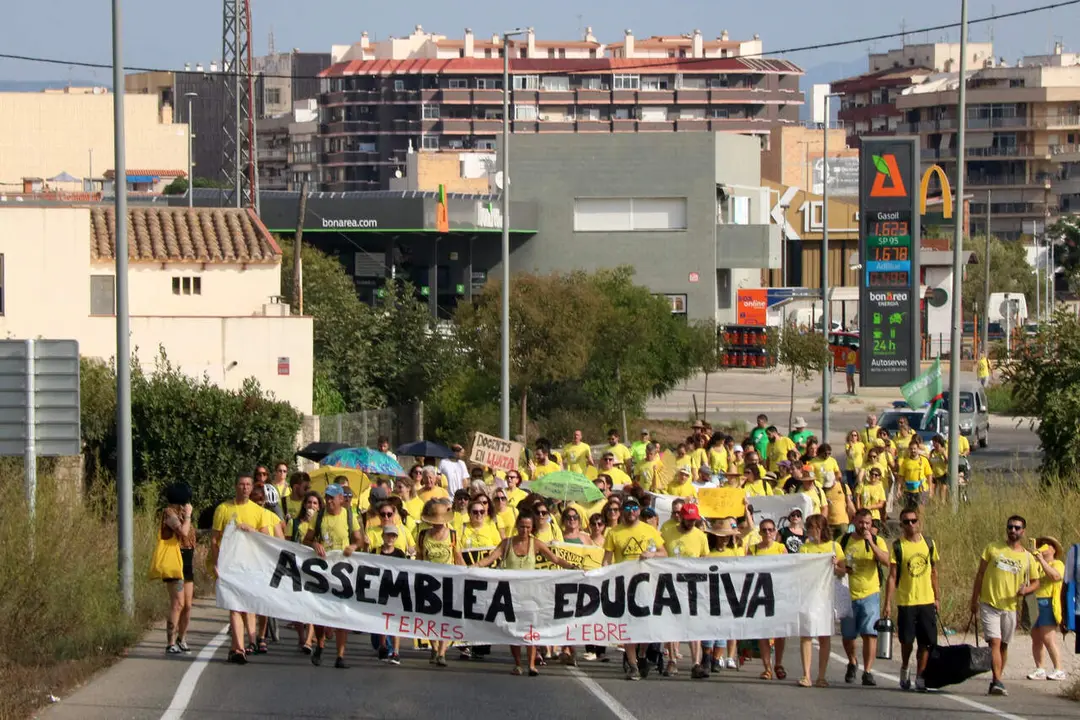

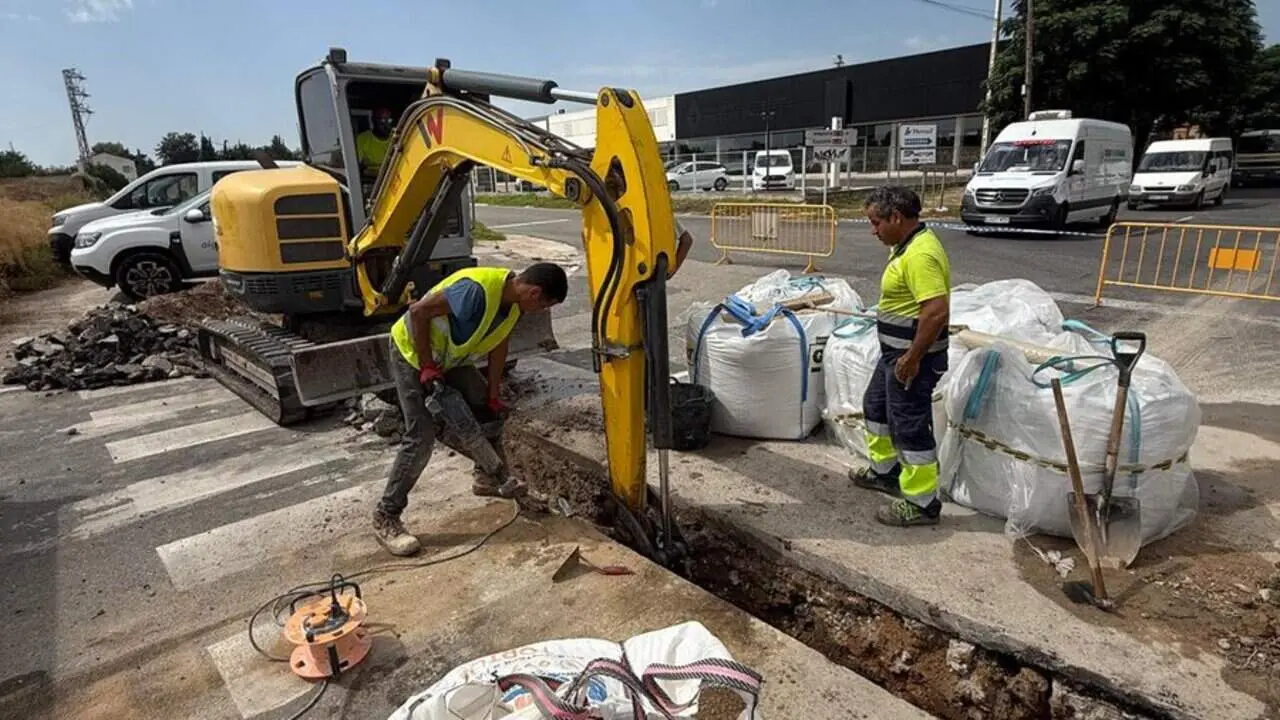
About 200 teachers have blocked the N-340 in Amposta to demand smaller class sizes, air-conditioned classrooms, and more educational resources. The protest occupied the dual carriageway section of the road, under the access bridge at the southern entrance, after a march through the town center.
The scene was not that of a peaceful start to the school year: teachers turned one of the main access roads to Amposta into the space for an assembly, a sit-in, and a protest against the problems that, they claim, persist within the schools of the Terres de l’Ebre.
The N-340 is blocked under the southern entrance bridge of Amposta
For drivers traveling through Amposta, the protest took place at a very specific spot: the dual carriageway stretch of the N-340 located under the access bridge at the southern entrance. For the teachers, occupying this space meant taking the educational conflict out of the classrooms and placing it in front of everyone.
What was the teachers’ protest like?
The mobilization began with a march of nearly 200 participants through the center of Amposta. Afterwards, a large part of the protesters occupied the road, where a sit-in and an assembly were held.
The route ended, thus, at a common passage point for locals and for people entering or leaving the town. It is not the same to protest in front of an administrative building as to block a route like the N-340: the message is seen, heard, and forces the conflict out of the office.
The Amposta protest was the central mobilization in the Terres de l’Ebre within the strike called to coincide with the start of the school year. Choosing the first day involved a recognized risk for the organizers themselves, as it came after several days of strike accumulated at the end of the previous school year.
What participation did the organizers expect?
The organizers evaluated the turnout positively, despite admitting they expected a higher attendance. Pau Ureña, spokesperson for USTEC in the Terres de l’Ebre, described the call as a risky bet because it had been a long time since a strike was held on the first day of school.
"It is the first time, in a long time, that a strike takes place on the first day of school. It was a very risky bet, and we have this situation of ambivalence," Ureña acknowledged. The phrase explains the dual message of the day: the protest gained visibility, but the response on the street was not as large as anticipated.
Amposta concentrated a demand that goes beyond a single center. The teachers of Terres de l’Ebre denounce that the start of the school year arrives amid breaches by the Department of Education and that the problems burdening the system have not been resolved with the announcements made after last year’s mobilizations.
Higher ratios and classrooms that keep “boiling”
For families and students in the Terres de l’Ebre, the conflict affects two very specific things: how many students there are in each classroom and under what conditions they spend the day. The teachers report that there are centers where ratios have increased compared to last school year and denounce that the heat still lacks an adequate response.
What do the teachers denounce in the centers of Terres de l’Ebre?
The main complaint is that ratios have not been generally reduced. Pau Ureña pointed out that in centers such as the Dertosa Institute, they are even higher than last school year.
This data concretizes a complaint often hidden behind administrative terminology. More students per classroom means more pressure on teaching teams and less margin to address various situations, especially when the same group demands the effective implementation of the 6,500 resources agreed upon for inclusive education.
The request is not only that these resources exist on paper. Teachers demand that centers receive sufficient resources to apply them and that staff can face the school year under conditions that do not turn every incident into an obstacle course.
- Reduction of ratios, especially in centers where they have increased.
- Effective application of the 6,500 resources agreed upon for inclusive education.
- More resources for educational centers.
- Improvements in classroom air-conditioning conditions.
Why do they speak of “boiling” classrooms?
Teachers demand solutions for the high temperatures inside classrooms. Ureña expressed it with a direct image: "Classrooms can’t keep boiling."
The heat does not appear in the protest as a minor or seasonal complaint. The group places it alongside ratios and educational resources as a problem affecting the day of students and professionals. When a classroom does not have adequate air-conditioning conditions, the discussion about educational quality ceases to be abstract.
The demand has a particularly local reading because the mobilization took place in the Terres de l’Ebre and because protesters speak of concrete situations in local centers. The message is clear: the announced improvements have not prevented the school year from starting with classrooms at temperatures teachers consider unbearable.
According to the group, the problems are structural. The protest does not call for a punctual solution for one specific week but for changes affecting the way staff, groups, and educational spaces are organized. Normality, they say, cannot be decreed from a press release.
The educational conflict remains open after the strike
For the reader in the Terres de l’Ebre, the day in Amposta does not end when protesters leave the N-340. Unions have warned that the strike is an expression of a broader disagreement with the conditions of the school year and that demands remain outstanding regarding salaries, language, and resources.
What other demands do they bring to the table?
Teachers also demand a salary revision clause linking increases to the CPI. To this request they add the defense of Catalan as a language of welcome, learning, and cohesion within the educational system.
The list of demands thus combines issues of income with aspects directly linked to the organization of centers. Salaries are part of the conflict, but so is the school’s capacity to guarantee resources, inclusion, and a shared linguistic framework.
Union representatives consider there is room for system improvement. Ureña stated that it could reach up to 6% of GDP and assured that a very large part of the staff has felt "absolutely insulted" by the conditions under which they had to face the start of the year.
Will there be more mobilizations?
Unions do not rule out new mobilizations as they perceive stagnation on the part of the Government. Pau Ureña explained that contacts with the Government have been limited to requests to call off the strike, without an offer in return.
Xènia Redondo, a teacher at the institute in Camarles and member of the Terres de l’Ebre Educational Assembly, placed the conflict in political terms: "It is a reflection that things cannot start normally because it has been the Department that did not want them to start normally."
Enric Segarra, a representative of CGT Terres de l’Ebre, added that "normality will not be established until we achieve real improvements." Both statements coincide on one idea: for teachers, the problem is not resolved with the formal start of the school year nor with the Department’s prior announcements.
The protest in Amposta leaves a hard-to-ignore photo: a road blocked, an assembly under a bridge, and nearly 200 people demanding changes. The concrete demands are ratios, the 6,500 resources, air conditioning, salaries, and Catalan; the Government’s response will determine whether the N-340 was just the setting for one day of strike or the first warning of a new cycle of educational mobilizations.
The N-340 in Amposta has put before everyone’s eyes a conflict that normally remains inside schools: ratios that can grow, classrooms that continue boiling, and inclusion resources still pending. Teachers have made visible that the start of the school year is not just a calendar date but the moment when it is verified whether promises actually reach the classrooms and families of the Terres de l’Ebre.
Frequently Asked Questions
- Why was the N-340 in Amposta blocked?
- Teachers occupied the dual carriageway stretch under the access bridge at the southern entrance of Amposta during the central protest of Terres de l’Ebre for the start-of-year strike. They also held a sit-in and an assembly there.
- How many protesters participated in the Amposta protest?
- The mobilization gathered nearly 200 participants, according to the content of the protest. Organizers assessed the participation positively, though they admitted they expected a higher turnout.
- What do the teachers of Terres de l’Ebre demand?
- They demand reducing ratios, implementing the 6,500 resources for inclusive education, improving classroom air conditioning, reviewing salaries according to the CPI, and reinforcing the role of Catalan.
- Could there be more mobilizations?
- Unions do not rule out new mobilizations because they denounce government stagnation and affirm that contacts have only served to request the strike’s cancellation without offering measures in return.
Source of the article: Jordi Marsal / Catalan News Agency