Tarragona: JUCIL wants to stop the transfer to the Mossos and warns of the first step towards the ports
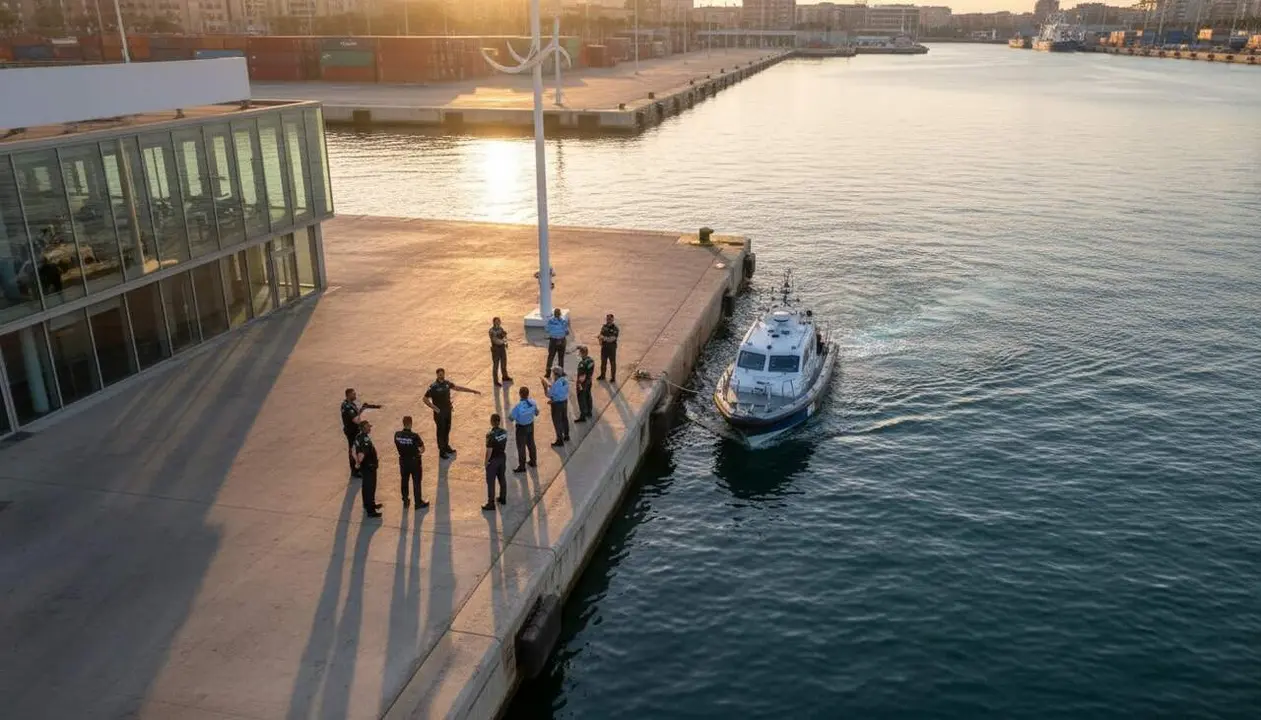

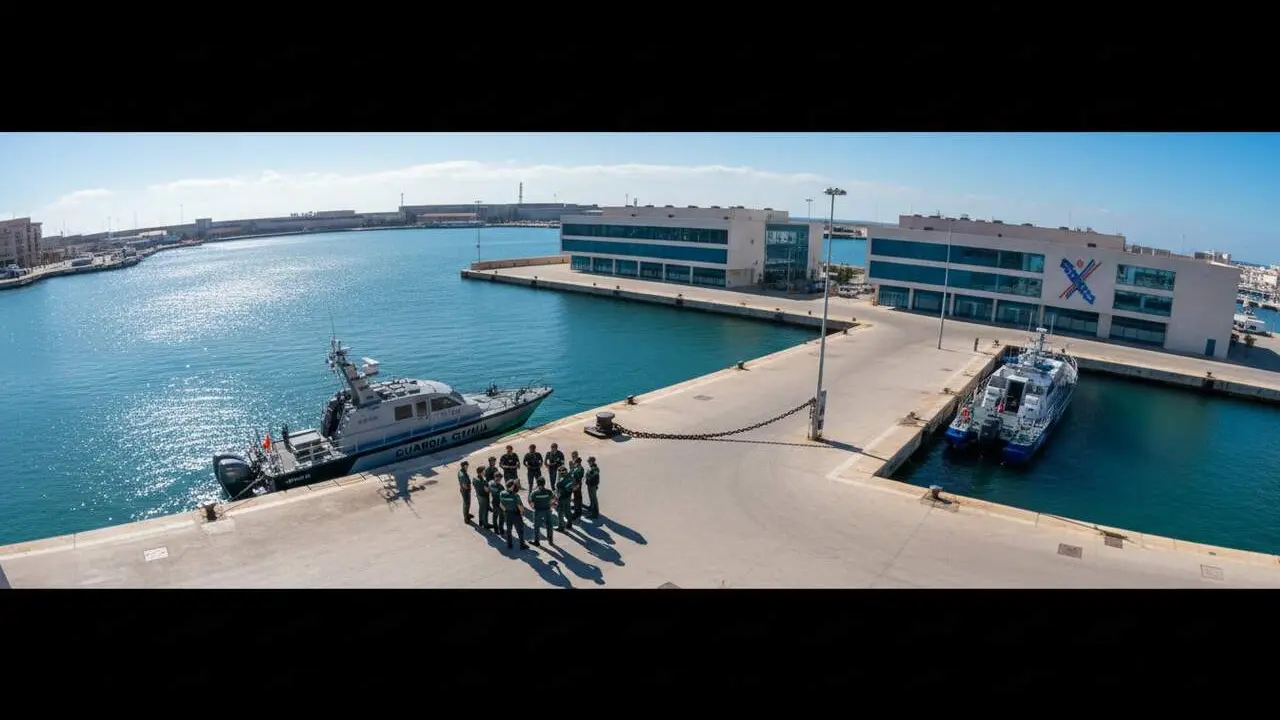
JUCIL wants to stop the transfer of spaces in the port of Tarragona to the Mossos d’Esquadra because it considers that it could open the door to a shift in jurisdiction. The Civil Guard association argues that the maneuver lacks sufficient legal backing and that the conflict goes far beyond a simple division of offices.
The complaint focuses on the facilities of the Tarragona Port Police station. According to the entity, the transfer would favor the establishment of the Catalan police in a state port of general interest and could turn Tarragona into the first move of a broader strategy. The paperwork here has more powder than it seems.
What does JUCIL denounce at the port of Tarragona?
Why does this dispute affect Tarragona?
For the Tarragona reader, the issue is who occupies and uses the police spaces within the port and what function they end up performing there. JUCIL asserts that this is not an isolated transfer, but a movement with effects on the presence of different security forces in the complex.
The professional association has denounced the “attempts to transfer” spaces and facilities located inside the Tarragona Port Police station in favor of the Mossos d’Esquadra. The source does not specify which rooms or zones would be subject to the transfer, nor does it report the existence of a definitive agreement.
This nuance is relevant. What is documented is a public complaint from JUCIL about a possible transfer, not the details of an approved agreement or a timeline for occupation. The news, therefore, is the open conflict surrounding this operation and not a confirmed entry of the Mossos into all port facilities.
What is the association’s central argument?
JUCIL argues that the “maneuver lacks the necessary legal motivation” and aims to force a “de facto jurisdictional transfer” inside a state port of general interest. Their reading is clear: giving physical space to a police force could end up facilitating a greater operational presence.
The key word is jurisdiction. The association does not present the issue as a simple internal reorganization, but as a progressive change in the distribution of functions. In this approach, the office would only be the visible part of a decision with institutional consequences.
In the statement, JUCIL also presents itself as one of the “most representative” professional associations of the Civil Guard. Therefore, its position comes from a group that defends the continuity of the force’s role in the ports and questions that the Mossos could gain space through this route.
What happened with the State Attorney’s report?
What did the 2024 report conclude?
According to JUCIL, in 2024 the State Attorney issued an unfavorable report regarding the transfer of space to the Regional Environmental Unit, known as URMA. The association uses this precedent to argue that the new operation requires legal justification that, in their view, does not yet exist.
This fact helps to understand why the complaint does not focus only on physical space. There is a precedent invoked by JUCIL and an interpretation that that legal position should continue to condition any subsequent transfers. However, the source does not reproduce the full content of the report nor explain its foundations.
So the documented point is limited but concrete enough: the association refers to an unfavorable 2024 report related to URMA and claims that this year there would be attempts to greenlight the establishment of the Catalan police after changes in the political positions of the Government and the Port Authority.
Why does JUCIL speak of a political change?
JUCIL links the transfer attempts to changes produced in the political posts of the Government and the Port Authority. Furthermore, it claims that the operation responds to concessions by the central Government to maintain the support of the pro-independence forces.
This is a political accusation by the association, not a conclusion substantiated by the provided information. The statement frames it as an interpretation of the moment and the decisions that, according to JUCIL, would be taking place at the port of Tarragona.
The distinction matters. One thing is the reported fact—the complaint about the spaces and the unfavorable report mentioned—and another, the political motive the entity attributes to it. Mixing them would make the accusation appear proven. And bureaucracy already has enough fog without adding smoke.
What might happen now with the facilities?
Is the transfer already approved?
There is no record that the source provides a definitive approval nor sets a date for the Mossos d’Esquadra’s entry into the police station’s spaces. What is documented is JUCIL’s complaint and its warning about a possible fundamental change.
This lack of detail leaves several practical questions open: which spaces are intended to be transferred, which body should authorize it, what legal basis would be invoked, and what functions the Mossos would carry out there. None of these details appear developed in the news brief.
Therefore, the local reader can hold onto three secure points:
- The dispute is situated at the port of Tarragona.
- The affected spaces would be facilities inside the Port Police station.
- JUCIL considers that the transfer may entail a de facto jurisdictional shift.
What scope does JUCIL warn about?
JUCIL characterizes the transfer as the “first step” of a planned strategy to satisfy the aspirations of the Mossos d’Esquadra and the Generalitat. The association adds that the subsequent goal would be to establish similarly at the port of Barcelona.
The reference to Barcelona broadens the political scope of the complaint, which originates in Tarragona but points to a possible pattern in other ports. The source does not specify what timeline this second phase would have, nor describe any action already initiated at the Barcelona port.
What remains on the table, then, is a dispute over presence, jurisdiction, and legal coverage. On one hand, JUCIL calls to stop the transfer because it considers it the beginning of dismantling the port forces. On the other, the available information does not record any response from the Government, the Port Authority, or the Mossos to these accusations.
The port of Tarragona is not only the address of the conflict: it is where a transfer of spaces can acquire a much larger institutional significance. JUCIL denounces this as a first step towards a jurisdictional change, while the 2024 report and the lack of details about the agreement leave the issue open. Now it remains to be seen if there will be formal authorization, what legal basis will be provided, and if any parties will respond publicly.
Frequently Asked Questions
- What does JUCIL want to stop at the port of Tarragona?
- It wants to stop the transfer of spaces and facilities of the Tarragona Port Police station to the Mossos d’Esquadra. The association considers that this operation may involve a de facto jurisdictional transfer.
- What does JUCIL say about the 2024 report?
- JUCIL states that the State Attorney issued an unfavorable report in 2024 regarding the transfer of space to the Regional Environmental Unit, known as URMA.
- Is the transfer already approved?
- The provided information does not confirm a definitive approval nor set a date for the Mossos’ entry into the spaces. It only reports JUCIL’s complaint regarding the transfer attempts.
- What other port does JUCIL mention?
- The association mentions the port of Barcelona and states that the transfer at Tarragona would be the first step of a strategy that could later be reproduced there.
Source of the article: Editorial Staff / Catalan News Agency