Montblanc, 50 years later: the surprising legacy of the March
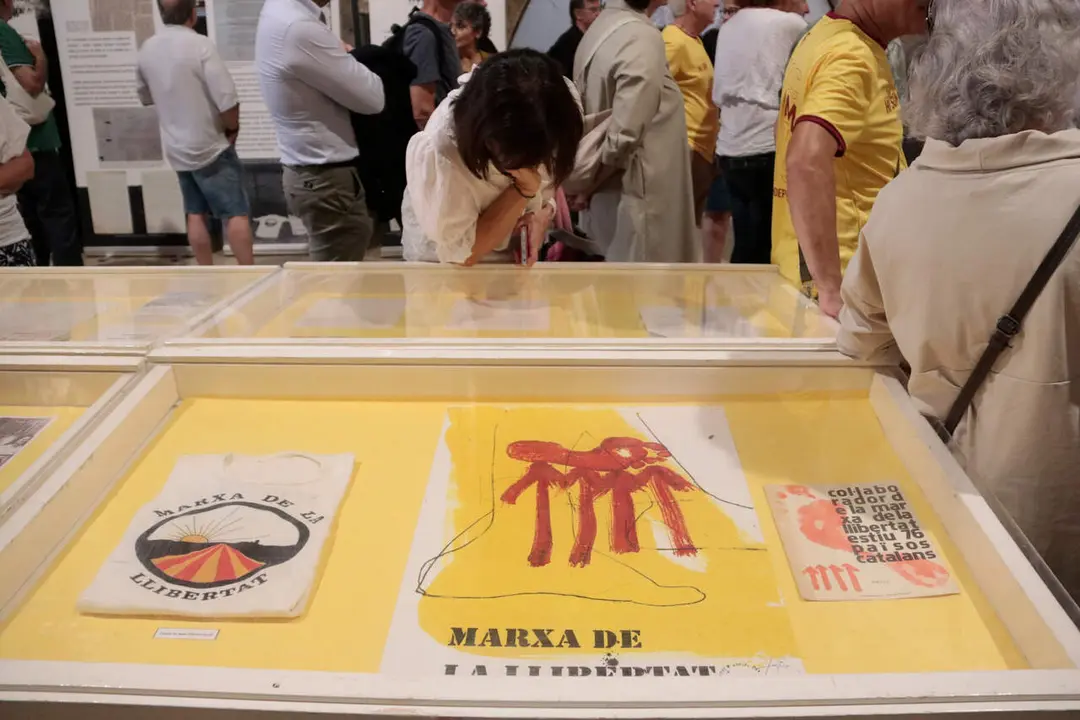

The March of Freedom left Montblanc a legacy of peaceful mobilization, democracy, and defense of freedoms. Fifty years later, an exhibition recovers its documents while a walk to Poblet once again brings the events before the collective memory. A story that still challenges.
Imagine the marchers stopped by police charges as they tried to reach the Poblet monastery. That September 12, 1976, repression prevented the planned route from being completed, but it did not erase the meaning of the mobilization. Now, Montblanc recovers that scene and the role it played in the emergence of new peaceful citizen movements.
What did the March of Freedom represent?
For readers in the Conca de Barberà, the March is not a distant reference: Montblanc was its final scene and Poblet, the destination participants could not publicly reach. Its history explains how a peaceful initiative turned towns and cities into spaces of democratic revendication during the early years of the transition.
How was the mobilization organized?
The initiative was proposed in the summer of 1976 as a mobilization throughout the Catalan Countries. Participants were divided into six columns and traveled through nearly 300 towns in Catalonia, the Valencian Country, and the Balearic Islands.
The slogan was clear and direct: “Catalan people. Start walking.” It was not just about covering territory. The marchers spread the demands of the democratic movement and kept a political message alive at a time when Francoist authorities still imposed strict surveillance.
The mobilization mainly claimed three objectives:
- Freedom.
- Amnesty.
- Statute of Autonomy.
This combination of demands made the March one of the most outstanding expressions of the will of an important part of Catalan society to advance toward a democratic system. The route, moreover, allowed sharing these demands with many towns of the Principality.
Why does it continue to be a reference?
The strength of the March does not depend only on the number of towns visited nor on the duration of the route, which lasted more than two months. Its value lies in the way of organizing a collective protest without resorting to violence, despite the express prohibition by Francoist authorities.
That experience showed that citizens could coordinate, move, and transmit a democratic program under adverse circumstances. Walking could also be a form of standing up. This is one of the reasons why former participants claim their connection with later peaceful initiatives.
What happened in Montblanc and Poblet?
For the residents of Montblanc and the Conca de Barberà, this episode has a very specific territorial component: the county became the final point of a mobilization that had crossed a significant part of the country. Police charges prevented the march from reaching Poblet around the time of the National Day of Catalonia.
How did Francoist repression act?
The prohibition of the initiative did not stop the marchers. During the route, they had to face surveillance, numerous arrests, fines, and police repression, in an environment that made any public gathering with democratic demands difficult.
In Montblanc, repression materialized in charges against the participants. The goal was to reach Poblet, but police intervention prevented the mobilization from culminating openly. Only some participants were able to reach the monastery clandestinely.
The outcome explains why Montblanc occupies a central place in the memory of the March. It was not just another stop on the route, but the space where the mobilization directly clashed with Francoist repression and where its final objective was interrupted.
What significance does that episode have today?
The memory of the events allows understanding the contrast between the peaceful nature of the initiative and the authorities’ response. The marchers did not abandon the mobilization but had to adapt to surveillance, arrests, and imposed restrictions.
This tension helps explain the symbolism that participants attribute to that feat. The march expressed the will of a significant part of Catalan society to leave behind the Franco dictatorship, and Montblanc became associated with the resistance of that democratic project.
The commemoration thus recovers a local memory that at the same time has a national dimension. What happened between Montblanc and Poblet connects a concrete experience with a mobilization that had traveled through Catalonia, the Valencian Country, and the Balearic Islands.
How is the pacifist legacy claimed now?
For the reader who wants to approach the events, the commemoration offers two complementary ways: consulting documents in the exhibition and physically walking the section between L’Espluga de Francolí and Poblet. Memory is not locked in an archive; it is presented with materials and an activity open to the territory.
What can be seen at the Montblanc exhibition?
The exhibition “1976-2026. 50 years of the March of Freedom” can be visited at the Comarcal Archive of the Conca de Barberà, in Montblanc. The exhibit is itinerant and gathers materials from the period to reconstruct the events.
Among the documents found there are:
- Leaflets linked to the mobilization.
- Archival photographs.
- Press clippings from the era.
The selection allows seeing how the March was explained and which material testimonies have preserved its memory. The organizers’ intention is to convey democratic values to present and future generations, making the documents serve as a starting point to speak about freedom, amnesty, and self-government.
What is its relation to the mobilizations of the process?
Former members consider that the March helped demonstrate other ways of organizing through pacifism. Pilar Magrinyà has linked that experience with later independence mobilizations, especially the so-called marches for freedom.
According to her testimony, she also participated and thought that those marches were a continuation of the 1976 initiative, but without the repression they had suffered then. The comparison does not erase the differences between the two moments: Magrinyà herself admits that the situation had changed and that not everything they wanted had yet been achieved.
This nuance is key. The legacy is not presented as an exact copy nor as a finished response, but as an experience that left forms of organization and a culture of peaceful protest. Memory, when preserved with names, places, and documents, ceases to be an abstract slogan.
The commemoration includes a walk between L’Espluga de Francolí and Poblet, covering a little more than three kilometers. The activity takes place this afternoon, coinciding with the anniversary, and allows recalling the events on the very territory that connects the mobilization with its planned destination.
The walk is part of the official commemoration “1976. 50 years of democratic struggles.” Alongside the traveling exhibition, it offers a simple and visible way to keep present a mobilization that was banned, persecuted, and, despite all, sustained by its participants.
Fifty years later, Montblanc concentrates documents, testimonies, and a route that tell the same story: that of a citizenry that demanded freedom, amnesty, and Statute of Autonomy walking from town to town. The March of Freedom, the repression experienced in Montblanc, and its pacifist legacy continue forming a useful memory to understand how democratic struggles broke through.
Frequently Asked Questions
- What was the March of Freedom?
- It was a peaceful mobilization across the Catalan Countries during the summer of 1976. Divided into six columns, it traveled through nearly 300 towns and demanded freedom, amnesty, and a Statute of Autonomy.
- What happened in Montblanc in 1976?
- Police charges prevented participants from publicly reaching Poblet. Only some marchers were able to reach the monastery clandestinely.
- What does the 50th anniversary commemoration include?
- It includes the traveling exhibition “1976-2026. 50 years of the March of Freedom” at the Comarcal Archive of the Conca de Barberà and a walk of a little over three kilometers between L’Espluga de Francolí and Poblet.
Article source: Ariadna Escoda / Catalan News Agency