Tropospheric ozone alert in Camp de Tarragona: what you need to know today
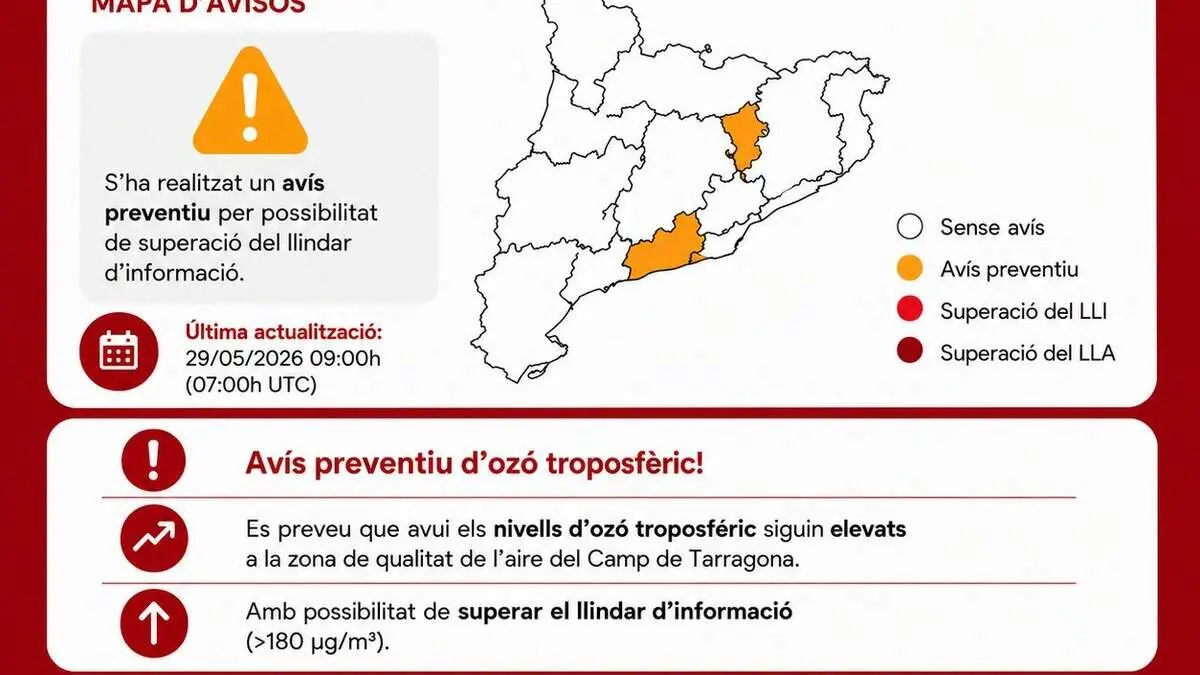

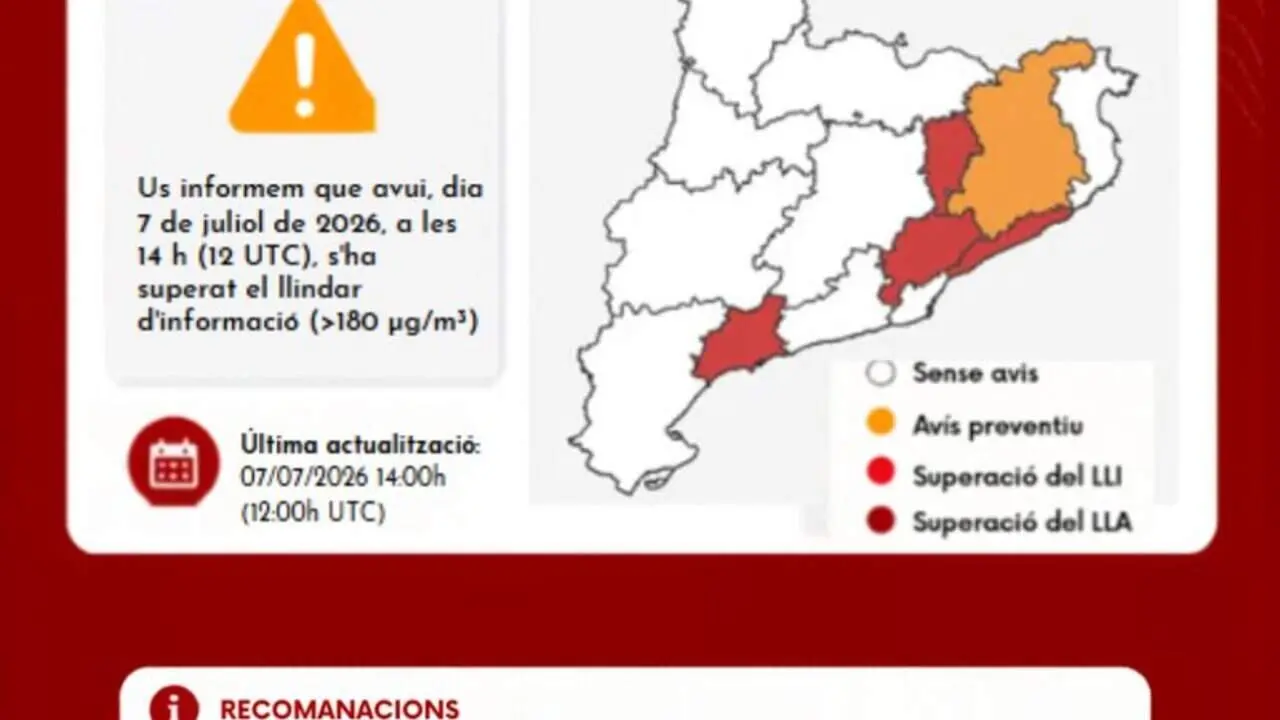
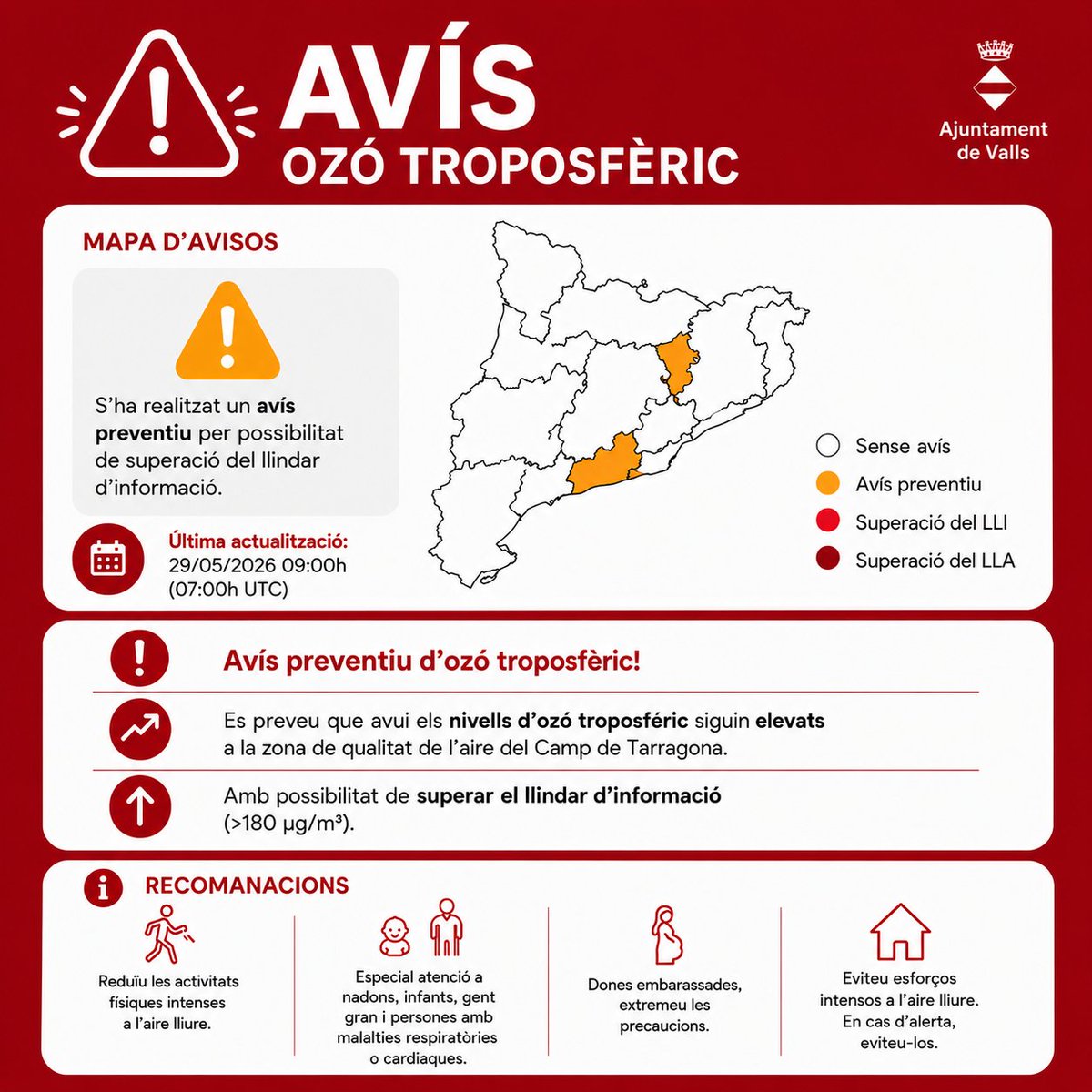
Tropospheric ozone levels soar today in the Camp de Tarragona. The preventive warning alerts that air quality could worsen above the information threshold, a fact that concerns the local population.
The Valls City Council made this warning public on May 29, 2026, highlighting that ozone values could exceed 180 µg/m3, a critical threshold for health and the environment.
Tropospheric ozone levels and their impact
What is tropospheric ozone?
Tropospheric ozone is an atmospheric pollutant formed at ground level by chemical reactions between nitrogen oxides and volatile organic compounds under sunlight. It is not the same as stratospheric ozone, which protects the Earth from ultraviolet rays.
Health and environmental hazards
When ozone levels exceed certain thresholds, they can cause respiratory discomfort, eye irritation, and worsen conditions in people with lung or cardiovascular diseases. Moreover, it affects vegetation and can damage crops and natural ecosystems.
Specific context of the Camp de Tarragona
Factors worsening air quality
The combination of weather conditions, such as heat and lack of wind, favors ozone accumulation. Additionally, industrial activity and heavy traffic contribute to the increase of precursor compounds.
Especially affected areas
The air quality zone of the Camp de Tarragona, which includes municipalities like Valls, Tarragona, and the surrounding territory, is the most exposed to this phenomenon. The Valls City Council’s warning is a direct example of concern for public health.
What can citizens do in response to the ozone warning?
Recommendations for the population
- Avoid intense physical activities outdoors during peak ozone hours.
- Reduce the use of private vehicles and opt for sustainable alternatives.
- Follow official guidelines and check the air quality status.
Institutional measures and monitoring
Local councils in the area, together with the Generalitat, constantly monitor air quality and activate preventive warnings to protect public health. Citizens need to stay alert to these alerts.
If you wonder what is behind this warning, now you know: it is the combination of local and meteorological factors that leaves the air in the Camp de Tarragona more polluted than it should be.
Source of the article: Valls City Council