The definitive transformation of Google: Discover how it affects you.
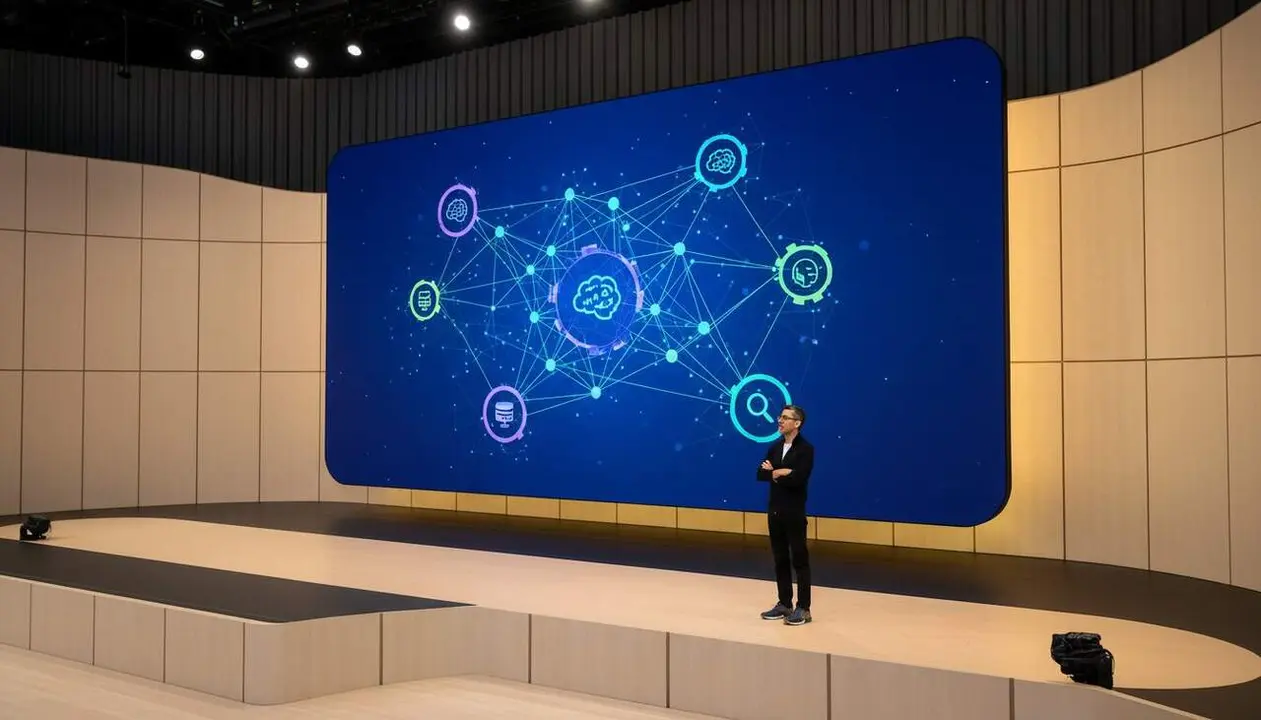

According to the official Google I/O developers event, generative artificial intelligence is now the engine driving the new search engine. This technology allows searches to move beyond just keywords to become detailed and conversational questions, with answers that can include full texts, tables, or graphics.
This change has been designed to offer a richer and more useful experience, as the AI not only selects information but synthesizes and updates it in real time thanks to agents working in the background.
Farewell to blue links
The end of the traditional list
Until now, Google showed a list of blue links ordered by relevance according to its algorithm. This formula has allowed the search engine to maintain its hegemony for decades.
But now, answers will be directly crafted texts, graphics, or even animations, tailored to the specific questions of users. This means there will be no need to visit multiple websites to get a clear answer.
How the new engine works
The foundation is the Gemini 3.5 Flash model, which integrates agents that constantly update information, preventing answers from becoming obsolete. This translates into more precise and up-to-date answers at the moment.
Different answers for each user
Extreme personalization
The new system does not apply a single algorithm for everyone. Instead, the AI engine generates unique answers for each person, according to their context and how they phrase the question.
This change breaks with the idea that the same query must have a standard answer, which profoundly modifies how we understand information searching.
Advantages and risks
While this allows obtaining answers more adjusted to individual needs, it also makes it impossible to share exact results as was done before with search ranking positions.
Google accelerates in the AI race
Response to the competition
After the unexpected impact of ChatGPT, Google has reorganized its teams and heavily invested in its Gemini AI family, which already has 900 million users.
The company leverages its infrastructure to monetize AI usage, improving ad personalization and increasing revenue.
Integration and future
Gemini will be the foundation for the new generation of Apple assistants and other devices, indicating that Google is positioning itself as a reference in generative AI.
This also opens the door to new functionalities in YouTube, Gmail, and Docs, with tools to interact with videos and create documents by voice.
How to try the new search engine and what to keep in mind
Activate and use the new AI searches
- Access Google with your usual account.
- Write detailed questions in the new expanded search field.
- Interact with the answers to adjust them or ask for more information.
- Try the additional features in YouTube, Gmail, and Google Docs if you have access to the updated version.
How to know if you already have the new search engine
- You see an expanded search field where you can write long questions.
- The answers are not just links but explanatory texts or graphics.
- You can ask follow-up questions to refine the information.
- There are new options to interact with audiovisual content on YouTube.
| Platform / Version | Affected | Solution available |
|---|---|---|
| Google Web Search 2026 | Yes | Automatic, enabled by default |
| YouTube and Gmail (US version) | Limited to the US | Subscription and gradual rollout |
Update your browser and apply the latest versions of Google apps to ensure you have access to all functions.
To protect your experience, review permissions and enable two-factor authentication to prevent unauthorized access.
If you notice strange behavior or inconsistent results, check the sources and verify there are no phishing attempts based on AI-generated answers.
With these changes, the way we search for information on the internet makes a qualitative leap: it adapts to you, is more visual and interactive, and places artificial intelligence at the center of everything. Now you just need to get used to it and take advantage of its possibilities.