Explosion in Tarragona with nitric acid: three injured and two in serious condition
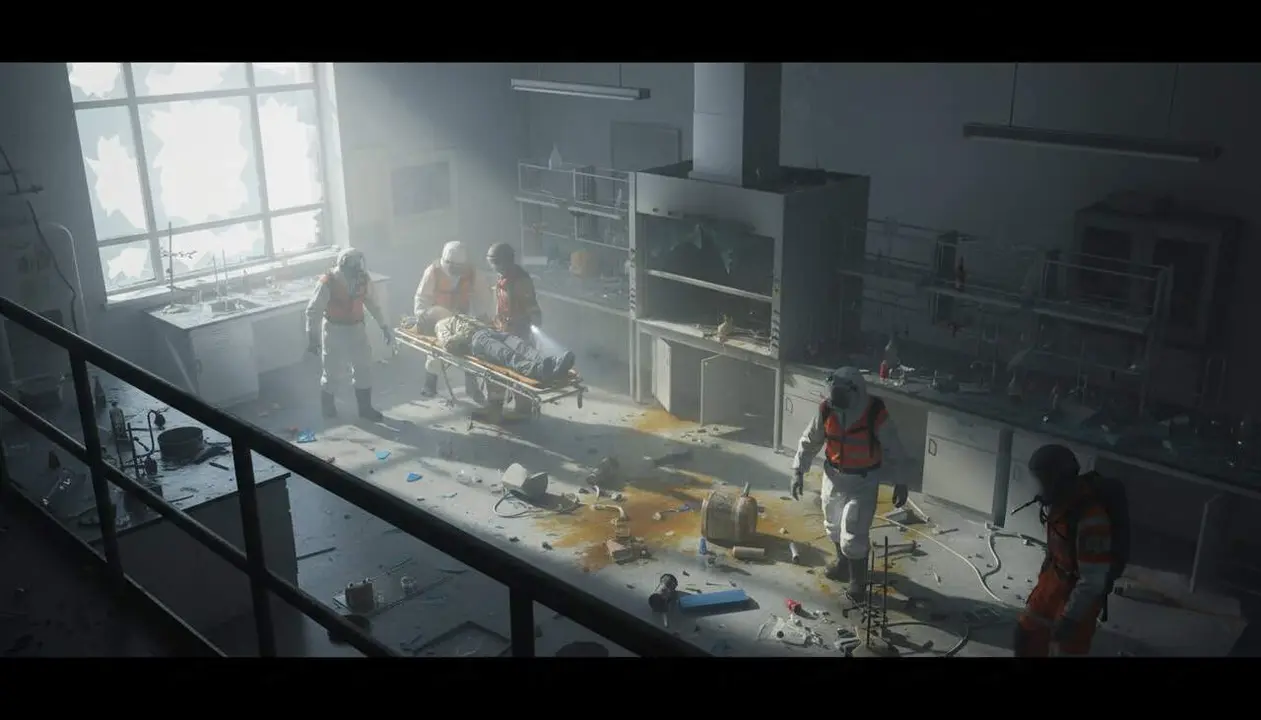

A nitric acid deflagration has injured three workers at the Faculty of Chemistry in Tarragona; two are in serious condition. The explosion occurred Monday morning while they were preparing materials for the new academic year, but it did not cause structural damage to the building.
The affected individuals were able to leave on their own after using the emergency showers. Two were transferred to Joan XXIII Hospital, and a third worker was admitted to Santa Pau and Santa Tecla in less serious condition. The incident required evacuating only part of the ground floor.
What happened at the URV laboratory?
How did the deflagration occur?
The incident took place in one of the practice laboratories of the Faculty of Chemistry and Enology at the Rovira i Virgili University, in Tarragona. For residents and the university community, the key detail is that the incident was confined to a specific area of the building and caused no structural damage.
Three members of the Technical, Management, and Administrative Services staff were transferring chemicals to prepare materials for the new academic year. They were pouring nitric acid from a five-liter bottle into smaller one-liter containers when one of the bottles fell to the ground.
The fall caused the deflagration. The Vice-Rector of Infrastructure and Relations with Health Institutions, Fàtima Sabench, explained that handling was carried out “under the strict and necessary safety regulations,” inside a fume hood and with all personal protective equipment worn.
Therefore, the sequence did not arise from teaching activities with students present, but during the preparation of laboratory materials. A difference that significantly changes the scope of the emergency: there were no students in the affected laboratory.
How much nitric acid was spilled?
The dean of the Faculty of Chemistry, Joan Carvajal, indicated that the spill could have been less than one liter. The bottle contained five liters, but at that moment the transfer was in progress, and the exact level was unknown.
Carvajal specified that no more than one liter was spilled and explained that the technicians themselves activated the emergency showers. The water diluted the product and facilitated subsequent decontamination tasks.
Nitric acid is commonly used in the laboratory and also in the chemical industry. According to the dean, it is a strong acid that can cause burns but does not pose other specific dangers beyond this characteristic.
The exact cause of the explosion has not yet been determined. The faculty has announced it will investigate what caused the deflagration, a task that will need to clarify what happened at the moment the bottle fell.
What is the condition of the three injured?
Are two workers still in serious condition?
A man and a woman have been transferred to Joan XXIII Hospital in serious condition. Another woman was admitted to the Santa Pau and Santa Tecla Hospital in Tarragona in less serious condition, according to information provided after the accident.
The Medical Emergency System attended to the three individuals. The injured were able to immediately activate the emergency showers, received initial care in the laboratory itself, and left the area on their own.
Vice-Rector Fàtima Sabench explained that the affected presented, among other injuries, some cuts and that one of the injured needed more particular care due to their conditions. The university has assured they were stable and out of danger.
This point is relevant to understanding the difference between the initial severity and the evolution communicated afterward: two injured have been classified as serious, but the university places them as stable and out of danger. Detailed medical data have not been made public.
Which emergency services intervened?
The SEM activated six ambulances and a joint team with the Firefighters. Officers from the Tarragona Municipal Police also worked, providing support at the university campus.
The Firefighters focused their intervention on decontaminating the laboratory, not on extinguishing a generalized fire. They worked following the guidelines of the Technological Interventions Support Group, known as GRIT.
The firefighters' special protective clothing was a safety measure for handling the nitric acid spill. The water from the emergency showers was collected in canisters so that the liquid used in decontamination remained controlled.
- People attended: three workers.
- Serious transfers: a man and a woman to Joan XXIII Hospital.
- Less serious transfer: a woman to Santa Pau and Santa Tecla.
- Medical resources: six ambulances and a joint SEM-Firefighters team.
- Support: officers from the Tarragona Municipal Police.
What happened with the building and university activity?
Was the entire Faculty evacuated?
The entire building was not evacuated. Only part of the ground floor, where the teaching laboratories are located, was evacuated. Since there were no students present at that time, the emergency protocol was not activated for the entire campus.
The rest of the workers left the building during the emergency services' intervention. According to Dean Joan Carvajal, the evacuation proceeded without problems, a detail especially relevant for anyone working or studying on campus.
Available information does not describe effects on other areas of the faculty. The involved laboratory remained under the care of specialized teams while tasks focused on collecting the contaminated water and ensuring the safety of the space.
Are there structural damages or a chemical cloud?
The building did not suffer structural damage as a result of the deflagration. The dean indicated that the Firefighters only performed decontamination tasks, assisted by the water from the emergency showers.
There was no need to activate an emergency due to a chemical contamination cloud either. This information limits the scope of the incident: there was a deflagration with three injured individuals and a controlled spill, but no general contamination of the building.
The firefighters collected the water used during decontamination in canisters, following GRIT's guidelines. The intervention kept the focus on the affected laboratory, without reports of damage to other areas of the faculty.
Now the cause investigation remains pending. The acid transfer was done with protective equipment, inside a fume hood, and with the security measures described by the university; what is still unclear is why the bottle’s fall ended up causing the deflagration.
The incident at the Faculty of Chemistry in Tarragona leaves three injured workers, two of them serious, but also a very limited emergency sequence: showers activated immediately, partial evacuation, specialized decontamination, and no structural damage. The missing detail is the exact cause of the deflagration, which URV’s investigation will have to determine.
Frequently Asked Questions
- How many people were injured in the Tarragona explosion?
- Three people were injured, all workers at the URV Faculty of Chemistry. One man and one woman are in serious condition, while a third woman is less seriously injured.
- Where were the injured transferred?
- The two seriously injured were transferred to Joan XXIII Hospital. The third injured was admitted to the Santa Pau and Santa Tecla Hospital in Tarragona.
- Was there any damage to the URV building?
- No. The deflagration did not cause structural damage. The Firefighters carried out decontamination tasks, and only part of the ground floor was evacuated.
- What product caused the deflagration?
- The deflagration occurred during the handling of nitric acid. A bottle fell while workers were transferring the product to smaller containers.
Source of the article: Editorial/Mar Rovira / Catalan News Agency