Corbera d'Ebre: arrested for growing 5,000 marijuana plants
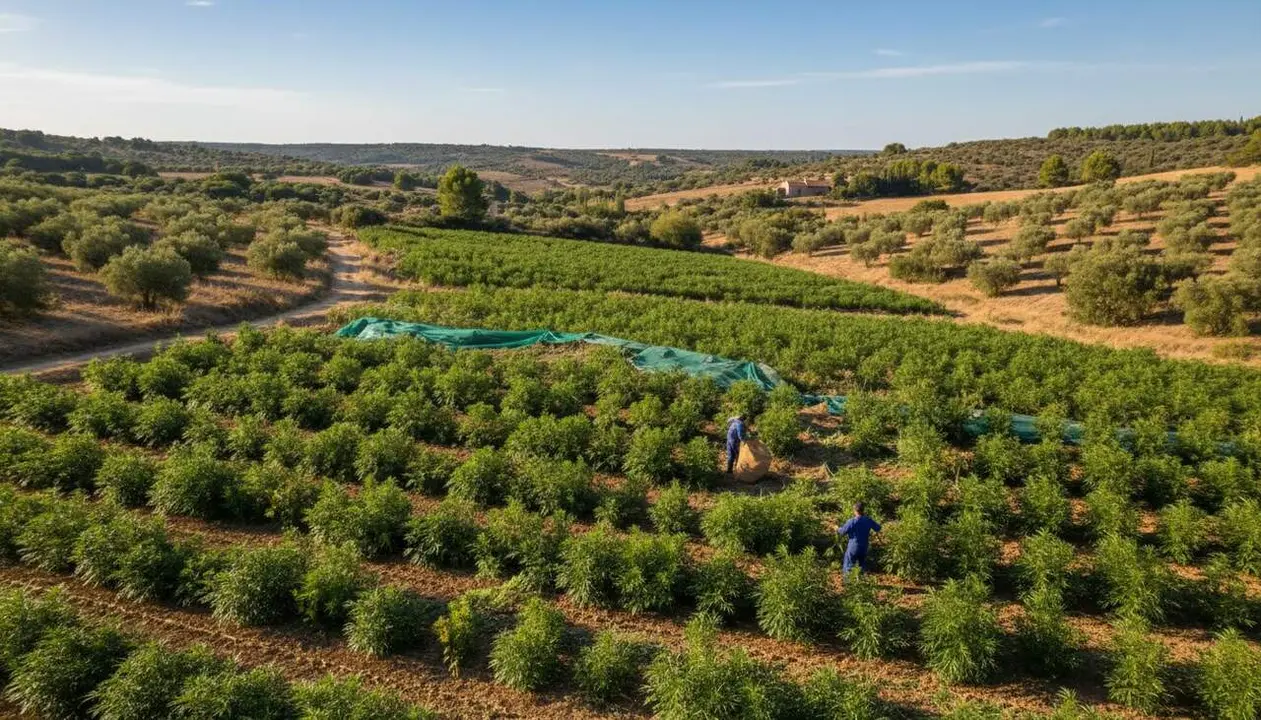

The Mossos d'Esquadra arrested a 20-year-old man for cultivating 5,000 marijuana plants in Corbera d'Ebre, in an outdoor plantation of 1,000 square meters. The investigation began on May 11th following a local alert and concluded with a police operation on June 17th.
The plantation had an intensive irrigation system using two agricultural ponds, a detail suggesting a highly planned production. This fact directly impacts security and territorial control in Terra Alta.
Key data of the operation in Corbera d'Ebre
What exactly was found during the operation?
The police operation took place early in the morning, around 7:30 am on June 17th. Officers located an illicit outdoor marijuana plantation with 5,000 plants distributed over an area of about 1,000 square meters.
The crop had an irrigation system with two agricultural ponds that ensured constant and intensive watering, evidencing the high preparation and organization of the person responsible for the cultivation.
Who was arrested and what charges are attributed to him?
The Mossos arrested a 20-year-old man as the alleged perpetrator of an offense against public health. He is a young person who could be involved in the production and distribution of marijuana in the area.
The arrest was carried out following an investigation initiated by the Gandesa Citizen Security Unit.
Local impact and context of the investigation
Why does this plantation pose a problem for Corbera d'Ebre?
The presence of a plantation of this size in a wooded area affects the safety and natural environment of the region. Intensive cultivation with infrastructures such as irrigation ponds can alter the territory and create conflicts with the local community.
Neighbors wonder how such a large operation is maintained without being detected earlier, reflecting the complexity of rural control in Terra Alta.
How and when did the police investigation begin?
The investigation began on May 11th thanks to information provided by the Gandesa Citizen Security Unit. After seven weeks of monitoring, an operation was planned to dismantle the plantation and arrest the person responsible.
This action is part of a broader strategy to combat illicit cultivation in rural areas of Tarragona.
Technical and legal aspects of the police intervention
What measures allowed the plantation to be detected?
The detection was based on surveillance and coordination between local Mossos units. Observation of the irrigation system and the extent of the crop were key to confirming illegality and preparing the intervention.
The fact that it had two agricultural ponds is relevant: this is not an improvised crop, but a project with investment and planning.
What legal consequences does the detainee face?
The young detainee faces a public health offense for cultivation and alleged distribution of marijuana. Catalan and Spanish legislation foresees penalties that may include fines and imprisonment depending on the severity and extent of the cultivation.
The investigation remains open to detect possible accomplices or related networks.
The Corbera d'Ebre case highlights the difficulty of controlling extensive and well-organized crops in rural areas, and how this impacts local security. The combination of large surface area and intensive irrigation system not only hinders detection but also reveals the ambition of the project.
It is clear that this type of police operations serve to stop illegal production, but they also raise doubts about how surveillance is maintained across the territory.
Source of the article: Editorial staff | ACN