The town where the best octopus is eaten and there is a romantic cathedral
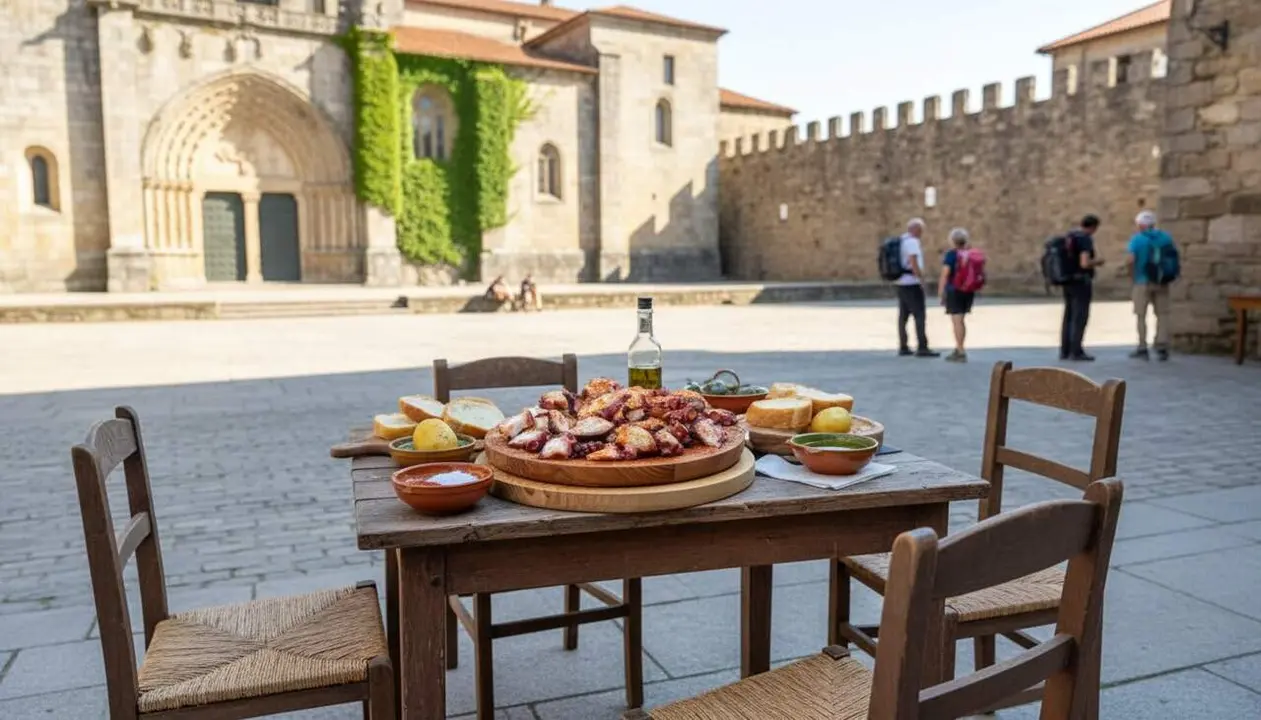

Who has never heard of that town where octopus is a true star and time seems to have stopped within medieval walls? On the banks of the Miño River, in a corner that blends history, gastronomy, and captivating landscapes, there is a place with a special charm that looks like it came out of a movie. Tui, in the province of Pontevedra, is one of those spots that leaves no one indifferent.
But it’s not just any town on the Way of St. James route: its narrow cobbled streets and its 12th-century Romanesque-Gothic cathedral hide a thousand secrets and a gastronomy that seduces even the most demanding palate. Its proximity to Portugal makes its cuisine a bridge between two cultures, with octopus as the undisputed protagonist.
Tui, the town of the best octopus and medieval heritage
💶 Average price: 25€ per person
🕐 Hours: Open from 10:00 to 22:00
🍽️ Specialty: Galician octopus
A captivating historical legacy
Inhabited since ancient times, Tui holds Roman, Suevic, Visigothic, and Jewish influences that have turned it into a cultural mosaic. Its cathedral of Santa Maria, built in the 12th century, stands out for its combination of Romanesque and Gothic styles, with a collection of religious objects that includes silver crosses attributed to the Templars. In addition, the Jewish quarter or "Call" preserves the medieval essence with narrow streets and houses from the 13th and 14th centuries, and its old synagogue with a unique courtyard in Galicia.
A living religious and cultural heritage
The Convent of the Poor Clares, founded in 1508, and the Chapel of Saint Telmo, the only example of Portuguese Baroque in Galicia, are other points of interest. The chapel, built on the saint’s house, shines with 19th-century frescoes and maritime ex-votos that testify to the local devotion to maritime guilds. This architectural and spiritual richness invites strolling and discovering every corner calmly and with admiration.
The gastronomy of Tui: the octopus that enchants
Galician octopus, a local icon
Tui’s fame as the town where the best octopus is eaten is no accident. This traditional dish is prepared with a technique that ensures the perfect cooking point, and is served sliced, seasoned with olive oil, coarse salt, and paprika. Locals and visitors seek bars and restaurants that maintain the ancestral recipe, conveying the authenticity and genuine Galician flavor. Octopus “a feira” becomes a gastronomic experience that exceeds expectations.
A border cuisine with Portuguese influences
The proximity to Portugal is reflected in the variety of dishes and sausages offered in Tui. Besides octopus, there is a strong presence of fresh Atlantic fish and typical preparations that combine the culinary traditions of both sides of the Miño River. This fusion makes Tui’s gastronomy rich and diverse, ideal for palates seeking flavor and authenticity.
The Way of St. James and its essence in the town
A key passage and history point
Tui is not only a gastronomic and historic destination but also a key place on the Way of St. James route. Pilgrims find here a place to regain strength and enjoy the charm of a village full of traditions and characterful corners. The international bridge over the Miño allows for the symbolic photo between Spain and Portugal, a gesture that summarizes the essence of this border town.
Recommendations for visiting the town
To enjoy Tui one must prepare to walk its cobbled streets and climb the cathedral tower, from where the views over the river and landscape are spectacular. Visiting the Convent of the Poor Clares and tasting their traditional sweets, such as almond fishes, is a classic among lovers of local culture and gastronomy. Likewise, exploring the Jewish quarter allows you to delve into the medieval history of the area.
If you are looking for a place with personality, where Galician octopus is a feast for the senses and the stones tell centuries of the past, Tui is a safe bet. This town not only preserves its heritage but lives it daily through its cuisine, architecture, and landscape. Don’t miss the opportunity to discover one of the most authentic and flavorful corners of the Way of St. James and of the town with charm that leaves no one indifferent.